Skip to content

Meditations on God

  • Robert Van Valkenburgh

  • Creating Change Requires Risk

    Some ideas are worth pursuing and some are not, but there is no way to know the difference without trying.
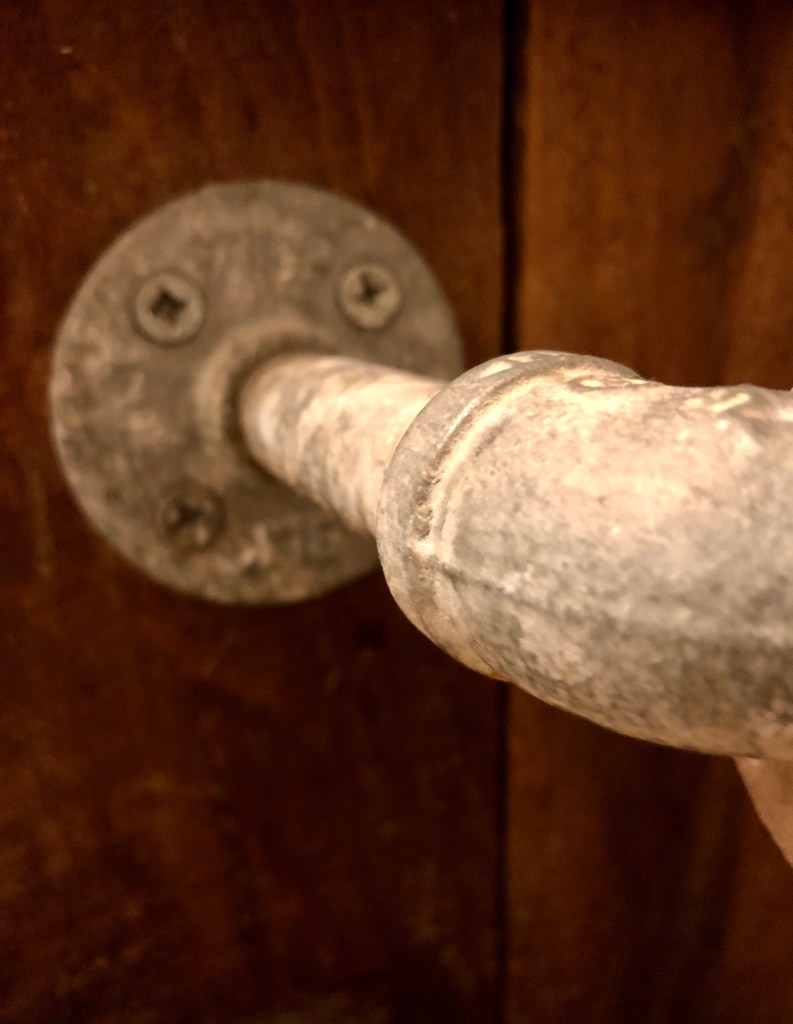
    By definition, an idea cannot be great without its potential to create some kind of change. Change is a risky proposition because change requires movement and, in order for movement to occur, friction, resistance, and inertia must be overcome. This process of turning an idea into change, of overcoming the forces that impede us, requires effort, dedication, and persistence on our part.

    Meanwhile, as we struggle to make progress toward the realization of our idea, we have no guarantee that we will get the results that we originally imagined or hoped for. Life is complicated. The only guarantee we can be sure of is that, if we take no action or if we hesitate, compromise, or quit along the way, whatever potential our idea had or has for greatness and change, will never be realized.

    Once we begin pushing forward, once we muster up enough courage to take the first step, we must maintain our bearing and we must and stay the course. Of course, we will want help and support along the way, but creating change is dangerous and others may not want to risk their safety, their security, and their reputations on our ideas until there is some proof or promise of reward. If that is enough to stop us, we should not have ever started.


    Holistic Budo: As it is in budo, so too it is in life. As it is in life, so too it is in budo.

    Robert Van Valkenburgh is co-founder of Taikyoku Mind & Body and Kogen Dojo where he teaches Taikyoku Budo and Brazilian Jiu-Jitsu, as well as a founding member of the Severna Park and Baltimore Holistic Chamber of Commerce.

    Street art photo taken by Robert Van Valkenburgh, artist unknown unless otherwise noted.

    If you found this post helpful or meaningful in some way, please feel free to Share, Comment, and Subscribe below.

    Share this:

    • Share on X (Opens in new window) X
    • Share on Facebook (Opens in new window) Facebook
    Like Loading…
    February 25, 2020
    bravery, challenges, change, courage, friction, ideas, inertia, kaizen, resistance, reward, risk, support, wabi sabi

  • Love Is Often Inconvenient

    We all deserve to be loved, to be seen, and to be heard, maybe not for who we are, but for who we could be if given the opportunity.

    We are all imperfect beings. We are flawed, frail, weak, and broken in some way or another. Beyond or beneath these shortcomings and failings, even in spite of them, is something perfect, something special, and something divine.

    It is this essence of potential that we should be looking for in others. It is this possibility of being that, whenever possible, we should see, hear, nurture, and trust. Looking past someone’s weakness, mistakes, and failures, to see depth, complexity, and light, that is true generosity.

    This requires us taking the longview and it requires us being patient, forgiving, and compassionate, even when it is inconvenient to do so, especially when it is inconvenient to do so. The ability to be generous, gracious, and kind to and for the potential of others is the essence of what it means to love. Loving in this way is often difficult, but it is our only hope for finding depth and fulfillment.


    Holistic Budo: As it is in budo, so too it is in life. As it is in life, so too it is in budo.

    Robert Van Valkenburgh is co-founder of Taikyoku Mind & Body and Kogen Dojo where he teaches Taikyoku Budo and Brazilian Jiu-Jitsu, as well as a founding member of the Severna Park and Baltimore Holistic Chamber of Commerce.

    Street art photo taken by Robert Van Valkenburgh, artist unknown unless otherwise noted.

    If you found this post helpful or meaningful in some way, please feel free to Share, Comment, and Subscribe below.

    Share this:

    • Share on X (Opens in new window) X
    • Share on Facebook (Opens in new window) Facebook
    Like Loading…
    February 24, 2020
    compassion, empathy, essence, failings, flaws, fragility, frailty, generosity, graciousness, light, love, shortcomings

  • To Fight Or To Make Peace

    A friend of mine used to be a bouncer at a pub. One day, the pub owner called him into his office and said, “I’m sorry, but I’m going to have to let you go.” My friend said, “I don’t understand. I win every fight that I get into.” The pub owner replied, “That’s the problem. You keep getting into fights.”

    A lot of people misunderstand the martial arts as simply being methods for fighting. While this is obviously true, it is also only the most superficial interpretation of any combative practice. If we look deeper, martial art training should actually give us the ability to neutralize violence, to end it quickly or even before it starts, so that there is no conflict, there is no battle, and there is no fight to speak of.

    Neutralizing conflict is not the same as avoiding it, however. One interpretation of the Japanese word for martial arts, ‘budo,’ literally, ‘the way of stopping the spear,’ is that we put down our own spears as a way of making peace and circumventing violence, but this type of pacifism relies solely on the mercy of those with whom we are potentially in conflict, leaving us exposed with no recourse should they deny our pleas for peace. Another, more practical interpretation of the word budo is that it means the ability to stop the violence of others with our own spears.

    We cannot truly create or even choose peace unless we also have the ability to destroy because mercy lies in the hands of the capable, not the inept. The martial arts, then, are methods for learning how to use our spears effectively so that we can give others the choice to not make us have to do so. Paradoxically, the easiest way to achieve peace in this way is to not create the perception of conflict in the first place, to never even show our spears and that is why the Japanese also say that budo begins and ends with courtesy, with respect, with a bow.


    Holistic Budo: As it is in budo, so too it is in life. As it is in life, so too it is in budo.

    Robert Van Valkenburgh is co-founder of Taikyoku Mind & Body and Kogen Dojo where he teaches Taikyoku Budo and Brazilian Jiu-Jitsu, as well as a founding member of the Severna Park and Baltimore Holistic Chamber of Commerce.

    Street art photo taken by Robert Van Valkenburgh, artist unknown unless otherwise noted.

    If you found this post helpful or meaningful in some way, please feel free to Share, Comment, and Subscribe below.
    Share this:

    • Share on X (Opens in new window) X
    • Share on Facebook (Opens in new window) Facebook
    Like Loading…
    February 19, 2020
    budo, conflict, courtesy, destruction, etiquette, fighting, japanese martial arts, Martial Arts, pacifism, peace, rei, reigi, reishiki, respect, spear, violence

  • Moving Through The Familiar To The Innovative

    Movements are made by attracting people with what is familiar, but then guiding them toward that which is not.

    We tend to like and to gravitate towards that with which we are already familiar. Familiarity makes us feel comfortable and secure because, with the familiar, we know what to expect. The familiar poses no threat, no surprises, and no potential for change.

    Innovation, on the other hand, is full of potential, possibility, and the unfamiliar. Innovation represents the new, it represents the unknown, and it represents change. Innovation is uncomfortable because we do not know what to expect, we do not know were it will take us, and we do not know if it will be worth the trip or if we will find our way back if it is not.

    If we want to have ideas that are popular, we must engage people where they are already engaged, through that which is familiar. If we want have ideas that are innovative, we must create new means of and reasons for engagement. But, if we want to have ideas that start a movement, we must do both.


    Holistic Budo: As it is in budo, so too it is in life. As it is in life, so too it is in budo.

    Robert Van Valkenburgh is co-founder of Taikyoku Mind & Body and Kogen Dojo where he teaches Taikyoku Budo and Brazilian Jiu-Jitsu, as well as a founding member of the Severna Park and Baltimore Holistic Chamber of Commerce.

    Street art photo taken by Robert Van Valkenburgh, artist unknown unless otherwise noted.

    If you found this post helpful or meaningful in some way, please feel free to Share, Comment, and Subscribe below.

    Share this:

    • Share on X (Opens in new window) X
    • Share on Facebook (Opens in new window) Facebook
    Like Loading…
    February 17, 2020
    change, comfort, familiar, familiarity, fear, innovation, innovative, movement, potential, progress, revolutionary

  • Compromising Creates Conflict

    Compromising our values so as to avoid conflict, in spite of our hopes, beliefs, or desires, creates dissonance not resolution.

    Avoiding conflict at the cost of what we hold true is neither a win for us nor for those to or for whom we compromise. Compromising on the truth, on our truth, leaves that truth unaddressed, unsatisfied, and unresolved, resonating inside of us throughout our lives and shaking us apart from the inside out. This does not serve us, it does not serve the truth, nor does it serve the relationships we are compromising for.

    Compromised truth does not resolve conflict. Compromised truth creates conflict. It creates conflict inside of us and that conflict manifests in our behavior, our attitude, and our relationships.

    If we want to find resolution that serves both the truth and the relationship, we must begin with the fundamental understanding that some conflict is unavoidable, even if simply because we do not and can not control how others will react to what we perceive as true. If resolution is our goal, approaching our relationships with a hardened heart and a calloused take-it-or-leave-it attitude will not get us there any more than compromise will, however. Instead, we must find a way to represent our truth with both unwavering integrity and compassion.


    Holistic Budo: As it is in budo, so too it is in life. As it is in life, so too it is in budo.

    Robert Van Valkenburgh is co-founder of Taikyoku Mind & Body and Kogen Dojo where he teaches Taikyoku Budo and Brazilian Jiu-Jitsu, as well as a founding member of the Severna Park and Baltimore Holistic Chamber of Commerce.

    Street art photo taken by Robert Van Valkenburgh, artist unknown unless otherwise noted.

    If you found this post helpful or meaningful in some way, please feel free to Share, Comment, and Subscribe below.

    Share this:

    • Share on X (Opens in new window) X
    • Share on Facebook (Opens in new window) Facebook
    Like Loading…
    February 16, 2020
    belief, compassion, compromise, conflict, dissonance, integrity, resolution, resonance, truth

Previous Page Next Page

Create a website or blog at WordPress.com

Loading Comments...

    • Subscribe Subscribed
      • Meditations on God
      • Join 270 other subscribers
      • Already have a WordPress.com account? Log in now.
      • Meditations on God
      • Subscribe Subscribed
      • Sign up
      • Log in
      • Report this content
      • View site in Reader
      • Manage subscriptions
      • Collapse this bar
    %d