Skip to content

Meditations on God

  • Robert Van Valkenburgh

  • Voluntary Essentialism

    “If you don’t prioritize your life, someone else will.” —Greg McKeown from ‘Essentialism: The Disciplined Pursuit of Less’
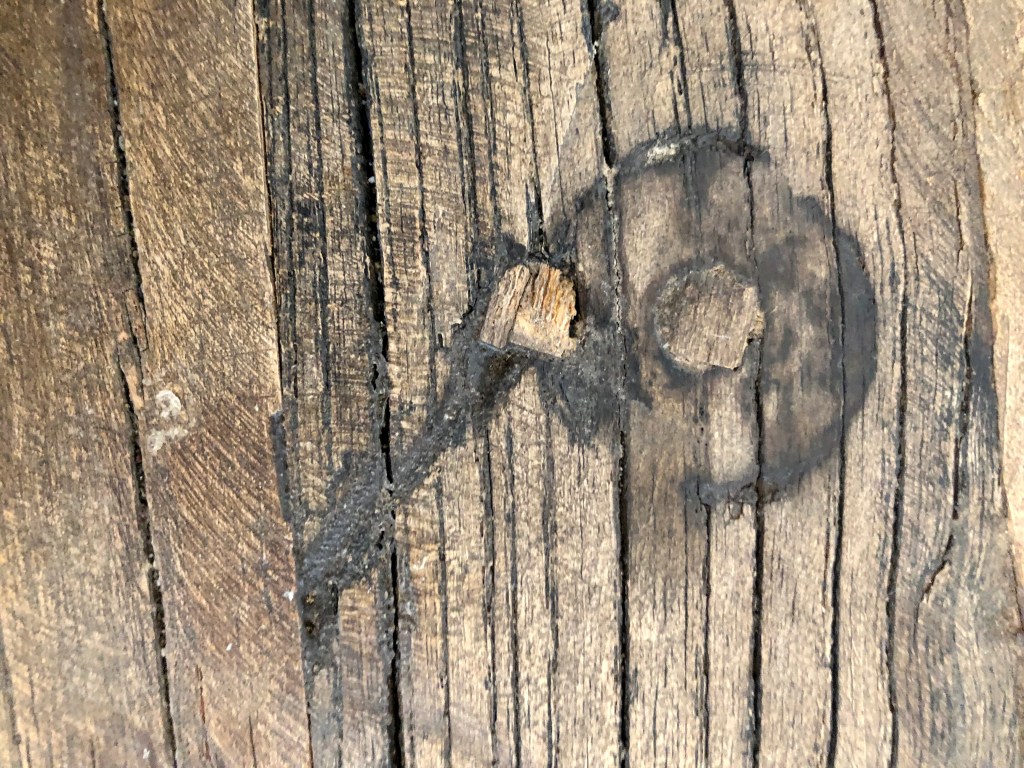
    In times of confusion and difficulty, often the only things we have to fall back on are our principles, our beliefs, and those things we hold to be most essential in our lives. While it is in times of trial and hardship that these become most apparent, it is in the good times, in the times of plenty, when our options are many, that we should contemplate and prioritize what is most important to us lest we find ourselves distracted by choices and possibilities unable to decipher what is essential from what is not.

    When things are going well, we should always take a moment to step back and ask ourselves what of the things we have now we can live without. If we can learn to do this during the good times, doing so during the bad times will not be as difficult. We must all know for ourselves what is essential to our survival, our well-being, and our quality of life versus what is simply desirable and pleasurable.

    By focusing on what matters most to us, even when we have everything, we will have more clarity when we experience loss. Without knowing this truth about our lives, it may be determined for us at some point by misfortune, unforeseen circumstances, or other people’s choices. It is infinitely better to choose to live with less when we can than to not know how to live with less when we must.


    Holistic Budo: As it is in budo, so too it is in life. As it is in life, so too it is in budo.

    Robert Van Valkenburgh is co-founder of Taikyoku Mind & Body and Kogen Dojo where he teaches Taikyoku Budo and Brazilian Jiu-Jitsu.

    All photos by Robert Van Valkenburgh (artist unknown, unless otherwise noted).

    If you found this post helpful or meaningful in some way, please feel free to Share, Comment, and Subscribe below.

    Share this:

    • Share on X (Opens in new window) X
    • Share on Facebook (Opens in new window) Facebook
    Like Loading…
    March 15, 2020
    desire, essential, essentialism, minimalism, need, survival, want, wealth

  • Transcending False Confidence

    “There is no courage without vulnerability.” —Brené Brown

    We have all seen people who carry themselves with what looks like confidence, but something is a little bit off about it. Something is not quite right. Instead of being quiet and self-assured, like true confidence should be, it is loud, brash, and ostentatious, as if it is hiding some other truth behind its facade.

    The thing about true confidence is that it is not one dimensional. It is not a front. It is not a show put on for the world to see, a distraction from what is really going on beneath the surface.

    True confidence has depth, weight, and strength, but only because the truly confident have become so, not by avoiding fear, failure, vulnerability, hurt, loneliness, and sadness, but by facing these in themselves, acknowledging them, embracing them, and taking courageous action in spite of them.

    Confidence is not the result of covering up our fragility, frailty, and insecurities, but of knowing them, of owning them, and of transforming them from darkness to light. Confidence is the simultaneous manifestation of both courage and vulnerability.


    Holistic Budo: As it is in budo, so too it is in life. As it is in life, so too it is in budo.

    Robert Van Valkenburgh is co-founder of Taikyoku Mind & Body and Kogen Dojo where he teaches Taikyoku Budo and Brazilian Jiu-Jitsu, as well as a founding member of the Severna Park and Baltimore Holistic Chamber of Commerce.

    Street art photo taken by Robert Van Valkenburgh, artist unknown unless otherwise noted.

    If you found this post helpful or meaningful in some way, please feel free to Share, Comment, and Subscribe below.

    Share this:

    • Share on X (Opens in new window) X
    • Share on Facebook (Opens in new window) Facebook
    Like Loading…
    March 14, 2020
    confidence, courage, darkness, fear, fragility, frailty, know thyself, light, strength, transcendence, vulnerability, weakness

  • Be The Constant (For Yourself And Others)

    Consistency breeds hope.

    We all need to know that there are things in our lives that we can count on. We need to know that certain people, places, and activities will be there for us when we show up, whether it is at home, at work, at the gym, the coffee shop, the bar, or whatever. We rely on this knowing as a foundation for optimism in our lives.

    This is why habits and routines are so important. We need habits and routines so that we know what to expect from our day to day lives, and also so that others know what to expect from us in theirs. Consistency lays the foundation for optimism and positive forward thinking.

    When there are disruptions to our routines, when we fall away from our habits for whatever reason, our lives begin to become more complicated, more stressful, and often more difficult. Having routines and habits removes the burden of choice from us in a positive way, in a way that gives us clarity, confidence, and hope. In times of uncertainty, confusion, and chaos, it is up to us to be the consistency others rely on so that we can all have more to look forward to.

    NOTE: For those of you who read my posts and who find some kind of comfort in their consistent delivery, I apologize for falling out of habit. Life got in the way, but I am regrouping and picking up where I left off. Nothing would please me more if you decided to me on the journey towards a new normal.


    Holistic Budo: As it is in budo, so too it is in life. As it is in life, so too it is in budo.

    Robert Van Valkenburgh is co-founder of Taikyoku Mind & Body and Kogen Dojo where he teaches Taikyoku Budo and Brazilian Jiu-Jitsu, as well as a founding member of the Severna Park and Baltimore Holistic Chamber of Commerce.

    Street art photo taken by Robert Van Valkenburgh, artist unknown unless otherwise noted.

    If you found this post helpful or meaningful in some way, please feel free to Share, Comment, and Subscribe below.

    Share this:

    • Share on X (Opens in new window) X
    • Share on Facebook (Opens in new window) Facebook
    Like Loading…
    March 13, 2020
    consistency, habits, hope, optimism, routines

  • About Bullying

    “Please believe me. I’m real. No, really. It happened. It hurt.”
    -Amanda Palmer, ‘The Art of Asking’

    Bullying is a violation. It is an assault on a person’s mind, body, or emotions, an assault on a person’s boundaries and willingness to participate. It is willful antagonism, provocation, mockery and harassment.

    Bullying is the act of seeing a person’s vulnerability, his or her differences, flaws, or weaknesses, and honing in on those, focusing on those, picking on those, and digging in, poking and prodding over and over again until that person can find no refuge, no comfort, no safety, no escape and, taken to its extremes, no reason to live.

    Children can bully other children, adults can bully children, adults can bully other adults, and the mob can bully an individual. It can happen at school, at home, at the office, in public, in private, on the road, on the playing field, courts, or mats, and it can happen online, but, regardless of where it happens or from whom it originates, it happens without the consent of the bullied.

    Bullying is pushing someone beyond their ability to stand up for themselves, whether that ability is physical, emotional, or psychological. It is the act of taking a position of power over someone else’s well-being, of violating their integrity, their space, and their security until they are backed into a corner with nowhere to turn. It is removing someone’s ability to speak up, to say ‘no,’ to say ‘stop,’ to be heard and to be seen as a human being with a voice and a life that matters.


    Holistic Budo: As it is in budo, so too it is in life. As it is in life, so too it is in budo.

    Robert Van Valkenburgh is co-founder of Taikyoku Mind & Body and Kogen Dojo where he teaches Taikyoku Budo and Brazilian Jiu-Jitsu, as well as a founding member of the Severna Park and Baltimore Holistic Chamber of Commerce.

    Street art photo taken by Robert Van Valkenburgh, artist unknown unless otherwise noted.

    If you found this post helpful or meaningful in some way, please feel free to Share, Comment, and Subscribe below.

    Share this:

    • Share on X (Opens in new window) X
    • Share on Facebook (Opens in new window) Facebook
    Like Loading…
    February 27, 2020
    abuse, assault, bullies, bully, bullying, consent, integrity

  • Leading Is The Opposite Of Easy

    It is always leadership’s fault and we are all leadership.

    We all experience situations, circumstances, and even relationships in our lives that we wish were better than they are, that we want to see improved, and which, through some positive change, would enhance our lives exponentially. Each time we experience these, we have choices to make. We can choose to ignore them and do nothing, we can walk away, we can blame others and hope or demand they change, or we can take the lead and do something.

    Obviously, doing nothing will not create the change we wish to see, but, perhaps we have decided, given all of the options, that our perceived problem was not really that bad after all, not worth the effort, and we can live with it.

    Walking away, when it is even an option, creates its own problems because there will always be wreckage left behind in the form of damaged relationships, hurt feelings, or even unnecessary and irreparable enmity, and, beyond that, we always take ourselves, our own baggage, and our own issues, including an inability to face our problems, everywhere we go.

    Blaming others not only damages our relationships, but it also damages our perceptions of our own power in our lives, reinforcing the belief that we have no control over whether or not things improve, that the only path to positive change in our lives is through the behavior of others, and that, if only they did better, we would be happy, content, and successful.

    Leading is the positive opposite of these other dubious strategies, as it requires us to take action when doing nothing seems easier, to stand our ground and work through things when leaving requires less effort, and to take ownership of both our problems and their solutions, adapting ourselves to the circumstances and the people involved instead of requiring that they adapt to us.


    Holistic Budo: As it is in budo, so too it is in life. As it is in life, so too it is in budo.

    Robert Van Valkenburgh is co-founder of Taikyoku Mind & Body and Kogen Dojo where he teaches Taikyoku Budo and Brazilian Jiu-Jitsu, as well as a founding member of the Severna Park and Baltimore Holistic Chamber of Commerce.

    Street art photo taken by Robert Van Valkenburgh, artist unknown unless otherwise noted.

    If you found this post helpful or meaningful in some way, please feel free to Share, Comment, and Subscribe below.

    Share this:

    • Share on X (Opens in new window) X
    • Share on Facebook (Opens in new window) Facebook
    Like Loading…
    February 26, 2020
    leadership, leading, lessons, life lessons, ownership

Previous Page Next Page

Create a website or blog at WordPress.com

Loading Comments...

    • Subscribe Subscribed
      • Meditations on God
      • Join 270 other subscribers
      • Already have a WordPress.com account? Log in now.
      • Meditations on God
      • Subscribe Subscribed
      • Sign up
      • Log in
      • Report this content
      • View site in Reader
      • Manage subscriptions
      • Collapse this bar
    %d