Skip to content

Meditations on God

  • Robert Van Valkenburgh

  • Start Your Day Well To Live Your Day Well

    “If you want to change the world, start off by making your bed,”

    —U.S. Navy Adm. William H. McCraven
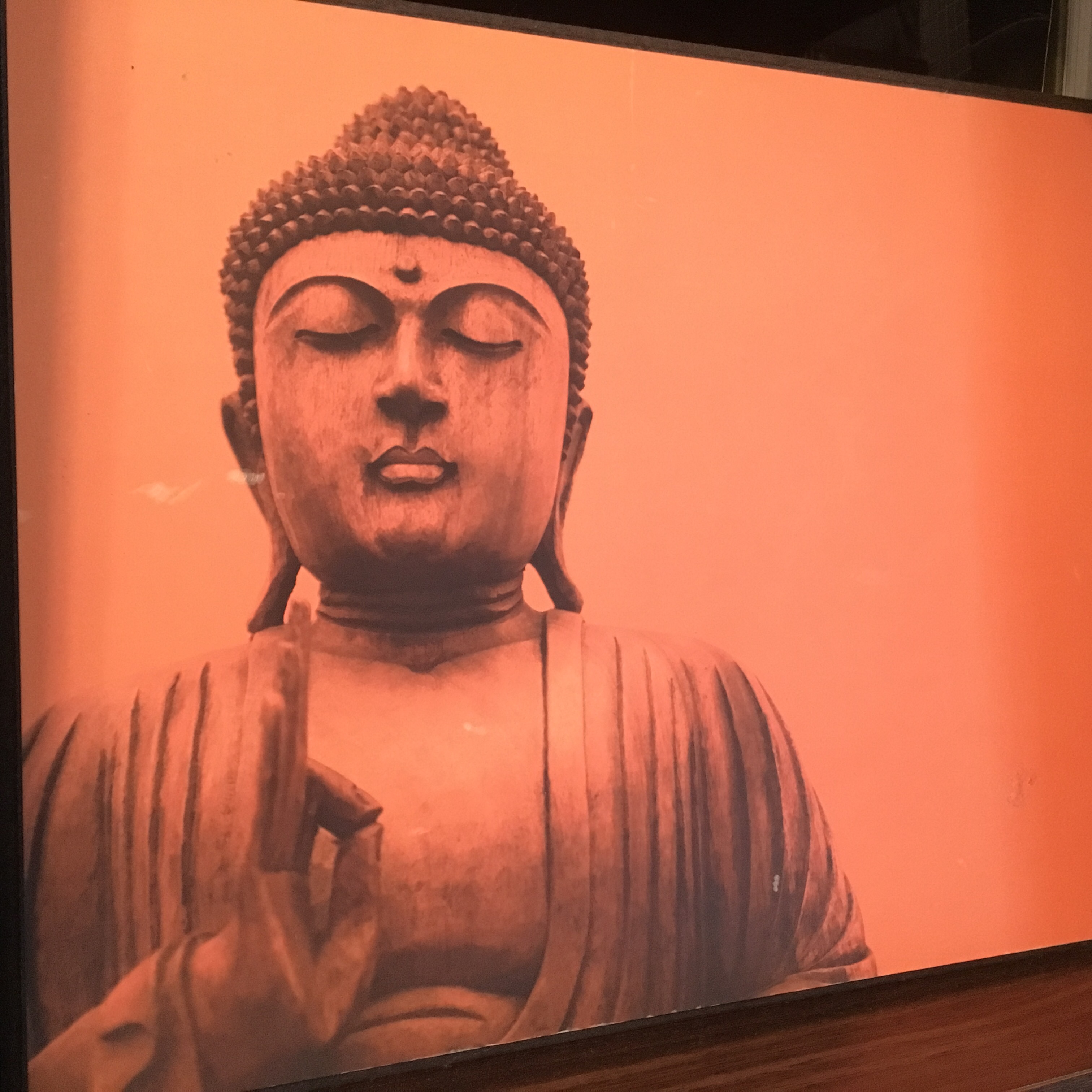
    To live in a constant state of stimulation is to live in a perpetual state of stress. Not only is stress unhealthy for us emotionally and physically, but it also affects the way that we make decisions and the way that we treat each other.

    In a world of constant noise and distraction, with everyone and everything vying for our attention, our responses, and our reactions in every moment, we must find a way to look through the haze, to see the beauty that lies beneath the surface noise, and to behave accordingly.

    It is unreasonable to think that we can ask the whole world around us to quiet down, to stop asking for so much from us, or to stop needing our attention and our participation. The world does not stop or slow down simply because we are overwhelmed or overextended.

    If we are to break free of the toxic cycle of constant stimulus-response, it is up to step back, to breathe, to quiet ourselves so that we can act with integrity and calm, so that we can approach the world from a place of graciousness, instead of anxiety, fear, and aggression. This begins upon awakening. It is much more difficult to have a good day if we do not start it well.

    “As in life, so too it is in budo. As in budo, so too it is in life.”

    -Robert Van Valkenburgh is co-founder of Taikyoku Mind & Body, Severna Park’s Holistic Chamber of Commerce, and Kogen Dojo where he teaches Taikyoku Budo and Brazilian Jiu-Jitsu
    Share this:

    • Share on X (Opens in new window) X
    • Share on Facebook (Opens in new window) Facebook
    Like Loading…
    July 29, 2019
    awakening, awareness, breathing, graciousness, kindness, life, mindfulness, morning routines, waking up

  • Create More Space for Truth and Love

    “I have never seen a situation where you shouted people down and convinced them you were right.”

    —Ann Miura-Ko

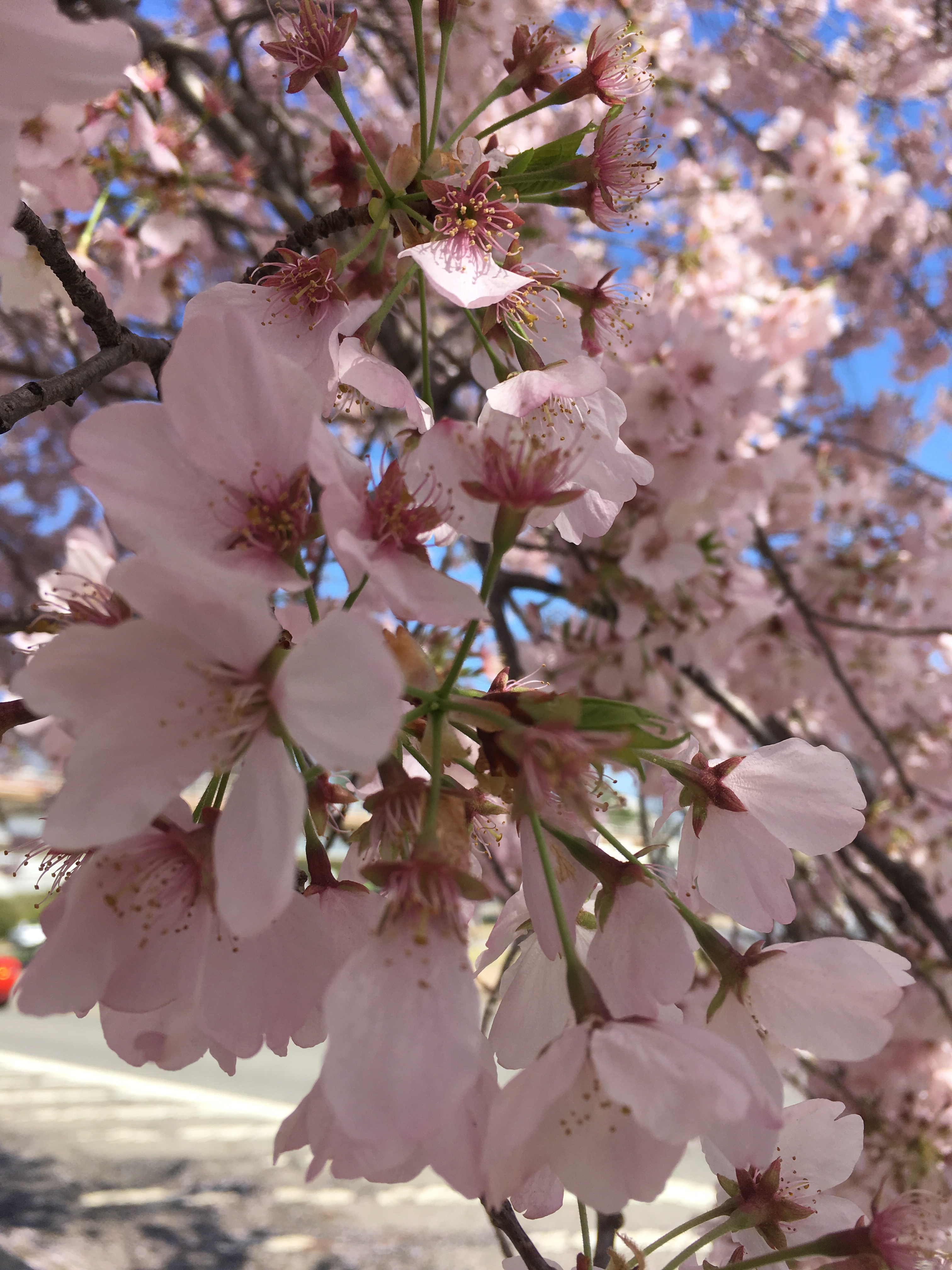
    Cherry Blossoms blooming in Washington DC, a gift from Japan

    We live in an era wherein nearly any and all information is available to us all of the time. It is literally ‘at our fingertips.’ It is no longer a matter of if you can know something. We can know anything. There are no secrets. In fact, there is so much information, simultaneously true and false, in the info-sphere that it is often overwhelming and confusing, making it difficult to know what and who to believe. For better or worse, this tends to lead us to believe that which agrees with our already tightly held viewpoints and ideologies.

    With all of the information out there, we have the dubious luxury to pick and choose what we want to believe and what we want to espouse as truth. It is like a dogmatic version of Choose Your Own Adventure. Instead of being open to new ideas, listening to others’ perspectives, and gauging our conclusions on whether or not they are based in fact, we have resorted to basing our opinions on whether or not they align with our beliefs and feelings. We bounce from idea to idea, opinion to opinion, and outrage to outrage, in a constant state of overstimulation and irritation.

    We have forgotten that there is deep truth inside each of us. We have forgotten to be quiet and still, letting that truth reveal itself. We have forgotten how to truly see each other, hear each other, and be with each other. We have forgotten that nothing we think or do or say is right or righteous without compassion or empathy guiding it. We do not need more information. We do not need more news. We do not need more data. We need more space for ourselves and for those around us to breathe, to be who we are, and to express our deepest and realest truth.

    “As in life, so too it is in budo. As in budo, so too it is in life.”

    -Robert Van Valkenburgh is co-founder of Taikyoku Mind & Body, Severna Park’s Holistic Chamber of Commerce, and Kogen Dojo where he teaches Taikyoku Budo and Brazilian Jiu-Jitsu

    Share this:

    • Share on X (Opens in new window) X
    • Share on Facebook (Opens in new window) Facebook
    Like Loading…
    July 29, 2019
    be yourself, compassion, deepest truth, empathy, express yourself, information, life, love, meditation, truth, understanding

  • Learning From Failure

    Allow the bad positions you find yourself in to be your teachers.

    Relson Gracie teaching how to escape bottom side control at Kogen Dojo. Photo by Mike Oswald Photogrpahy

    Not much is really learned from doing well aside from learning that we should not take any risks that might jeopardize our success. The problem with this is that success does not teach us how to deal with failure. Success gives us tunnel vision, causing us to have a false sense of security and invulnerability. When what we are doing is working for us, we tend to assume that it will continue to work indefinitely, that is, until we face an unforeseen challenge, a problem that success did not equip us to overcome.

    It seems counterintuitive to intentionally put ourselves into bad positions or circumstances simply as a way of learning how to overcome them. In fact, this can have dangerous to our health and finances. Unfortunately, it is only through struggle and hardship that we learn who we really are and how we can and will deal with difficulty or even tragedy in our lives. We need a way to test ourselves under pressure so that we can exercise our troubleshooting muscles under stress.

    One of the many benefits of Brazilian jiu-jitsu (BJJ) is that it allows us the opportunity to repeatedly, even intentionally, find ourselves into bad positions that we must think and work our way out of. It teaches us to remain calm under pressure, to find a way to breathe, to survive in the face of difficulty and even pain, and to make micro-adjustments that enable us to not only escape danger, but to actually reverse our bad position, putting us back on top. It is not always up to us whether or not we end up in a bad position in BJJ. Quite often it is the result of having a more skilled opponent. What is in our control, however, is how we deal with these negative circumstances and whether or not we learn from them.

    “As in life, so too it is in budo. As in budo, so too it is in life.”

    -Robert Van Valkenburgh is co-founder of Taikyoku Mind & Body and Kogen Dojo where he teaches Taikyoku Budo and Brazilian Jiu-Jitsu
    39.073857 -76.547111

    Share this:

    • Share on X (Opens in new window) X
    • Share on Facebook (Opens in new window) Facebook
    Like Loading…
    July 28, 2019
    bad positions, bjj, brazilian jiu-jitsu, consequences, difficulites, failure, gracie jiu-jitsu, kogen dojo, learning, life, life lessons, Martial Arts, problems, success

  • Mercy is Found in Death

    Mercy is the ability to destroy a person at the very moment of his or her error or mistake, at his or her most fragile and vulnerable, but choosing instead to offer compassion to that person, to teach him or her how to be better.

    Ellis Amdur and Budd Yuhasz performing a jo kata at Kogen Dojo

    One of the foundational training methods of classical Japanese martial arts is the use of paired kata, partner drills meant to ingrain in the practitioners a specific set of skills, attitudes, and principles. In a kata, there are essentially two positions or roles. Shidachi is the person doing the technique, the person winning, the person killing his or her opponent. Uchidachi is the person receiving the technique, the person losing, the person who is dying.

    Traditionally, the teacher is uchidachi, the losing position in the kata, with the student being shidachi. Uchidachi’s role is not a passive one. Uchidachi does not simply let shidachi win. It is uchidachi’s responsibility to lead and guide shidachi through the kata, by exposing and filling in the holes in shidachi’s technique, balance, distancing, and attitude. The teacher’s goal is not to embarrass or humiliate the student, but to build him or her up slowly by making adjustments, large or small, by adding pressure and resistance, but never too much, to point out mistakes and weakness, while simultaneously helping the student to overcome these along the way to success.

    While the teacher sacrifices his or her own life and body for the sake of the student’s learning, he or she learns as much or more through this process. By being an active observer, by making the macro or micro-adjustments necessary to lead shidachi through the kata, uchidachi becomes hypersensitive to openings and mistakes that, if he or she chose to, could be violently exposed and taken advantage of. Shidachi may never even realize this because the lesson is not his or her to learn, yet. It may seem counterintuitive, but through teaching shidachi how to be more expertly violent, uchidachi is learning how to defeat such violence and, more so, the teacher is learning how to give life instead of how to take it.

    “As in life, so too it is in budo. As in budo, so too it is in life.”

    -Robert Van Valkenburgh is co-founder of Taikyoku Mind & Body and Kogen Dojo where he teaches Taikyoku Budo and Brazilian Jiu-Jitsu

    39.073857 -76.547111

    Share this:

    • Share on X (Opens in new window) X
    • Share on Facebook (Opens in new window) Facebook
    Like Loading…
    July 26, 2019
    budo, classical martial arts, compassion, japanese martial arts, kata, kobudo, kogen dojo, koryu, life giving sword, life taking sword, Martial Arts, mercy, shidachi, taikyoku budo, tori, traditional martial arts, uchidachi, uke

  • A Vision Shared

    Having vision means seeing things differently than other people do, but your vision will never be a movement unless others see it also.

    ‘Egg’ by Ana

    Vision without action and without an audience is just daydreaming. There is nothing wrong with daydreaming, but daydreaming alone is not going to bring about any change in your life or the lives of those you wish to serve with your vision. This means that you must bring your vision to life and vision is not real unless it is shared with and by others.

    You may have the best idea in the world, but without the ability to communicate that idea to others in a way that inspires them to care enough to take action, it is still just an idea. In order for an idea to become a reality, it must find an audience, and make some kind of change in the world, no matter how small that change might be.

    We never know how far an idea’s impact may ripple through time and space once we bring it to life. If it is an idea worth sharing, we owe it to ourselves and to the idea itself to do so.

    “As in life, so too it is in budo. As in budo, so too it is life.”

    -Robert Van Valkenburgh is co-founder of Taikyoku Mind & Body and Kogen Dojo where he teaches Taikyoku Budo and Brazilian Jiu-Jitsu

    Share this:

    • Share on X (Opens in new window) X
    • Share on Facebook (Opens in new window) Facebook
    Like Loading…
    July 25, 2019
    change, ideas, Inspiration, perspective, sharing, vision

Previous Page Next Page

Create a website or blog at WordPress.com

Loading Comments...

    • Subscribe Subscribed
      • Meditations on God
      • Join 270 other subscribers
      • Already have a WordPress.com account? Log in now.
      • Meditations on God
      • Subscribe Subscribed
      • Sign up
      • Log in
      • Report this content
      • View site in Reader
      • Manage subscriptions
      • Collapse this bar
    %d