Skip to content

Meditations on God

  • Robert Van Valkenburgh

  • Breathe And Prioritize

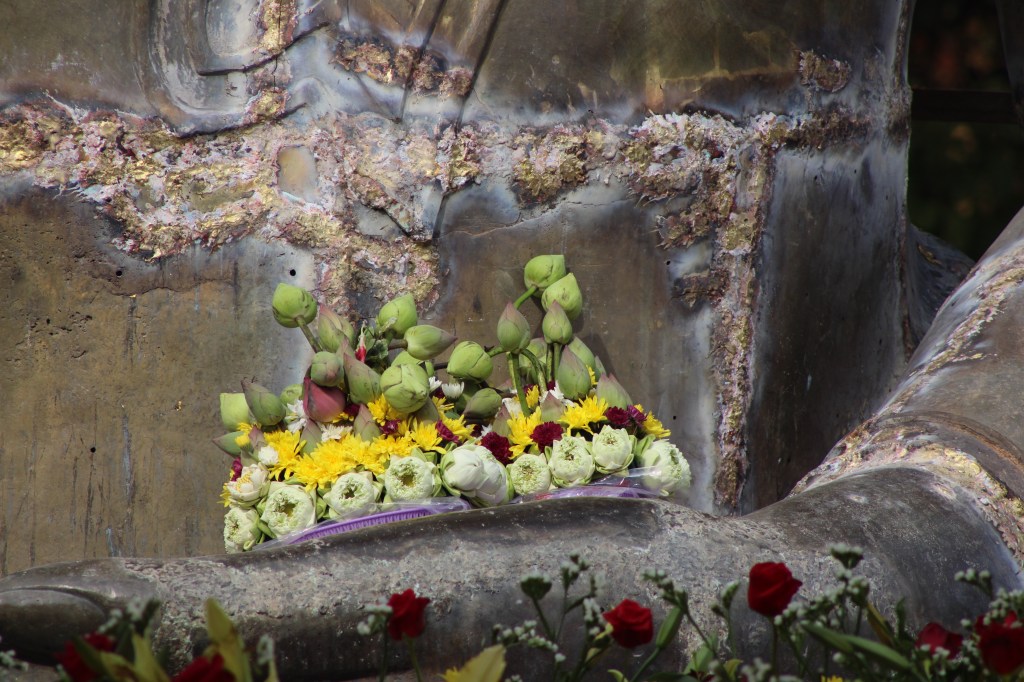
    Slow down. Take a deep breath. Prioritize. Follow through. Repeat.

    Busy is not the same as productive. Doing a lot of activities does not mean that we are actually accomplishing anything worthwhile. It is far better to do less, better than it is to do more, poorly.

    Priorities, by definition, should be limited in number. They are the essential few things which must be accomplished in order for all other things in our lives to function and progress. In order to have and follow through on true priorities, we are required to deny other tasks, and even other peoples’ priorities, a place at the top of our agenda.

    The only way to truly prioritize is to slow down and take an honest look at our lives, determining which few things, people, and goals are genuinely important to us. Anything and everything else is inessential and therefore cannot, by definition, be a priority. All too often, when it comes to prioritizing our time towards that which is most necessary, we are our own worst enemies, fearful of what will happen and what others will think of us if we do not make everything and everyone else a priority, and that is why we must take time to breathe.


    Holistic Budo: As it is in budo, so too it is in life. As it is in life, so too it is in budo.

    Robert Van Valkenburgh is co-founder of Taikyoku Mind & Body and Kogen Dojo where he teaches Taikyoku Budo and Brazilian Jiu-Jitsu.

    All photos by Robert Van Valkenburgh unless otherwise noted.

    If you found this post helpful or meaningful in some way, please feel free to Share, Comment, and Subscribe below.
    Share this:

    • Share on X (Opens in new window) X
    • Share on Facebook (Opens in new window) Facebook
    Like Loading…
    April 9, 2020
    breathe, courage, essentialism, fear, patience, priorities, prioritizing, risk, slow down, success

  • On Suffering And Healing

    Our ability to be useful, to be effective in our relationships toward a positive end, is largely contingent upon our ability to understand our own pain and suffering, and to use that understanding to help and to heal ourselves and others.

    The exact details, circumstances, and causes of our individual suffering may differ from those around us. We are are all unique and we each have unique experiences. Even the way we each experience the same or similar situations is unique to each of us individually based on our personal histories, perspectives, and values or beliefs.

    Where we are not unique, however, is in the fact that, whether caused by physical pain or illness, by loss, by hardship, or even simply by fear itself, we all experience suffering in our lives at one point or another. How we experience suffering may be unique to us as individuals, but that we have or will experience it is not. If we embrace this unfortunate fact of life instead of denying it, avoiding it, or hiding from it, we will discover that the shared universality of our suffering, instead of isolating us from one another, actually enjoins us and gives us the tools by which to better understand each other.

    Once we understand our own suffering, both its causes and effects, we begin to see others in a more compassionate light. Instead of seeing their flaws, mistakes, and perceived wrongdoings as malicious and intentional, we start to understand that they too have been hurt, are hurting, or are afraid of being hurt, and that what is expressed outwardly as anger, greed, or selfishness, is nothing more than attempted self-protection, a shield from vulnerability that likely has more to do with their avoidance of suffering than it does with us personally. In this way, self-understanding opens the door to empathy and empathy is the path to healing.


    Holistic Budo: As it is in budo, so too it is in life. As it is in life, so too it is in budo.

    Robert Van Valkenburgh is co-founder of Taikyoku Mind & Body and Kogen Dojo where he teaches Taikyoku Budo and Brazilian Jiu-Jitsu.

    All photos by Robert Van Valkenburgh unless otherwise noted.

    If you found this post helpful or meaningful in some way, please feel free to Share, Comment, and Subscribe below.

    Share this:

    • Share on X (Opens in new window) X
    • Share on Facebook (Opens in new window) Facebook
    Like Loading…
    April 8, 2020
    compassion, difficulty, effectiveness, efficacy, empathy, healing, helping, love, pain, suffering, understanding, usefulness

  • Creativity Is A Process Of Discovery And Change

    Creative outlets are not just important, but are essential in knowing who we are and what our individual point of view is.

    Art, regardless of the medium, is a process of both personal discovery and expression. Through the creative process we begin to unearth truths about ourselves that may have otherwise been left hidden to us and, through us, to others. The creative process helps us to discover about who we are, the way we view ourselves and the world around us, and how we relate to, and even want to shape and change, the world through our ideas and perspectives.

    One of the main reasons we all need a creative outlet is that it helps us to define and refine our unique points of view. It helps us to discover, explore, and express our individual opinions and tastes, as a means of contributing something new to the collective conversation. Whether our chosen creative medium is paint and canvas, pen or pencil and paper, film, an instrument, food, or the human body, the act of creation is the act of paring away that which is not us, focusing in on what is, and concentrating that into something powerful and evocative.

    Through this process of self discovery and self expression, the spirit of creativity is change. The creative process changes us and our creations change others, making us more of who we are, more of who we are meant to be, and putting into the world some part of ourselves that we hope will change others. Ideally, we start this process early in our lives, when we are young and playful, and we do not ever stop, but it is never to late to start discovering or rediscovering our creative selves.


    Holistic Budo: As it is in budo, so too it is in life. As it is in life, so too it is in budo.

    Robert Van Valkenburgh is co-founder of Taikyoku Mind & Body and Kogen Dojo where he teaches Taikyoku Budo and Brazilian Jiu-Jitsu.

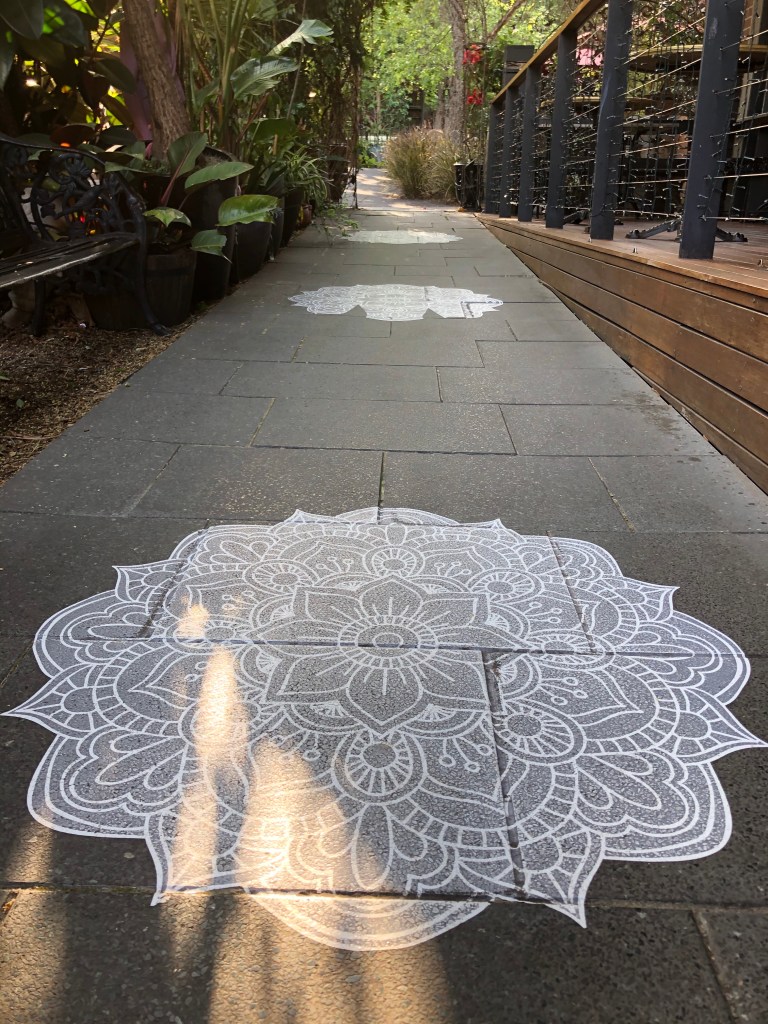
    Photo by Sidaravy Van Valkenburgh, shot in Sydney, Australia.

    If you found this post helpful or meaningful in some way, please feel free to Share, Comment, and Subscribe below.
    Share this:

    • Share on X (Opens in new window) X
    • Share on Facebook (Opens in new window) Facebook
    Like Loading…
    April 7, 2020
    art, change, cooking, creativity, dance, discovery, drawing, essential, Martial Arts, music, transformation, writing

  • The Dividing Line Between Success And Failure

    Some of the world’s greatest innovations were borne out of necessity and limited resources.

    Limitations do not have to be seen as restrictive boundaries within which we are stuck and unable to escape. With a shift in mindset, away from hopelessness and toward creative solutions, our limitations, whether they be time, tools, or resources, actually become our muse, the source from which our inspiration arises. By accepting our limitations, we give ourselves permission to harness them to our advantage instead of being bound by them to our detriment.

    When necessity demands that we act, either for our physical survival or our existential fulfillment, we must take stock of the time, tools, and resources we have at our disposal and determine how to best use these to achieve our goals. What we have may be all that we get. This may be the palette from which we must paint our masterpiece.

    In reality, the difference between a novice and an expert is not the materials one or the other has at his or her disposal, but the way that they are utilized and to what effect. The dividing line between success and failure is drawn by creativity. It is our ability to bring creative solutions to the table and to execute them in spite of our limitations, whether natural or circumstantial, that determines our usefulness in service to both our community and to our ideas themselves.


    Holistic Budo: As it is in budo, so too it is in life. As it is in life, so too it is in budo.

    Robert Van Valkenburgh is co-founder of Taikyoku Mind & Body and Kogen Dojo where he teaches Taikyoku Budo and Brazilian Jiu-Jitsu.

    All photos by Robert Van Valkenburgh unless otherwise noted.

    If you found this post helpful or meaningful in some way, please feel free to Share, Comment, and Subscribe below.

    Share this:

    • Share on X (Opens in new window) X
    • Share on Facebook (Opens in new window) Facebook
    Like Loading…
    April 6, 2020
    art, artist, boundaries, creativity, failure, limitations, palette, resources, restrictions, solutions, success, time, tools

  • Find Your Movement Practice (And Then Practice Moving)

    “If you can’t get out of your head, get into your body. Get out and move.”
    —Tim Ferriss

    We all need to feel like we are productive, that our lives have meaning and purpose. Sometimes, however, we feel trapped, like we are stuck, in a rut, or running around in circles with no direction or momentum. One of the easiest ways to overcome the feeling of aimless idleness is through a movement practice.

    While a movement practice contains exercise within it, it is generally more than simply exercise for exercise’s sake. Typically, a movement practice is made up of a variety of movements or routines that focus on range of motion, stretching, breathing, and a holistic, ie whole body, approach to the strengthening and conditioning of the muscles, bones, and connective tissues. A movement practice usually begins as an unloaded, meaning without additional weights, activity, but many movement practices, especially those focusing on so-called ‘functional fitness’ also incorporate weights, tools, or other props to assist the practitioner and/or to add difficulty or intensity over time.

    Yoga, qigong, and tai chi are well known movement practices, but some forms of dancing, martial arts, and even parkour or pilates can be considered movement practices. Like any physical activity, the first thing a person should consider when seeking out a movement practice is what his or her goals, as well as what his or her physical, space, and time limitations are, all without getting so caught up in research and reading that it turns into procrastination. It is called a movement practice, after all, and it requires both movement and practice.


    Holistic Budo: As it is in budo, so too it is in life. As it is in life, so too it is in budo.

    Robert Van Valkenburgh is co-founder of Taikyoku Mind & Body and Kogen Dojo where he teaches Taikyoku Budo and Brazilian Jiu-Jitsu.

    All photos by Robert Van Valkenburgh unless otherwise noted.

    If you found this post helpful or meaningful in some way, please feel free to Share, Comment, and Subscribe below.

    Share this:

    • Share on X (Opens in new window) X
    • Share on Facebook (Opens in new window) Facebook
    Like Loading…
    April 5, 2020
    functional fitness, mind and body, movement, movement practice, natural movement, practice, qigong, tai chi, taikyoku, yoga

Previous Page Next Page

Create a website or blog at WordPress.com

Loading Comments...

    • Subscribe Subscribed
      • Meditations on God
      • Join 270 other subscribers
      • Already have a WordPress.com account? Log in now.
      • Meditations on God
      • Subscribe Subscribed
      • Sign up
      • Log in
      • Report this content
      • View site in Reader
      • Manage subscriptions
      • Collapse this bar
    %d