Skip to content

Meditations on God

  • Robert Van Valkenburgh

  • Love Is Not Always Convenient

    Maturity is the ability to love even when it is inconvenient.
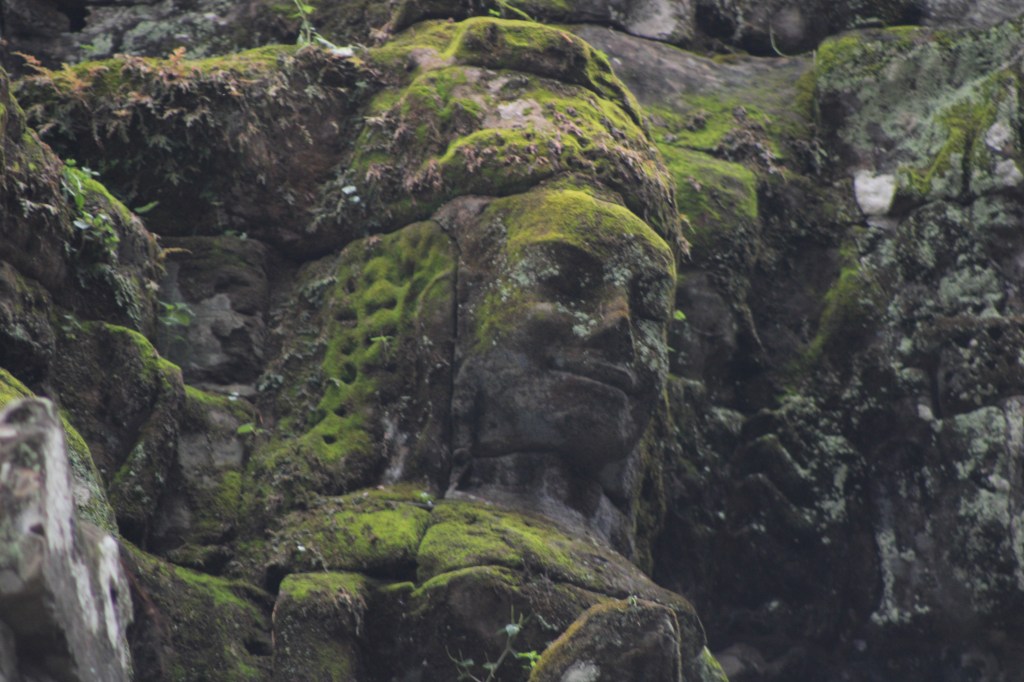
    As children, our capacity for love is directly tied to our needs and desires. We love those who care for us, who nurture us, and who feed, clothe, and play with us. When our needs or desires are threatened, we amplify or withdraw our affection in an attempt, whether conscious or unconscious, to manipulate our elders, siblings, or peers into giving us the things we want.

    This is not mature behavior, however. In fact, using emotional leverage as a tool for getting what we want or avoiding what we do not want is the essence of childishness. As children, we lack the cognitive, emotional, and verbal skills necessary to express our needs and wants clearly, intelligently, and rationally, but, ideally, as we get older, we are taught both explicitly and implicitly by our elders, siblings, and peers that emotional manipulation is not only immature, but is also unacceptable.

    Maturity is measured in our ability to love consistently and unwaveringly, regardless of whether or not we get what we think we want or need from the object of our affection. If we are emotionally mature, our love is not selfish, is not conditional upon reciprocation, and is not tied to behavior, convenience, or personal benefit, but is, instead, the deep, sincere, and consistent desire for those we care about to have what is best for them, even when it is not directly beneficial to us.

    If we are honest with ourselves, however, we know that emotional maturity is both a process and even a transient state, but we also know that it is an ideal worth striving for.


    Holistic Budo: As it is in budo, so too it is in life. As it is in life, so too it is in budo.

    Robert Van Valkenburgh is co-founder of Taikyoku Mind & Body and Kogen Dojo where he teaches Taikyoku Budo and Brazilian Jiu-Jitsu.

    All photos by Robert Van Valkenburgh unless otherwise noted.

    Follow Robert Van Valkenburgh and Holistic Budo on Facebook, Instagram, Twitter, Tumblr, and LinkedIn.

    If you found this post helpful or meaningful in some way, please feel free to Share, Comment, and Subscribe below.
    Share this:

    • Share on X (Opens in new window) X
    • Share on Facebook (Opens in new window) Facebook
    Like Loading…
    June 18, 2020
    childishness, children, consistency, emotional maturity, emotions, family, generosity, growing up, love, maturity, parenting, relationships

  • Our Occupations Are For Service

    We must find a balance between the ways in which we serve our communities and the ways in which we serve our hearts’ callings.

    When people are challenged with the idea that they should do what they love, many automatically assume this necessarily refers to their occupation. This is a patently false assumption, however. Doing what we love is more of a private, personal responsibility to ourselves than it is an occupational goal per se.

    Our occupations are the means by which we serve the needs of our communities in exchange for sustenance, usually in the form of money that we use to feed, house, and clothe ourselves and our families. In order for others to be willing to pay us for our skills, knowledge, or expertise, they must first need those things from us more than they need their money.

    The work we are paid for revolves more around the needs of others than it does around our own personal desires. Simply put, if there is no public need for the work we do, we do not have a job. For this reason, our occupations may not in fact have anything to do with our personal happiness, fulfillment, or enjoyment.

    Doing what we love, then, is a personal matter. It means that we are responsible for finding a balance between the needs of the community that pays us for our service while also serving the calling of our hearts in a way that gives our lives meaning, purpose, and fulfillment. If our service to both our communities and our heart’s calling happen to overlap, we are fortunate indeed, but, if they do not, we should not mourn.


    Holistic Budo: As it is in budo, so too it is in life. As it is in life, so too it is in budo.

    Robert Van Valkenburgh is co-founder of Taikyoku Mind & Body and Kogen Dojo where he teaches Taikyoku Budo and Brazilian Jiu-Jitsu.

    All photos by Robert Van Valkenburgh unless otherwise noted.

    Follow Robert Van Valkenburgh and Holistic Budo on Facebook, Instagram, Twitter, Tumblr, and LinkedIn.

    If you found this post helpful or meaningful in some way, please feel free to Share, Comment, and Subscribe below.

    Share this:

    • Share on X (Opens in new window) X
    • Share on Facebook (Opens in new window) Facebook
    Like Loading…
    June 17, 2020
    achievement, calling, career, community, goals, jobs, life, love, occupation, passion, priorities, purpose, service, stoic, stoicism, success, work

  • Creating That Which We Love

    “What audiences like is something good. So your real obligation [as an] artist is to make a thing you really love.”
    —T-Bone Burnett

    If we are not happy with the creative work we are doing, no matter how large our audience may be, it will ultimately prove to be unsustainable. That is because, even if what we create sustains us financially, if it does not actually please us, it is nothing more than a job.

    There are already an infinite number jobs in the world we do not want to do or will not enjoy doing. There is simply no justifiable need for us to create a new one for ourselves. Consciously or unconsciously, we know this, and, if we continue to do creative work we do not enjoy, this knowledge will eat at us until we either quit or it kills us from the inside out.

    Even less than we do, the world at large does not need more creative work that we do not enjoy. The world needs to see, to feel, and to experience more joy, more passion, and more active engagement, and, if the creative work we do does not come from or lead us to that place, it is adding to the problem.

    This does not mean we must love everything we create, but it does mean that we should try to create that which we love from a place of love. If we do this consistently enough for ourselves and we share what we create with the world, our audience will find us and, more importantly, they will find us loving what we are doing.


    Holistic Budo: As it is in budo, so too it is in life. As it is in life, so too it is in budo.

    Robert Van Valkenburgh is co-founder of Taikyoku Mind & Body and Kogen Dojo where he teaches Taikyoku Budo and Brazilian Jiu-Jitsu.

    All photos by Robert Van Valkenburgh unless otherwise noted.

    Follow Robert Van Valkenburgh and Holistic Budo on Facebook, Instagram, Twitter, Tumblr, and LinkedIn.

    If you found this post helpful or meaningful in some way, please feel free to Share, Comment, and Subscribe below.

    Share this:

    • Share on X (Opens in new window) X
    • Share on Facebook (Opens in new window) Facebook
    Like Loading…
    June 16, 2020
    1000 true fans, audience, broken record, community, creation, creative, creative work, creativity, joy, malcolm gladwell, passion, rick rubin, t-bone burnett, work

  • To Fight For Peace

    We all need to fight for what we believe in, but what some of us believe in is not fighting.

    People are complex creatures full of inconsistencies and contradictions. Quite often, our actions do not align with what we claim to believe or value. Sometimes, our behaviors even directly contradict the very principles we espouse.

    One such contradiction is the idea of fighting for peace. This may be the ultimate human paradox. In fact, literally millions of people have died over the years in an effort to live more peacefully, whether through acts of self-initiated violence, self-defense in the face of violence, violence as a means of protesting real or perceived injustices, or as innocent bystanders caught up in violence.

    The fact is that we live in a violent world. Nature itself is violent. That we do not have to constantly fight for our lives against the elements, against predatory creatures, and against enemies or warring tribes is truly a modern, perhaps even regional, luxury.

    While unrealistic to believe that we can live without struggle, challenges, conflict, or difficulty, we can choose to live without fighting and without violence unless and until someone forces our hand to the point where we must defend ourselves.

    Even then, however, we must have prepared for violence in some way if we are to survive it, overcome it, and even transcend it. The secret is to find a means by which to deal with violence in a way that does not also violate our integrity, turning us into that which we are philosophically or spiritually opposed to.


    Holistic Budo: As it is in budo, so too it is in life. As it is in life, so too it is in budo.

    Robert Van Valkenburgh is co-founder of Taikyoku Mind & Body and Kogen Dojo where he teaches Taikyoku Budo and Brazilian Jiu-Jitsu.

    All photos by Robert Van Valkenburgh unless otherwise noted.

    Follow Robert Van Valkenburgh and Holistic Budo on Facebook, Instagram, Twitter, Tumblr, and LinkedIn.

    If you found this post helpful or meaningful in some way, please feel free to Share, Comment, and Subscribe below.

    Share this:

    • Share on X (Opens in new window) X
    • Share on Facebook (Opens in new window) Facebook
    Like Loading…
    June 15, 2020
    conflict, conflict resolution, deescalation, integrity, Martial Arts, peace, self defense, stoicism, the art of war, violence, war

  • The Balance Of Give And Take

    Some people are natural givers and others are natural takers, but both extremes can be equally destructive if not properly balanced with their opposite.

    When we describe someone as a taker, a person who is uncompromisingly selfish and who demands more of a relationship than he or she is willing to give back to it, there is often a negative connotation attached to the image we conjure of this person. Conversely, we often think of a giver, someone who is all too willing to compromise for others and who appears to consistently give more than he or she takes from a relationship, as an inherently positive archetype.

    In reality, however, emotionally, psychologically, and spiritually healthy people are some balanced combination of both of these extremes.

    The reasons we dislike, distrust, and even despise selfish people are somewhat obvious when we consider the fact that humans are inherently tribal creatures. A person who takes more than he or she gives back to the tribe is essentially an enemy to the tribe’s overall health and well-being, like a cancer that must be cut out of the body before it metastasizes.

    An extreme giver, on the other hand, in spite of the way we usually think about such people, is actually just as detrimental to the tribe as the extreme taker. A person who gives away more of themselves and their resources than they gather or harvest, who overextends themselves and the group, making everyone more vulnerable, is also an enemy to the tribe, like an open wound that must be sealed or cauterized so that the body does get infected or bleed out.

    The tribe, in order for it to survive and thrive, must function as a cohesive unit wherein, ideally, each member never takes or demands more than they give and, also, wherein each member never gives away or offers up more than they gather or harvest. In order for the tribe to be at its best, it and its members, must be in balance.


    Holistic Budo: As it is in budo, so too it is in life. As it is in life, so too it is in budo.

    Robert Van Valkenburgh is co-founder of Taikyoku Mind & Body and Kogen Dojo where he teaches Taikyoku Budo and Brazilian Jiu-Jitsu.

    All photos by Robert Van Valkenburgh unless otherwise noted.

    Follow Robert Van Valkenburgh and Holistic Budo on Facebook, Instagram, Twitter, Tumblr, and LinkedIn.

    If you found this post helpful or meaningful in some way, please feel free to Share, Comment, and Subscribe below.

    Share this:

    • Share on X (Opens in new window) X
    • Share on Facebook (Opens in new window) Facebook
    Like Loading…
    June 14, 2020
    altruism, balance, community, family, friendship, giving, life, selfishness, survival, taking, thriving, tribe

Previous Page Next Page

Create a website or blog at WordPress.com

Loading Comments...

    • Subscribe Subscribed
      • Meditations on God
      • Join 270 other subscribers
      • Already have a WordPress.com account? Log in now.
      • Meditations on God
      • Subscribe Subscribed
      • Sign up
      • Log in
      • Report this content
      • View site in Reader
      • Manage subscriptions
      • Collapse this bar
    %d