Skip to content

Meditations on God

  • Robert Van Valkenburgh

  • Truth in Art and Grappling

    “It is only brave before you do it.”

    —Debbie Millman
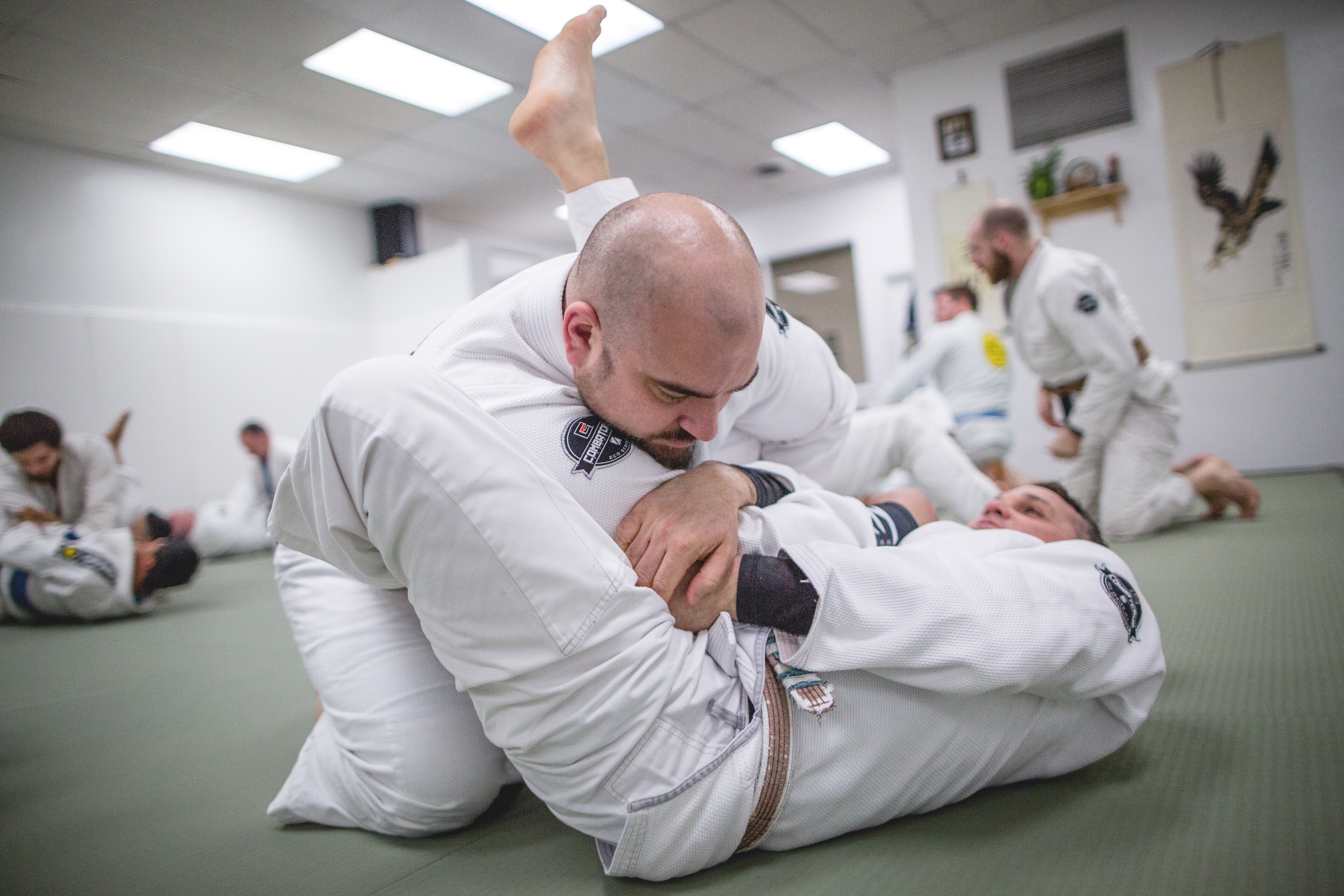
    Robert Van Valkenburgh being caught in an armbar by Ike Haertel while attempting to pass Ike’s guard. Photo by Mike Oswald Photogrpahy

    Art, creative work shared with others, is a lot like grappling in that it takes risk to attain any kind of reward. In order to be successful, you must put yourself on the line. You must invest in losing, a lot. You must invest in being wrong, a lot. You must test your best ideas against others, just to find out that they need more work, that you need more work.

    In both art and grappling, there is no separation between you and the part of yourself that you put into the world. There is no hiding. There is not holding back. You either open up or you don’t and, if you don’t open up, if you don’t take risks, you may be showing up, but you aren’t really showing up and it isn’t enough.

    There is no lying in art or grappling. Your truth will be exposed. You will be exposed. If you do not like what you find when your truth is in the open, you can deny it. You can withdraw. You can quit. If you do, you will never know what is on the other side of that which scares you. You will never know who you could have been if you were willing to truly face yourself, your weakness, your fragility, and worse, your strength.

    Your fear is only an excuse to hide from your power.

    “As in life, so too it is in budo. As in budo, so too it is in life.”

    -Robert Van Valkenburgh is co-founder of Taikyoku Mind & Body and Kogen Dojo where he teaches Taikyoku Budo and Brazilian Jiu-Jitsu
    39.073857 -76.547111

    Share this:

    • Share on X (Opens in new window) X
    • Share on Facebook (Opens in new window) Facebook
    Like Loading…
    July 9, 2019
    art, bjj, brazilian jiu-jitsu, budo, creativity, fear, kogen dojo, life, Martial Arts, power, risk, submission grappling

  • Three Archetypes for Better Randori

    In competitive grappling, such as Brazilian jiu-jitsu (BJJ), judo, et al, there are essentially three different ways that one can approach randori (free sparring), depending upon our personality, training goals, or partner. We can train defensively, offensively, or educationally. That is, we can approach randori like the tortoise, the hare, and the scientist.

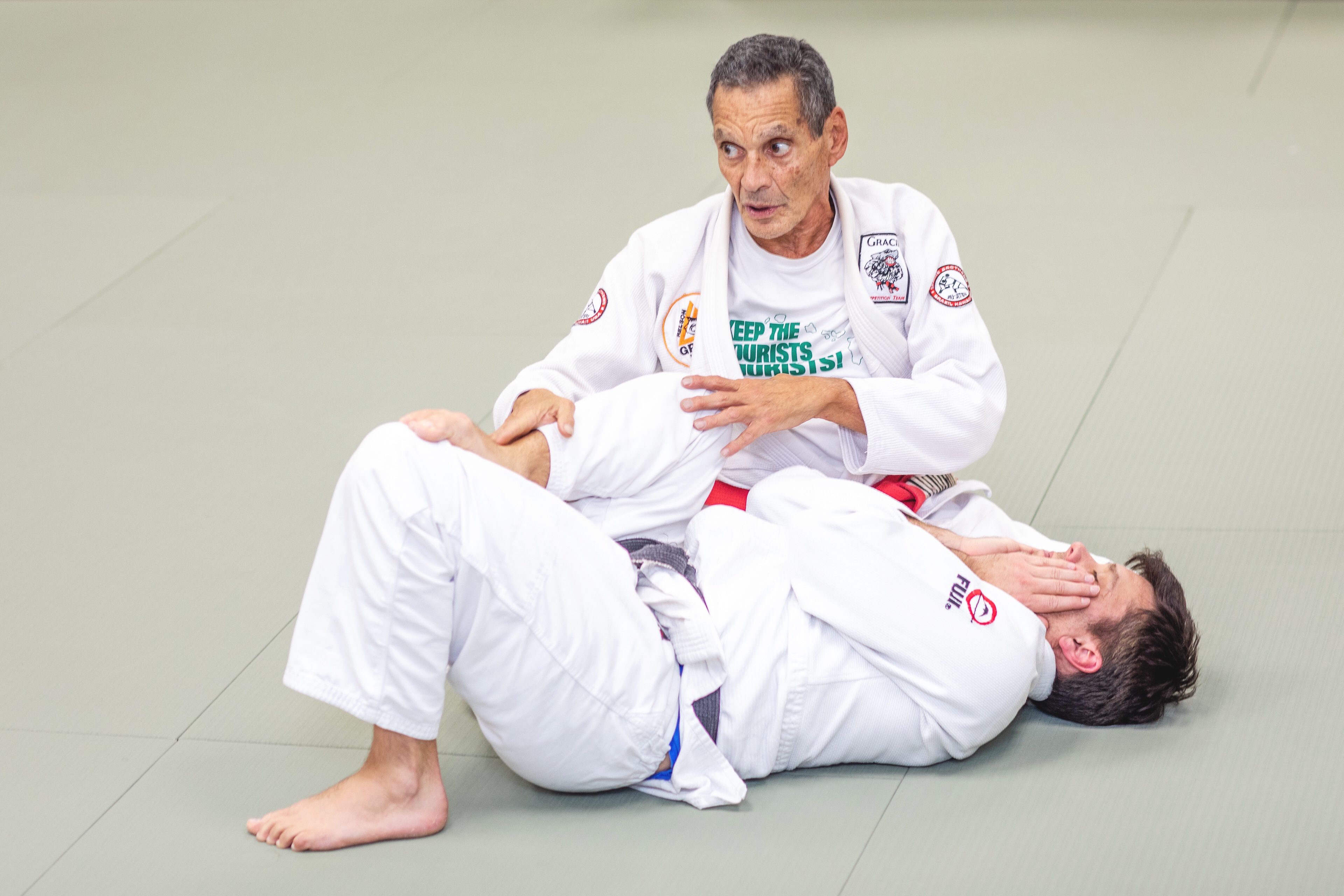
    Relson Gracie teaching a his ‘Tortoise’ approach to bottom side control at Kogen Dojo. Photo by Mike Oswald Photography

    The tortoise approach to randori is one wherein the practitioner attempts to shut down all of his or her opponent’s attacks while patiently waiting for an opening, the perfect opportunity to apply his or her own attack. This approach is conservative. It is slow, steady, and low risk, but also requires a lot of patience and time. The goal is unrelenting precision and pressure, constantly driving forward with the armor of perfect defense.

    A less conservative, higher risk approach to sparring is that of the hare. The hare attacks any and all openings in the opponent’s defenses. While this offensive approach also requires the practitioner to be more open and vulnerable him or herself, it also puts the opponent in a perpetual state of defense, therefore, making counters risky. The goal is controlled chaos that is both frightening and unpredictable, where every move is a potential finish.

    The scientist approach to randori treats each sparring session and partner like a fact-finding mission. This is a means by which to practice one’s techniques, strategies, and tactics against a variety of opponents, even if it means losing. In fact, in this approach, losing is simply more information. The scientist is constantly gathering data, testing and retesting until reliable conclusions can be made.

    Within each of us lies the potential to manifest any and all of these archetypes, even in a single sparring session. They are all teachers, none better than the other. Each has its lessons to offer. Next time you slap hands and bump fists, ask yourself who your teacher will be this round — the tortoise, the hare, or the scientist.

    “As in life, so too it is in budo. As in budo, so too it is in life.”

    -Robert Van Valkenburgh is co-founder of Taikyoku Mind & Body and Kogen Dojo where he teaches Taikyoku Budo and Brazilian Jiu-Jitsu
    39.073857 -76.547111

    Share this:

    • Share on X (Opens in new window) X
    • Share on Facebook (Opens in new window) Facebook
    Like Loading…
    July 8, 2019
    bjj, brazilian jiu-jitsu, budo, gracie jiu-jitsu, grappling, judo, kogen dojo, life, Martial Arts, randori, scientific method, sparring, submission grappling, tortoise and hare

  • Now Is The Time To Do Good Work

    Do good work, practice, and be patient.

    Do not wait for the timing to be right to do good work. Do good work until the timing is right.

    Everything prior to the perfect moment is simply practice and preparation for that moment.

    If you wait for the perfect moment to arrive, you and your skills will not be ready to take advantage of it and the moment will pass you by.

    “As in life, so too it is in budo. As in budo, so too it is in life.”

    -Robert Van Valkenburgh is co-founder of Taikyoku Mind & Body and Kogen Dojo where he teaches Taikyoku Budo and Brazilian Jiu-Jitsu

    Share this:

    • Share on X (Opens in new window) X
    • Share on Facebook (Opens in new window) Facebook
    Like Loading…
    July 8, 2019
    budo, good work, life, patience, practice, timing

  • Our Gifts Are Found Outside The Lines

    “Traditional schooling first failed us when we were taught to stay between the lines and finish our work before [we] play.”

    —Scott Belsky

    “A Boat” by Ana

    The question of creativity is not necessarily how to break the rules, per se. Some rules, the laws of nature, for example, by definition, cannot really be broken. The true question of creativity is how to think about these rules in a way that transcends the restrictions we are taught to think that they place on us.

    When we are young, we have no concept of these restrictions. Anything we can imagine is possible. In fact, to our minds, the very act of imagining something makes it real. We have not yet learned that the world and our imaginations are separate. We have not yet learned to be practical and to compromise our dreams for the sake of what is and must be.

    Part of maturing as a human being is growing out of the perpetual fantasy world that is childhood, learning the rules and adapting to them. Our parents teach us rules so that we can be safe and make good decisions. In school, we are graded on how well we can memorize, regurgitate, and follow rules. At work, we are paid to follow rules or to enforce them. All of this moves us forward in life and makes the world function, but it is not what we are here for.

    We each have a unique gift to offer the world, but that gift is not found within the rules and it is not found in work. It is found by coloring outside of the lines. It is found in imagination, play, and risk. We must come full circle and learn to be as children again, to fantasize, to make a mess, and to believe that the impossible is not only possible, but that it is up to us to make it real.

    “As in life, so too it is in budo. As in budo, so too it is in life.”

    -Robert Van Valkenburgh is co-founder of Taikyoku Mind & Body and Kogen Dojo where he teaches Taikyoku Budo and Brazilian Jiu-Jitsu

    Share this:

    • Share on X (Opens in new window) X
    • Share on Facebook (Opens in new window) Facebook
    Like Loading…
    July 7, 2019
    art, budo, creation, creative, creativity, Inspiration, life, meaning, our gift, purpose, scott belsky

  • Reduce Friction (Instead of Cutting Costs)

    “There is a limit to how much you can cut, but no limit to how much you can earn.”

    —Ramit Sethi

    Wooden swords (bokken) made by Trevor Higgins for Kogen Dojo, a project that required him to invest money in better equipment in order to streamline his process for greater output without sacrificing quality and morale.

    The problem with cutting costs as a business model is that, once you have reduced your expenses and you are still not as profitable as you need or want to be, the only thing left to cut is morale. Asking people to do more with less is not a sustainable business model, especially if you rely on those people to also make your company profitable.

    If the people selling and providing your services are also the people whose resources you have reduced, eventually their sales and performance will also diminish. If your response to this drop in sales and performance is to cut out more resources, in this case personnel, you are in a race to the bottom and, paraphrasing Seth Godin, the only thing worse than losing a race to the bottom, is winning it.

    The path to success is a reduction in friction, not expenses. Cut the things out of your business that are slowing down your earners and keeping them from doing their job freely. If you reduce the obstacles in their path, they will perform better and will earn more money for the company and themselves.

    Money buys you the freedom to streamline your processes and make them more efficient, not to cut unnecessary costs, even if that is a byproduct, but to reduce friction so that your team has more freedom to drive the business forward. They will be happier, your customers will be happier, and the company will be more profitable. Profit is the result of a team that wants to and is allowed to be successful.

    Unfortunately, this puts you, the leader, in a position that requires you to actually have to lead people, instead of managing numbers.

    “As in life, so too it is in budo. As in budo, so too it is in life.”

    -Robert Van Valkenburgh is co-founder of Taikyoku Mind & Body and Kogen Dojo where he teaches Taikyoku Budo and Brazilian Jiu-Jitsu

    Share this:

    • Share on X (Opens in new window) X
    • Share on Facebook (Opens in new window) Facebook
    Like Loading…
    July 5, 2019
    budo, business, cutting costs, efficiency, friction, leadership, life, morale, profit, race to the bottom, ramit sethi, sales, seth godin, streamlining

Previous Page Next Page

Create a website or blog at WordPress.com

Loading Comments...

    • Subscribe Subscribed
      • Meditations on God
      • Join 270 other subscribers
      • Already have a WordPress.com account? Log in now.
      • Meditations on God
      • Subscribe Subscribed
      • Sign up
      • Log in
      • Report this content
      • View site in Reader
      • Manage subscriptions
      • Collapse this bar
    %d