We never know when our small act of kindness will change someone else’s entire life for the better.
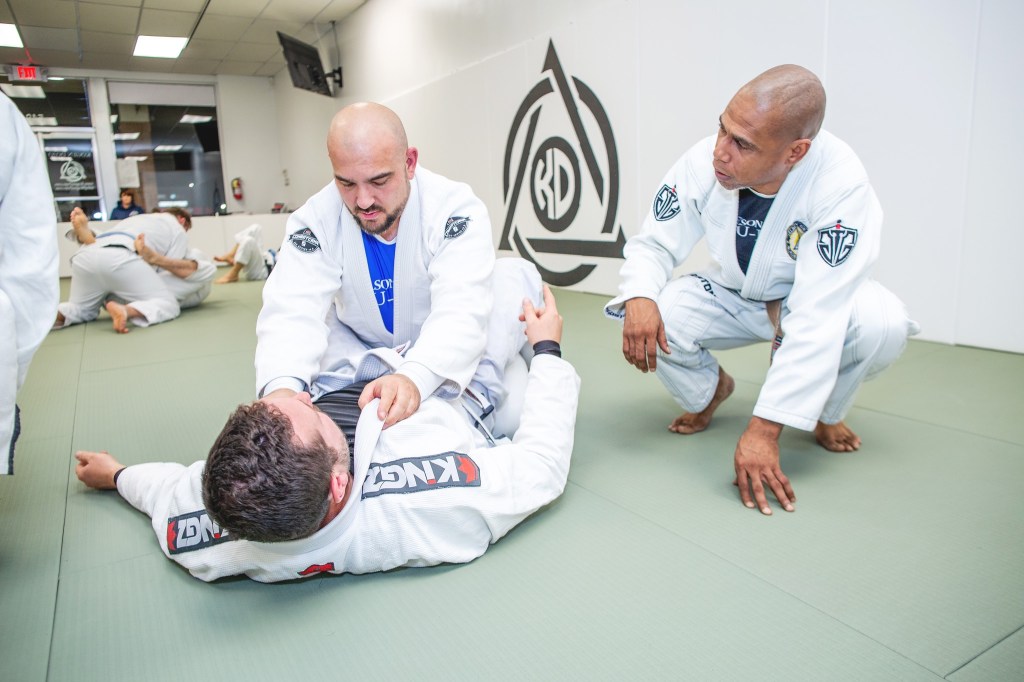
When I first started Brazilian jiu-jitsu (BJJ) in early 2013, I had already done many years of martial art training, specifically traditional Korean hapkido. I loved hapkido and still do for what it is. Not only was it a lot of fun learning all kinds of joint locks and throws, but the people I met through our small dojang (Korean training hall) were and are still some of the finest folks I have ever known.
Hapkido did not really prepare me for BJJ, however. I was a fish out of water on the ground and it was like learning a totally new language of body movement, distance management, and physical interaction with another person and with all new stresses. It was a steep learning curve and I struggled. In fact, I still struggle.
In my third BJJ class, we were practicing guard passes, a totally new skill for me, and, at some point, I cannot really remember how or why, a blue belt came up to me and introduced himself, saying, “My name is Dwayne, but everyone calls me Bowie.” Bowie proceeded to show me a guard pass, a stack pass to a bread-cutter (aka paper-cutter) choke, that he had had a lot of success and that he thought would work well for me. Four years later, Bowie, my brother Matt, and myself opened up our own martial art academy, Kogen Dojo, and seven years later, I still use the guard pass and choke that Bowie taught me.
Holistic Budo: As it is in budo, so too it is in life. As it is in life, so too it is in budo.
Robert Van Valkenburgh is co-founder of Taikyoku Mind & Body and Kogen Dojo where he teaches Taikyoku Budo and Brazilian Jiu-Jitsu.
Photo of Dwayne Bowie and Robert Van Valkenburgh at Kogen Dojo by Mike Oswald Photography
If you found this post helpful or meaningful in some way, please feel free to Share, Comment, and Subscribe below.
 Within us, we each have a different capacity for kindness. There is a maximum degree to which we can focus our mental-emotional energy on the well-being of others before we overextend ourselves and burn out. Being aware of this capacity, and its edges, is an essential aspect of self-awareness.
We owe it to ourselves, and those we are meant to serve, to discover the full depth of this capacity. To live beneath this capacity is to do the world and ourselves a grave injustice. It means not living up to our potential to be loving, helpful, and useful.
Living beyond this capacity, however, is just as tragic as living beneath it. Living beyond our capacity for kindness means that we give so much of ourselves to others that we have nothing left, nothing left for ourselves or for those who may matter most. When we cross our own boundaries, extending ourselves beyond the limits of what is healthy, we are no longer able to be kind anyway, and it is all for naught.
Within us, we each have a different capacity for kindness. There is a maximum degree to which we can focus our mental-emotional energy on the well-being of others before we overextend ourselves and burn out. Being aware of this capacity, and its edges, is an essential aspect of self-awareness.
We owe it to ourselves, and those we are meant to serve, to discover the full depth of this capacity. To live beneath this capacity is to do the world and ourselves a grave injustice. It means not living up to our potential to be loving, helpful, and useful.
Living beyond this capacity, however, is just as tragic as living beneath it. Living beyond our capacity for kindness means that we give so much of ourselves to others that we have nothing left, nothing left for ourselves or for those who may matter most. When we cross our own boundaries, extending ourselves beyond the limits of what is healthy, we are no longer able to be kind anyway, and it is all for naught.

 Meditations on God