If we want to know what works and what does not, if we want to know what matters and makes the most difference in our lives, we must first begin with some degree of consistency.
By establishing a consistent baseline of values, principles, and behaviors, it becomes much easier to determine the causes of our success or failure.
Consistency gives us the ability to add or subtract new ideas, new input, and new actions into our lives in a way that allows us to test their affect on us, on the way we feel, on the way we perform, and on the way we interact with others.
By starting with consistent controls, we can add or subtract variables to or from our lives and produce some relatively reliable data points with regards to efficacy and outcome.
The easiest way to do this is by first with limitations, restrictions, and boundaries on the aspects of our lives we wish to examine and improve.
In other words, if we want to get down to the causes and conditions of our success or failure, we must remove that which is nonessential and then add things back slowly and deliberately.
This is true whether we are talking about diet, exercise, productivity, or even creativity.
By first eliminating all that is not essential from our lives, we are then better able to determine for ourselves what truly matters or does not, what is necessary or is not, and what adds benefit or value to our lives or what causes undesirable negative consequences.
Holistic Budo: As it is in budo, so too it is in life. As it is in life, so too it is in budo.
Robert Van Valkenburgh is co-founder of Taikyoku Mind & Bodyand Kogen Dojo where he teaches Taikyoku Budo and Brazilian Jiu-Jitsu.
All photos by Robert Van Valkenburgh unless otherwise noted.
“If we can play together, then we can live together.“ —Cas Holman, ‘Abstract: The Art of Design’
As children, play is our primary learning mechanism, both as a solo and a group activity. Play is how we learn to move, to experiment, and to socialize. As we get older, many of us seem to forget the importance of play as a gateway to personal and creative growth, stress relief, and interpersonal connectivity, but, in reality, we never stop needing it.
As the years go on, we take on, or are given, more and more responsibilities. The pressure of these responsibilities often takes precedence over our desire or our ability to simply let go, to have fun, to enjoy ourselves in the innocence, purity, and joyfulness that is play. On top of this, we get distracted and drawn in by outside forces telling us what play should look like as adults, that it should be organized, materialistic, or even chemically aided, but the reality is that play is whatever we want it to be as long as it is both fun and physical.
Play is a physically, emotionally, and psychologically, immersive, expressive, and freeing experience unlike anything else available to us as humans. It is an outlet for our bodies and our minds to express themselves without fear, preconception, or expectation, and it is also a source of input through which we learn and grow as individuals and as members of a tribe. Regardless of our age, gender, or social status, play is an essential and necessary aspect of human existence that taps into our primal natures as physical, creative beings and also as social animals.
Holistic Budo: As it is in budo, so too it is in life. As it is in life, so too it is in budo.
Robert Van Valkenburgh is co-founder of Taikyoku Mind & Bodyand Kogen Dojo where he teaches Taikyoku Budo and Brazilian Jiu-Jitsu.
All photos by Robert Van Valkenburgh unless otherwise noted.
Creative outlets are not just important, but are essential in knowing who we are and what our individual point of view is.
Art, regardless of the medium, is a process of both personal discovery and expression. Through the creative process we begin to unearth truths about ourselves that may have otherwise been left hidden to us and, through us, to others. The creative process helps us to discover about who we are, the way we view ourselves and the world around us, and how we relate to, and even want to shape and change, the world through our ideas and perspectives.
One of the main reasons we all need a creative outlet is that it helps us to define and refine our unique points of view. It helps us to discover, explore, and express our individual opinions and tastes, as a means of contributing something new to the collective conversation. Whether our chosen creative medium is paint and canvas, pen or pencil and paper, film, an instrument, food, or the human body, the act of creation is the act of paring away that which is not us, focusing in on what is, and concentrating that into something powerful and evocative.
Through this process of self discovery and self expression, the spirit of creativity is change. The creative process changes us and our creations change others, making us more of who we are, more of who we are meant to be, and putting into the world some part of ourselves that we hope will change others. Ideally, we start this process early in our lives, when we are young and playful, and we do not ever stop, but it is never to late to start discovering or rediscovering our creative selves.
Holistic Budo: As it is in budo, so too it is in life. As it is in life, so too it is in budo.
Robert Van Valkenburgh is co-founder of Taikyoku Mind & Body and Kogen Dojo where he teaches Taikyoku Budo and Brazilian Jiu-Jitsu.
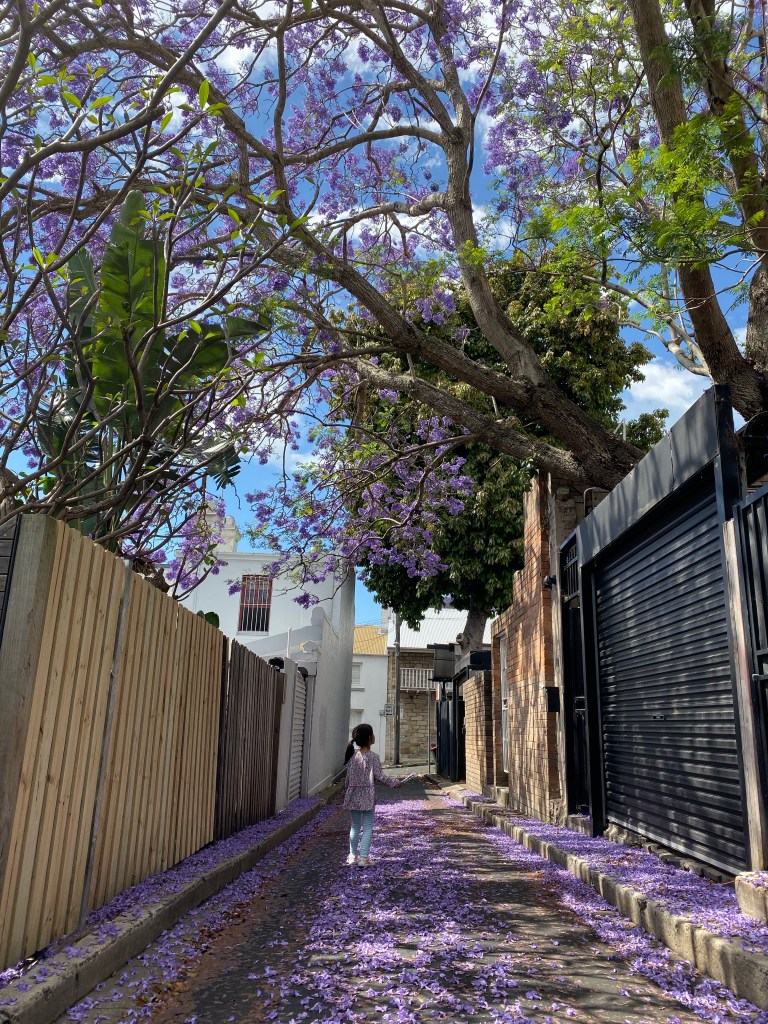
Photo by Sidaravy Van Valkenburgh, shot in Sydney, Australia.
If you found this post helpful or meaningful in some way, please feel free to Share, Comment, and Subscribe below.
“If you don’t prioritize your life, someone else will.” —Greg McKeown from ‘Essentialism: The Disciplined Pursuit of Less’
In times of confusion and difficulty, often the only things we have to fall back on are our principles, our beliefs, and those things we hold to be most essential in our lives. While it is in times of trial and hardship that these become most apparent, it is in the good times, in the times of plenty, when our options are many, that we should contemplate and prioritize what is most important to us lest we find ourselves distracted by choices and possibilities unable to decipher what is essential from what is not.
When things are going well, we should always take a moment to step back and ask ourselves what of the things we have now we can live without. If we can learn to do this during the good times, doing so during the bad times will not be as difficult. We must all know for ourselves what is essential to our survival, our well-being, and our quality of life versus what is simply desirable and pleasurable.
By focusing on what matters most to us, even when we have everything, we will have more clarity when we experience loss. Without knowing this truth about our lives, it may be determined for us at some point by misfortune, unforeseen circumstances, or other people’s choices. It is infinitely better to choose to live with less when we can than to not know how to live with less when we must.
Holistic Budo: As it is in budo, so too it is in life. As it is in life, so too it is in budo.
Robert Van Valkenburgh is co-founder of Taikyoku Mind & Body and Kogen Dojo where he teaches Taikyoku Budo and Brazilian Jiu-Jitsu.
All photos by Robert Van Valkenburgh (artist unknown, unless otherwise noted).
If you found this post helpful or meaningful in some way, please feel free to Share, Comment, and Subscribe below.


 Meditations on God