Skip to content

Meditations on God

  • Robert Van Valkenburgh

  • A Palette Is Not A Painting

    If you don’t like the palette you have been given, create your own, but then make something with it.
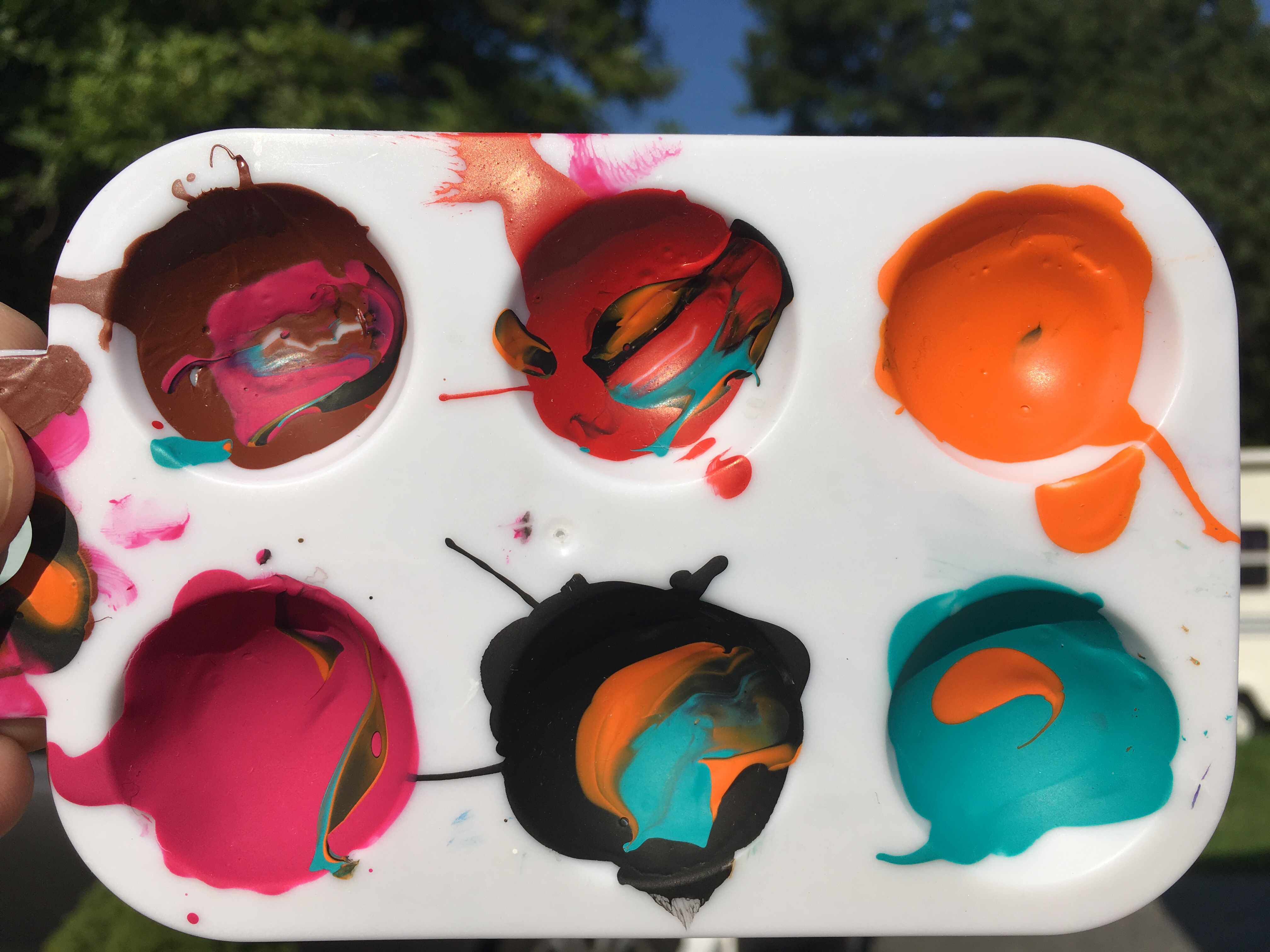
    Too often we find ourselves dissatisfied with what we have, insisting that if we only had more or if we only had something different we would be happy. The problem is that, if we actually get the thing(s) we are pining over, more often than not, we are still left dissatisfied and wanting something more or something different.

    Consuming or collecting, except in specialized hobbies, are not ends in and of themselves. A musician who has mastered a multitude of skillful scales, chord changes, and riffs must, at some point, put them together if he or she is to actually have a song. A martial artist may have dozens or hundreds of techniques in his or her arsenal, but, without sparring or competition, they may never come together in a useful way. Likewise, an artist’s palette means nothing if he or she does not actually paint with it.

    At some point, if we are ever to wrest satisfaction or contentment out of this life, we must take what we have and actually do something. If we want to break the cycle of emptiness, collecting and consuming simply to find more dissatisfaction, we have to stop seeking, even if for a moment, and create something. Then, if we wish to actually make a change in our life and the world around us, which, by the way is where joy and meaning are found, we must share it.

    We must be prepared, however. What we make may not be good enough… yet. The secret is to keep creating and keep sharing until it is. We must become masters of our palettes, and we must be generous with our work until, one drop at a time, our unique contributions begins to change the world around us. As this takes place, we may find that it was never really about the palette anyway.

    “As in life, so too it is in budo. As in budo, so too it is in life.”

    -Robert Van Valkenburgh is co-founder of Taikyoku Mind & Body, Severna Park’s Holistic Chamber of Commerce, and Kogen Dojo where he teaches Taikyoku Budo and Brazilian Jiu-Jitsu
    Share this:

    • Share on X (Opens in new window) X
    • Share on Facebook (Opens in new window) Facebook
    Like Loading…
    August 13, 2019
    art, artist, create something, creation, creative, creativity, generosity, Inspiration, make art, make change, Martial Arts, music, painting, palette

  • Thoughtfulness Precedes Action

    A good technician is a thoughtful observer first, a physical mechanic second.

    When I first started repairing machines for a living, I was taught that there is a difference between a part changer and a technician. A part changer, like the name suggests, changes parts until the symptoms of the problem go away. A technician, on the other hand, replaces only the correct parts because he or she did the necessary troubleshooting to discover and address the root cause of the problem. The goal is to become a technician, not to be a part changer.

    Both the part changer and the technician must do the physical work of replacing damaged or malfunctioning parts. The difference is that the part changer starts with this step, while the technician does this last, after the real work, the troubleshooting, has been done. Sometimes parts must be installed in order to troubleshoot, but, while this is the part changer’s whole process, it is only part of the technician’s process.

    The technician begins by listening, asking questions, observing, and then thinking about the problem. Only once he or she understands the problem and traces out its root cause(s), does the technician begin actually changing parts, the right parts. He or she takes the time to test, retest, and, most importantly, to think through the trouble, so that he or she is clear as to what will fix the main issue and its related symptoms.

    Troubleshooting a problem requires an understanding of, not only the system within which the problem exists and the way that the individual components of the system work together, but also the ability to think abstractly and logically about the problem. The best technicians are thoughtful before they are physical. They know that the more they think about a problem in the beginning, the less work they will actually have to do. Intelligence is efficiency.

    “As in life, so too it is in budo. As in budo, so too it is in life.”

    -Robert Van Valkenburgh is co-founder of Taikyoku Mind & Body, Severna Park’s Holistic Chamber of Commerce, and Kogen Dojo where he teaches Taikyoku Budo and Brazilian Jiu-Jitsu

    Share this:

    • Share on X (Opens in new window) X
    • Share on Facebook (Opens in new window) Facebook
    Like Loading…
    August 12, 2019
    listening, observer, observing, problem solving, problems, repairs, root causes, technician, thinking, thoughtfulness, troubleshooting, understanding

  • Systems to Live By

    If you see every problem that arises as new and unique, you will always be reactive and to be reactive is to be behind. In combat, to be behind is to fail and to fail is to die.

    A kata in traditional Japanese martial arts is a set of pattern drills intended to teach specific lessons in spacing, physical/mental attitude, and power generation.

    It is highly likely that the problems and challenges we face from day to day are going to become greater and more complex over time. At some point, if we want to be successful, we have to do something to get ahead of these problems. This means identifying patterns and creating systems for dealing with those patterns.

    When we are overwhelmed by all of the challenges coming at us every day, it can appear as if each problem is unique. If we are able to step back and look for similarities in all of these seemingly disparate issues, we may notice patterns emerging in the chaos.

    There are really many fewer problems than we tend to think exist. These problems simply have a multitude of shapes, names, and faces. Instead of looking at the superficial symptom, look for, identify, and label patterns. Once patterns are recognized, we can begin to systematize solutions for those patterns.

    Systems for addressing patterns give us time and room to breathe and think about the true, and much more rare, outliers and anomalies. Without systems, every problem is new and every issue is an emergency. This is no way to live.

    “As in life, so too it is in budo. As in budo, so too it is in life.”

    -Robert Van Valkenburgh is co-founder of Taikyoku Mind & Body, Severna Park’s Holistic Chamber of Commerce, and Kogen Dojo where he teaches Taikyoku Budo and Brazilian Jiu-Jitsu

    39.073857 -76.547111

    Share this:

    • Share on X (Opens in new window) X
    • Share on Facebook (Opens in new window) Facebook
    Like Loading…
    August 12, 2019
    cause, causes, japanese martial arts, kata, pattern recognition, patterns, problem, problems, root cause, solution, solutions, systems, systems thinking

  • Honoring a Memory (in Your Own Way)

    Honoring a loved one’s memory is a very personal thing.

    Several years ago, my teacher, friend, and mentor passed away. He left behind many people who cared about him a great deal, people upon whose lives he made a major, positive impact.

    The people closest to him, the people who were directly affected by his presence on a regular basis, all have different, unique ways of honoring his memory now that he is gone.

    Some honor his memory by doing the things he said he wanted them to do. Others honor his memory by doing the things they think he would have wanted done. Others still honor his memory by doing what they want, which is what he usually did, and by following their whims and passions wherever they may lead.

    The thing is, none of these approaches are wrong because they are all rooted in a heartfelt, sincere desire to pay respect to the life he led and the lessons he taught.

    He was the kind of person who, when he looked at you and truly saw you, it made you feel special, like your life had deep purpose and meaning. Being the person he saw, being this better version of ourselves, that, I think is the greatest honor we can do to his memory.

    “As in life, so too it is in budo. As in budo, so too it is in life.”

    -Robert Van Valkenburgh is co-founder of Taikyoku Mind & Body, Severna Park’s Holistic Chamber of Commerce, and Kogen Dojo where he teaches Taikyoku Budo and Brazilian Jiu-Jitsu

    Share this:

    • Share on X (Opens in new window) X
    • Share on Facebook (Opens in new window) Facebook
    Like Loading…
    August 11, 2019
    homage, honor, Inspiration, memory, mentor martial arts, teacher

  • Learning Self-Defense For Others

    The Gracie jiu-jitsu self-defense curriculum is not for you.

    Relson Gracie and Mike Stewart Jr. at Kogen Dojo. Photo by Mike Oswald Photography

    Brazilian jiu-jitsu practitioners often talk disparagingly about the Gracie self-defense curriculum. They say things like: “I don’t care about that. I just do BJJ for fun. I can defend myself. I don’t need that stuff.” The people who say things like this are usually capable, fit, adult men who have enough skill and physicality that they can most likely defend themselves, especially with a little bit of BJJ or Muay Thai added to their skillset. They are missing the point.

    The self-defense curriculum is not for them. The self-defense techniques taught in Gracie jiu-jitsu are for smaller, weaker people who may never train long enough in BJJ (or whatever) to get good enough to defend themselves with BJJ skills. They are for the average person to learn how to deal with the most common attacks they are likely to encounter in everyday life. They are not meant to teach fighting. They teach survival.

    The techniques in the self-defense curriculum teach a child how to deal with and control a bully when conflict is inevitable. They teach a woman how to get out of and get away from unwanted grabs and restraints. They teach a man who is shoved or punched at how to close the distance or create space so as to stay safe. They teach a person how to both take the fight to the ground and how to get up off the ground safely. A BJJ or Muay Thai practitioner may not need these skills. It is not about them.

    There is a lot of talk in BJJ about leaving your ego at the door. For a BJJ practitioner, especially for BJJ instructors, learning the self-defense curriculum is a selfless act. It should be learned so that it can be taught to the person or people who need it. Learning and teaching self-defense, especially when you do not need it yourself, is an act of charity. It is not about you. It never was.

    “As in life, so too it is in budo. As in budo, so too it is in life.”

    -Robert Van Valkenburgh is co-founder of Taikyoku Mind & Body, Severna Park’s Holistic Chamber of Commerce, and Kogen Dojo where he teaches Taikyoku Budo and Brazilian Jiu-Jitsu

    39.073857 -76.547111

    Share this:

    • Share on X (Opens in new window) X
    • Share on Facebook (Opens in new window) Facebook
    Like Loading…
    August 9, 2019
    altruism, bjj, brazilian jiu-jitsu, bully, bullying, charity, children’s self-defense, giving back, gracie jiu-jitsu, jiu-jitsu, kogen dojo, Martial Arts, self defense, selfishness, selflessness, women’s self-defense

Previous Page Next Page

Create a website or blog at WordPress.com

Loading Comments...

    • Subscribe Subscribed
      • Meditations on God
      • Join 270 other subscribers
      • Already have a WordPress.com account? Log in now.
      • Meditations on God
      • Subscribe Subscribed
      • Sign up
      • Log in
      • Report this content
      • View site in Reader
      • Manage subscriptions
      • Collapse this bar
    %d