Skip to content

Meditations on God

  • Robert Van Valkenburgh

  • On Traction and Confidence (Find Your Flippers)

    Sometimes we just need a little bit of traction to realize that we can accomplish anything.
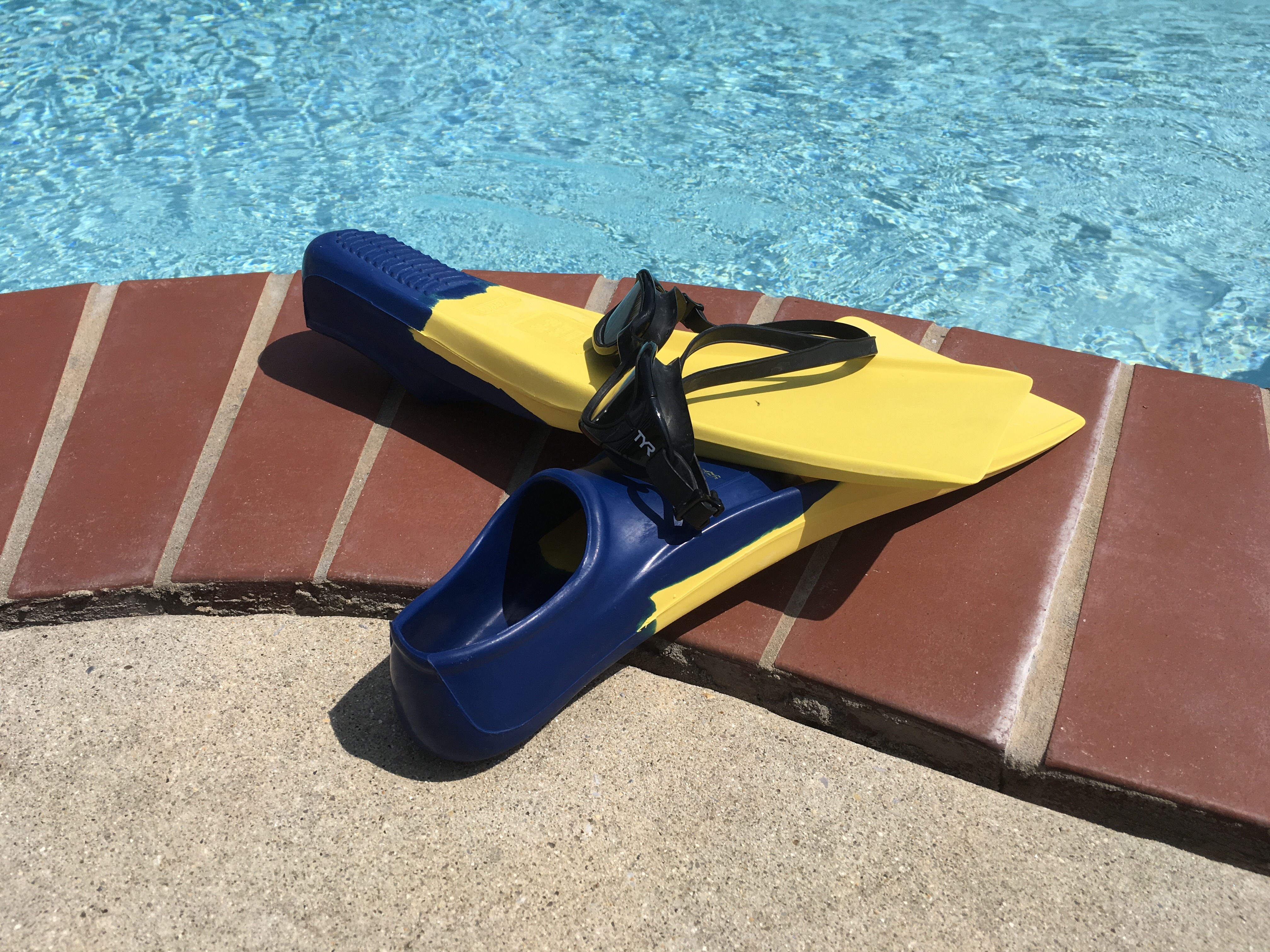
    Making progress on something that is difficult is one of the greatest feelings in the world. There is great satisfaction to be found in overcoming a personal struggle. Just how we go about doing this is a subject of much debate and varying opinions. All too often, we hear people say that hard work alone is the path to success, but simply trying harder or doing more is not a viable strategy if the thing we are doing is not working. Doing more of what is not working never leads to success.

    Take swimming for example. Before we know how to swim, if we are thrown in the water and simply told to try hard or put forth a lot of effort, we will still sink. In fact, if we begin flailing around and expending lots of energy, we will most likely get exhausted and sink more quickly than if we were relaxed and had some real, clear instructions that told us exactly what we should be trying to do in order to stay afloat.

    The first goal of swimming, after all, is not sinking, but telling someone not to sink is not the same as teaching them how to swim, or giving them the tools to do so. We need clear instructions that tell us exactly what to do and how to do it, but we also need traction. Especially in the beginning of a new activity, we need to feel as if the effort we put forth propels us forward.

    For this reason, the best kids’ swim instructor I’ve ever seen starts kids with flippers on their feet. Flippers provide more traction in the water than tiny, bare preschooler feet do. By giving the kids traction, simple, clear instructions, and a big push in the right direction, they begin to swim very quickly. Traction gives us confidence. Once confidence is developed, new layers of difficulty and skill are added.

    This is a formula for success in any endeavor. Find your (or your students’) flippers.

    Holistic Budo: As it is in budo, so too it is in life. As it is in life, so too it is in budo.

    -Robert Van Valkenburgh is co-founder of Taikyoku Mind & Body, Severna Park’s Holistic Chamber of Commerce, and Kogen Dojo where he teaches Taikyoku Budo and Brazilian Jiu-Jitsu

    Share this:

    • Share on X (Opens in new window) X
    • Share on Facebook (Opens in new window) Facebook
    Like Loading…
    August 18, 2019
    ability, confidence, efficacy, learning, leverage, success, swimming, teaching, traction

  • Do for Others and Yourself

    Help others bring their dreams to life, but don’t forget to work on yours as well.

    ‘Icing’ by Ana and Ravy

    Unless you are independently wealthy, you probably need a day-job and this most likely means working for someone else. Most of us earn a living this way, by helping to build and grow someone else’s dream. There is nothing wrong with this. We all need money and experience, and we all have to start somewhere.

    Often, survival requires that we put or own personal goals, aspirations, and passions on the back burner for a while in order to earn a living and improve our lives. The need for food, shelter, and clothing requires us to do what we must, not necessarily what we want. While we are struggling to survive and, hopefully to get ahead, it is easy to lose sight of our deeper needs for fulfillment, meaning, and personal achievement.

    Often, we conflate our lives and our occupations, our achievements at work with our true desires and aspirations. In the hustle and bustle of trying to get by, everything begins to blur. Our own dreams become a distant, fading memory. If ignored or forgotten for long enough, they begin to manifest as regret, disappointment, sadness, or even anger.

    Unless we have found the rare opportunity where our dreams align with the dreams of those we work for or with, it is imperative that we take some time and make some space for ourselves. It is okay to help others build their dreams, but we cannot ignore our own in the process. Like our children, our dreams need our attention, nurturing, and effort.

    Holistic Budo: As it is in budo, so too it is in life. As it is in life, so too it is in budo.

    -Robert Van Valkenburgh is co-founder of Taikyoku Mind & Body, Severna Park’s Holistic Chamber of Commerce, and Kogen Dojo where he teaches Taikyoku Budo and Brazilian Jiu-Jitsu
    Share this:

    • Share on X (Opens in new window) X
    • Share on Facebook (Opens in new window) Facebook
    Like Loading…
    August 17, 2019
    altruism, aspirations, doing for others, dreams, goals, hustle, life, personal goals, regret, selfishness, selflessness, work

  • Do More For Your Own Dream

    Dreams do not become reality during normal working hours.

    ‘Worm Art’ by Ana

    If you truly want to get ahead, you will need to do more. You will need to do more than is expected. You will need to do more than is required. You will need to do more than the person next to you. You will need to do more than you did yesterday. You will need to do more than you thought you would need to do.

    If you are unwilling to do more, it’s okay. Give yourself a break. Let yourself off the hook. You are in good company. Most of the people around you do not want to do more either. It is not expected. It is not required. You will be just fine.

    However, if you are tired of living an average life of average means and average accomplishments, you will have to do more. You may have to show up earlier, stay later, or both. You may need to wake up before or go to sleep after everyone else. You may need to drill more, do more reps, or start a side hustle. The specifics of your ‘more’ depend on your dreams and your goals.

    Do not be fooled into believing that simply working harder and putting in more hours is an end in itself, however. Plenty of people have given up on their dreams by taking this path, by doing more simply to feel busy. Busy is an excuse to not do the real work. Busy is how cowards ignore their dreams.

    Do more of what you are afraid of. Do more of the thing you are avoiding, the thing that will break your heart if it fails, the thing you will regret forever if you let time pass you by. Do more of what matters.

    Holistic Budo: As it is in budo, so too it is in life. As it is in life, so too it is in budo.

    -Robert Van Valkenburgh is co-founder of Taikyoku Mind & Body, Severna Park’s Holistic Chamber of Commerce, and Kogen Dojo where he teaches Taikyoku Budo and Brazilian Jiu-Jitsu
    Share this:

    • Share on X (Opens in new window) X
    • Share on Facebook (Opens in new window) Facebook
    Like Loading…
    August 16, 2019
    aspirations, day job, dreams, goals, hard work, hustle, side hustle, work

  • John Danaher on the Importance of Training in a Gi for Beginners in BJJ

    Brazilian jiu-jitsu instructor John Danaher on teaching BJJ to beginners (excerpted and transcribed from the UFC Unfiltered podcast with Matt Serra and Jim Norton, episode 40):

    “I would run all beginner’s classes in a gi. Let’s break down what changes when you put a gi on and you take one off. Really, only a few things change.

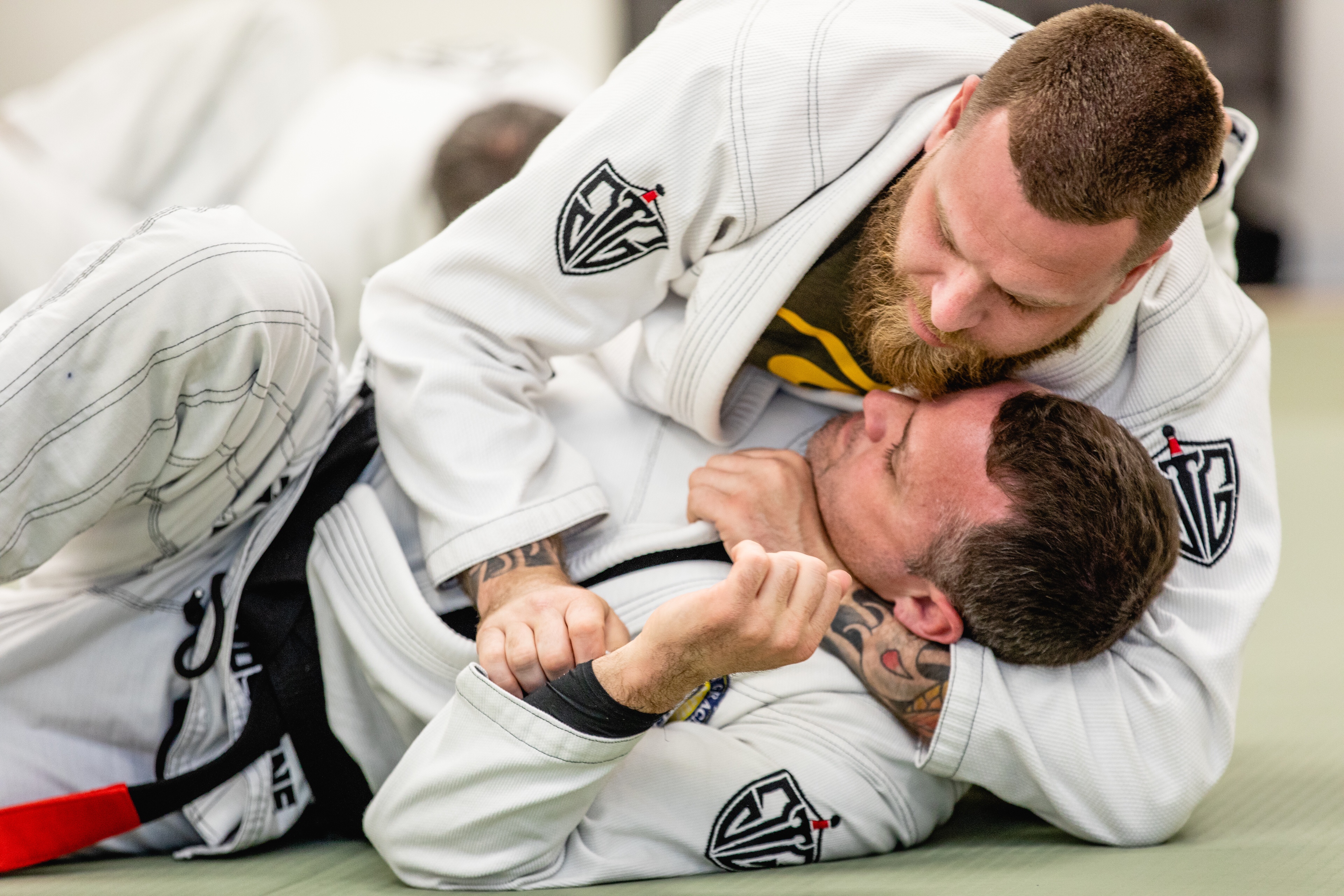
    Mike Stewart Jr. and Ike Haertel practicing lapel chokes from side mount at a Relson Gracie seminar at Kogen Dojo. Photo by Mike Oswald Photography

    First, the minute you put a gi on, the friction between the two athletes goes up astronomically. That immediately has a slowing down effect. You can no longer just squirm or pull out of techniques. You have to work systematically out of them. You are forced immediately to apply technique to escape from positions, rather than to rely on slipperiness or explosions, what have you. So that’s the first effect: friction.

    The second effect is that it massively multiplies the number of effective grips that you can employ upon your opponent. So that means that you have to learn patience. You have to learn how to systematically break grips and generate movement after breaking grips. You can’t just move whenever you feel like it. So students tend to develop a good sense of patience and subtlety in movement which is lacking in people who train only without the jacket.

    Of course, the third element is strangleholds. There are so many more strangles available with the gi on, and they are so much more effective that you develop good habits of always protecting your back and neck, which you obviously don’t see so much in pure no-gi training situations.

    Those habits of defense and posture, those are enormously useful for athletes as they go higher and higher into the sport. They translate well into no-gi training as well. So, for that reason, I do believe it is very, very important for students to, especially early in their training, when the main habits of their game are set, it is very, very important for them to do some of their work in the gi.

    That’s why, as I said before, if I had my own gym and there was a beginners program, it would be exclusively in the gi.“

    Holistic Budo: As it is in budo, so too it is in life. As it is in life, so too it is in budo.

    -Robert Van Valkenburgh is co-founder of Taikyoku Mind & Body, Severna Park’s Holistic Chamber of Commerce, and Kogen Dojo where he teaches Taikyoku Budo and Brazilian Jiu-Jitsu

    39.073857 -76.547111

    Share this:

    • Share on X (Opens in new window) X
    • Share on Facebook (Opens in new window) Facebook
    Like Loading…
    August 15, 2019
    basics, beginners, bjj, brazilian jiu-jitsu, danaher death squad, fundamentals, gi, gracie jiu-jitsu, jiu-jitsu, john danaher, Martial Arts, nogi

  • John Danaher on Teaching Positional Dominance and Strangles Before Joint Locks in BJJ

    Brazilian jiu-jitsu instructor John Danaher on teaching BJJ to beginners (excerpted and transcribed from the UFC Unfiltered podcast with Matt Serra and Jim Norton, episode 40):

    “If I ran a beginners class, I would not only disallow leglock activities for the first year of training, I would probably even disallow arm locks. I would have students only focus on positional work and strangleholds.

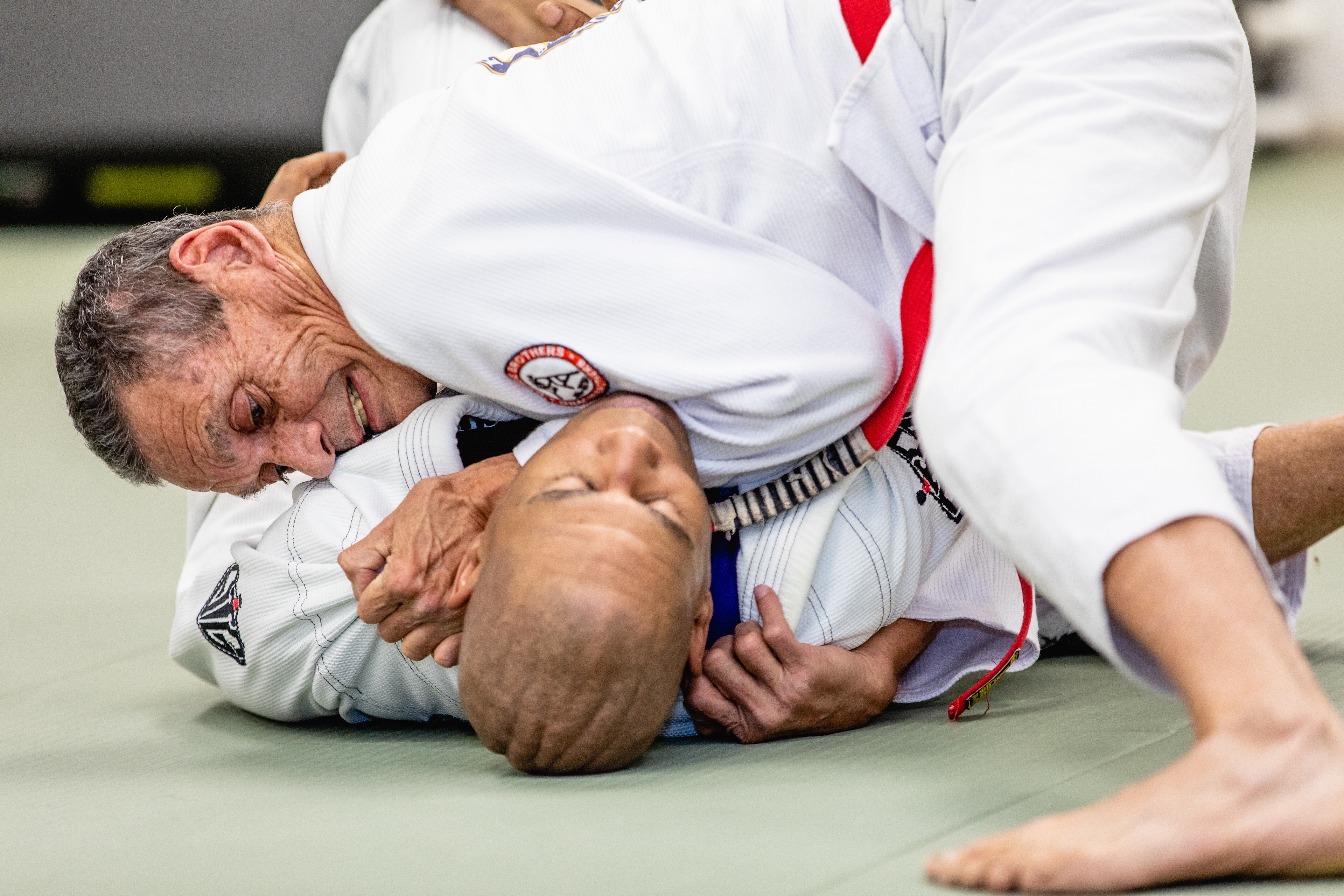
    Relson Gracie teaching a bread-cutter choke (lapel strangle variation) at Kogen Dojo. Photo by Mike Oswald Photography

    I do believe strangleholds are the most effective submission in the sport. They give you the most versatility and the highest percentage of controlling people. They are the most useful in actual fighting, as opposed to just a sport situation and I believe that when you ban everything except strangleholds, beginners are forced to develop a strong positional game because the only way you can get to someone’s neck is by first getting past their legs and controlling them, and pinning them.

    So, for the first year of training, I would have my students only do positional work and strangles. Only when they had gotten through that, would I bring in joint locks of any kind, whether leg or arm locks. Then, they would go into the advanced class and they would change.

    There are really two jiu-jitsu‘s that I would teach. I would teach them an even more traditional Brazilian jiu-jitsu than the standard method for the first year, so they become positionally strong and they develop the ability to get to and follow the back for strangleholds, the most important kinds of submissions. Then, joint locks would be introduced in the second year of training and they would work from there.”

    Holistic Budo: As it is in budo, so too it is in life. As it is in life, so too it is in budo.

    -Robert Van Valkenburgh is co-founder of Taikyoku Mind & Body, Severna Park’s Holistic Chamber of Commerce, and Kogen Dojo where he teaches Taikyoku Budo and Brazilian Jiu-Jitsu

    39.073857 -76.547111

    Share this:

    • Share on X (Opens in new window) X
    • Share on Facebook (Opens in new window) Facebook
    Like Loading…
    August 14, 2019
    armlocks, basics, beginners, bjj, brazilian jiu-jitsu, chokes, danaher death squad, fundamentals, gracie jiu-jitsu, john danaher, kogen dojo, leglocks, position before submission, strangles

Previous Page Next Page

Create a website or blog at WordPress.com

Loading Comments...

    • Subscribe Subscribed
      • Meditations on God
      • Join 270 other subscribers
      • Already have a WordPress.com account? Log in now.
      • Meditations on God
      • Subscribe Subscribed
      • Sign up
      • Log in
      • Report this content
      • View site in Reader
      • Manage subscriptions
      • Collapse this bar
    %d