We never know where the effects of our influence will end.
Every word, deed, and interaction ripples outward beyond our reach and beyond our control.
This happens whether we are conscious of it or not.
It happens whether we want it to or not.
For better or worse, once it leaves us, our influence belongs to those affected by it.
We cannot take it back.
It is imperative, therefore, that what we leave others with is something we are proud of, something we can hold our head high about, and something we are happy to have attached to our legacy forever.
Holistic Budo: As it is in budo, so too it is in life. As it is in life, so too it is in budo.
Inevitability is not affected by the way we feel about it.
There are certain facts of life that will not change regardless of whether we agree or disagree with them, approve or disapprove of them, or whether we aid or resist them.
Inevitability does not care about our plans, our opinions, or our emotions.
In spite of how strongly we feel about them, some things we are powerless to affect.
When faced with the inevitable, the sooner we can accept and embrace the reality of its existence, the more easily and effectively we can prepare for it, get out of its way, and view its effects from a vantage point of detachment.
That is to say, we must change ourselves so that we can find a way to live with that which we can not change or stop.
Holistic Budo: As it is in budo, so too it is in life. As it is in life, so too it is in budo.
Robert Van Valkenburgh is co-founder of Taikyoku Mind & Bodyand Kogen Dojo where he teaches Taikyoku Budo and Brazilian Jiu-Jitsu.
All photos by Robert Van Valkenburgh unless otherwise noted.
“I gotcha back, but you best to watch your front ‘cause it’s the people that front, they be pulling stunts.” —Gary E. Grice, aka GZA
Proximity does not imply connection. Just because someone stands next to us does not mean that they share our moral, philosophical, or spiritual beliefs, and it certainly does not mean that they want or will do what is best for us or our tribe. In fact, the best place for our enemies to hide is right next to us, protected by the shadows that are created by the light we are trying to put into the world.
It is when we are at our most sensitive, at our most open-hearted, and our most raw with emotion that we are also the most porous and susceptible to negative influence. When we feel the most deeply about some issue, event, or cause, we are also at our most vulnerable to psychological, emotional, and spiritual hijacking. When our hearts and minds are flooded with emotion, we often lose the ability to filter the good from the bad and are temporarily blinded to the truth around us.
It is in moments like these, when we are at our happiest, our saddest, our angriest, or our most hurt, that we are in most desperate need our family and trusted friends by our side. We need them not only to share in our joy, our sorrow, our rage, or our pain, but also to act as a buffer between our open hearts and the malignant forces that want to creep into them. It only takes a little bit of evil to corrupt, distort, and manipulate the truth and the light, and the hope they bring.
While we need those we love, respect, and trust to watch our backs for us, we must also watch our fronts, being careful to maintain our focus and our bearing as we move forward because a lie looks and sounds a lot like the truth when it is masked by passion.
Holistic Budo: As it is in budo, so too it is in life. As it is in life, so too it is in budo.
Robert Van Valkenburgh is co-founder of Taikyoku Mind & Bodyand Kogen Dojo where he teaches Taikyoku Budo and Brazilian Jiu-Jitsu.
All photos by Robert Van Valkenburgh unless otherwise noted.
If you see every problem that arises as new and unique, you will always be reactive and to be reactive is to be behind. In combat, to be behind is to fail and to fail is to die.
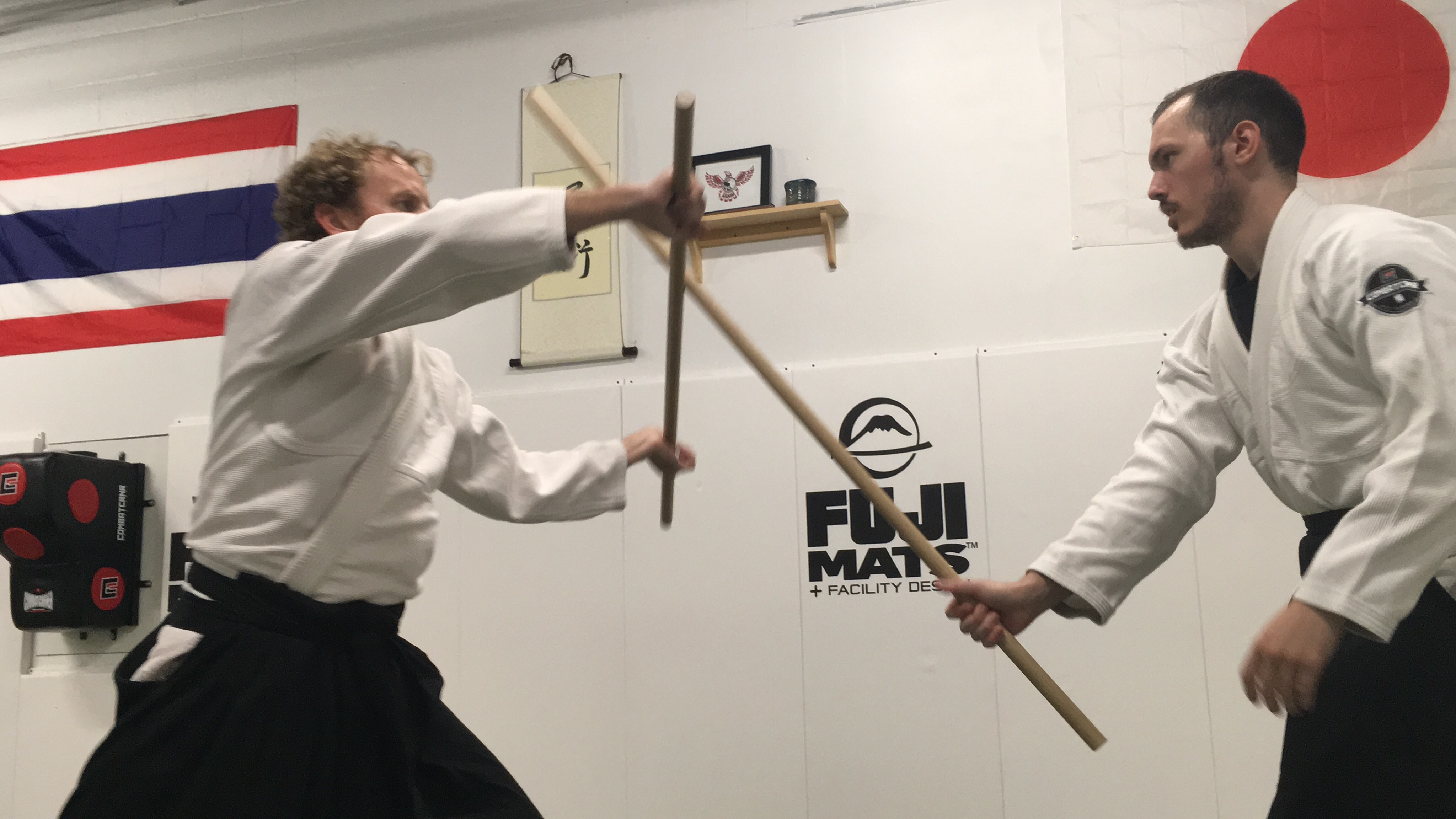
A kata in traditional Japanese martial arts is a set of pattern drills intended to teach specific lessons in spacing, physical/mental attitude, and power generation.
It is highly likely that the problems and challenges we face from day to day are going to become greater and more complex over time. At some point, if we want to be successful, we have to do something to get ahead of these problems. This means identifying patterns and creating systems for dealing with those patterns.
When we are overwhelmed by all of the challenges coming at us every day, it can appear as if each problem is unique. If we are able to step back and look for similarities in all of these seemingly disparate issues, we may notice patterns emerging in the chaos.
There are really many fewer problems than we tend to think exist. These problems simply have a multitude of shapes, names, and faces. Instead of looking at the superficial symptom, look for, identify, and label patterns. Once patterns are recognized, we can begin to systematize solutions for those patterns.
Systems for addressing patterns give us time and room to breathe and think about the true, and much more rare, outliers and anomalies. Without systems, every problem is new and every issue is an emergency. This is no way to live.
“As in life, so too it is in budo. As in budo, so too it is in life.”

 Meditations on God