Skip to content

Meditations on God

  • Robert Van Valkenburgh

  • Natural Force Multipliers

    Relative traits vs absolute forces.
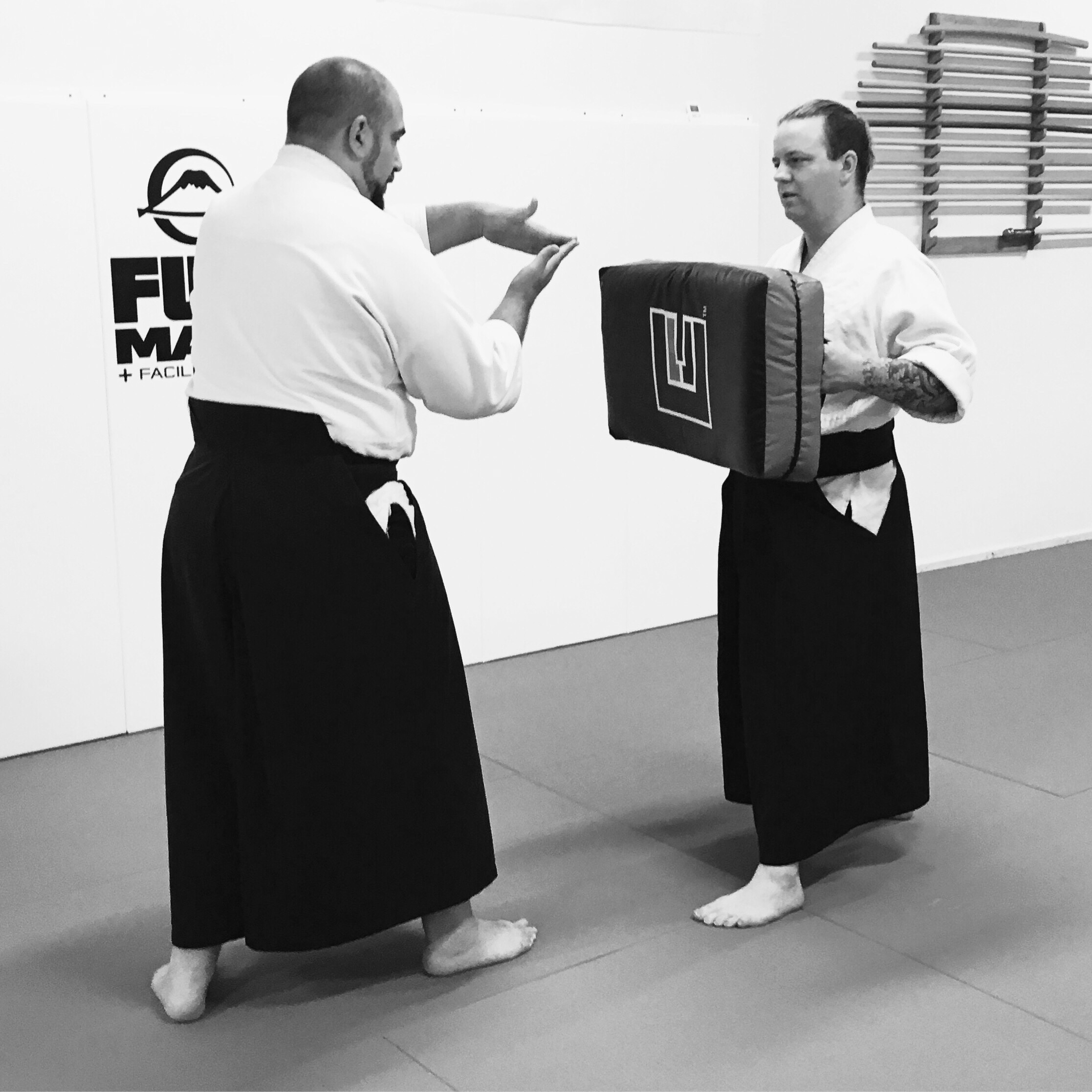
    It is a fundamental truth in martial arts that there are certain attributes that make it easier to apply techniques against a resisting opponent. Physical attributes such as strength, speed, flexibility etc. all give a person an advantage over someone who lacks these same traits. Each of these is what I will refer to as a relative trait, however.

    A person may be stronger, faster, or more flexible than his opponent one round, but weaker, slower, and stiffer than a different opponent in another round. In this way, unless a person is a world class full-time athlete, it is easy to see that relying on relative traits alone is a dubious proposition. That is why combat sports tend to have weight classes, so that two opponents begin with similar relative traits, allowing skill to be the main variable in a given bout.

    This is also why, since the dawn of time, humans have invented and utilized force multipliers to aid us in our daily tasks and struggles. Weapons and tools are our means of overcoming the limitations of our relative traits. Nature gives us force multipliers as well, but we must first know where to look and how to utilize what is available. I am specifically talking about using the forces of the earth in our favor, both gravity pulling down on us and the ground pushing up underneath us. This combining of relative traits with absolute forces is where specialized training comes in.

    -Robert Van Valkenburgh teaches Taikyoku Budo and Brazilian Jiu-Jitsu at Kogen Dojo

    39.073857 -76.547111

    Share this:

    • Share on X (Opens in new window) X
    • Share on Facebook (Opens in new window) Facebook
    Like Loading…
    March 1, 2019
    aiki, aikido, aikijujutsu, internal strength, japanese martial arts, jin, ki, kogen dojo, Martial Arts, qi, taikyoku budo

  • One More Thing

    If you don’t know what it’s for, you probably don’t need it.

    In my travels, I was in a coffee shop the other day getting an afternoon pick-me-up espresso. As I waited in line, I noticed that they had a rather enticing merchandise wall with all sorts of cool-looking coffee paraphernalia, branded clothing, and gadgets.

    I picked up one of the items they were selling and realized that I had no idea what it was or what it was for. Presumably, it was something to make a coffee drink at home seem more ‘artisan’ (a word, in my opinion, that should only be used to describe the humans that create goods, never the actual goods themselves).

    As I looked at this mystery object, I realized a few things. First, we make too much stuff and most of it will only end up in a landfill, adding no real value to our lives whatsoever. Second, that I go to the coffee shop to have someone else make me the kind of coffee that I cannot and do not want to make at home. Finally, I realized that if I do not know what something is, there is a high likelihood that I do not need it.

    -Robert Van Valkenburgh teaches Taikyoku Budo and Brazilian Jiu-Jitsu at Kogen Dojo

    Share this:

    • Share on X (Opens in new window) X
    • Share on Facebook (Opens in new window) Facebook
    Like Loading…
    February 28, 2019
    coffee, coffee shop, consumerism, essentialism, minimalism

  • Patience, Persistence, and Green Veggies

    There is no accounting for taste.

    When I was a child, there were two vegetables I could not tolerate, spinach and brussels sprouts. It was not for lack of trying, but whenever I attempted to eat them, I had an uncontrollable, averse reaction to them.

    Fast forward many years and brussels sprouts are now one of my favorite vegetables, with spinach’s taste to me ranging from tolerable to delicious depending on the preparation. The vegetables did not change, but clearly my tastes did.

    This process of transformation, the fact that we can physically, mentally, and emotionally evolve into almost entirely different human beings as we go through life, absolutely fascinates me. It tells me that we have so much more opportunity and potential than we can possibly imagine, if only we are willing to keep trying. More so, it tells me that sometimes an attempt at something does not work simply because of the timing, setting, or circumstance within which we made that attempt. If we try again later, who knows? Perhaps we will find that things have changed, that we have changed, and that which was not possible for us before is now exactly right and our lives will be better for it. Maybe our future self will really like brussels sprouts and spinach if we are patient enough and persistant to find out.

    -Robert Van Valkenburgh teaches Taikyoku Budo and Brazilian Jiu-Jitsu at Kogen Dojo

    Share this:

    • Share on X (Opens in new window) X
    • Share on Facebook (Opens in new window) Facebook
    Like Loading…
    February 27, 2019
    brussels sprouts, change, cooking, evolution, food, patience, persistence, possibility, potential, spinach, transformation

  • Non-Competition for Mutual Benefit

    We are a collective of training brothers and sisters joined together with the goal of mutually beneficial martial improvement.

    One of the things that attracted me to traditional martial arts was the feeling of family and belonging within the group. We all worked together to make each other better and, through that, to make the group stronger. We knew each others’ families, had dinner at each others’ homes, went out to eat together, and attended each others’ weddings. Successes were celebrated together and losses were mourned together. It was like family.

    I think this is the essence of what some traditional martial artists mean when they say, “We don’t compete.” While they may think that this idea means not testing each other with resistance and not challenging each others’ limits with pressure in training, what I think this idea of non-competition really means is that we all work together, that we are all here for each other, and through this mutually beneficial practice, you are never my enemy.

    -Robert Van Valkenburgh teaches Taikyoku Budo and Brazilian Jiu-Jitsu at Kogen Dojo

    Share this:

    • Share on X (Opens in new window) X
    • Share on Facebook (Opens in new window) Facebook
    Like Loading…
    February 26, 2019
    family, hapkido, japanese martial arts, kogen dojo, Martial Arts, mutual benefit, non-competition, seiya dojo, taikyoku budo, traditional martial arts

  • Permission to be Less Successful

    “I would have been more successful if I had given more of myself to my career, but I was only willing to give about 70%. The rest I gave to my family and to hunting, fishing, and playing music.” -My Grandfather

    The things our elders tell us, whether they know it or not, affect us and shape us. This simple statement, which I have heard from my grandfather many times over the course of my life, gave me permission to seek a balance between my work and my personal life. That balance is not always easy to find, but I know that it is okay to only give other people so much of my time, energy, and dedication before saying, “Sorry, but no more. The rest is for me and the people I care about most.”

    -Robert Van Valkenburgh teaches Taikyoku Budo and Brazilian Jiu-Jitsu at Kogen Dojo

    Share this:

    • Share on X (Opens in new window) X
    • Share on Facebook (Opens in new window) Facebook
    Like Loading…
    February 25, 2019
    advice, elder wisdom, grandparents, Inspiration, permission, success

Previous Page Next Page

Create a website or blog at WordPress.com

Loading Comments...

    • Subscribe Subscribed
      • Meditations on God
      • Join 265 other subscribers
      • Already have a WordPress.com account? Log in now.
      • Meditations on God
      • Subscribe Subscribed
      • Sign up
      • Log in
      • Report this content
      • View site in Reader
      • Manage subscriptions
      • Collapse this bar
    %d