It feels good to win, especially at something you have worked hard for.
Losing, on the other hand, rarely feels that great.
But losing will teach you more about yourself than winning ever could.
When you lose, do you make excuses? Do you blame others? Do you tell yourself it does not matter? Do you tell yourself it matters more than it actually does? Do you get angry with the winner, with yourself, or with someone else?
Or do you reflect objectively on your preparation, your mistakes, your performance, and your opportunities for improvement, so that you can make the necessary adjustments to do better next time?
How you lose says way more about you than how you win.
Be unphased while defending and unrelenting while attacking.
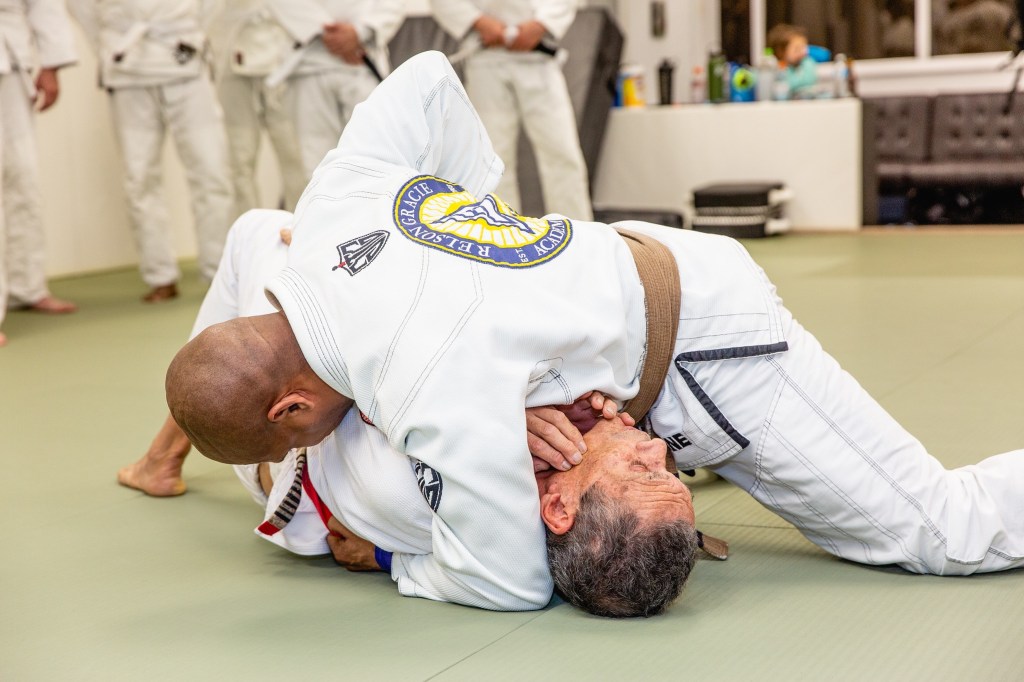
If we are open and receptive to them, many of the skills and lessons learned from Brazilian jiu-jitsu (BJJ) transfer over into our lives off the mats. Through rolling (BJJ sparring), we learn over time how to be unphased when we are on the defensive and how to be unrelenting when we are on the offensive. That is to say, we learn how to be calm and patient when we find ourselves under pressure and how to be tenacious and persistent when applying it.
When we are under pressure, when we are under attack, if we become impatient and lose our heads, we make mistakes that could result in our defeat. The squirming and flailing that come with fear only prove to make our situation worse, exposing us even further, giving our adversary more openings through which to attack. The path to escaping or reversing a bad position is found through both the maintaining of our own integrity and the calm, patient, and strategic application of leverage in the proper direction(s).
Once we are out of danger, we must begin moving forward unrelentingly, doing our best to stay ahead of the blocks, counters, and reversals that we will inevitably confront along our path. This is not the time to look back nor is it the time to be reckless, and we must always understand our own strengths and weaknesses so as to protect our flanks, but, once we gain traction, we can not give up our ground. If we are to be victorious in our endeavor, we must move decisively and aggressively forward, always being careful to neither over nor under-commit in the direction of our desired outcome.
Holistic Budo: As it is in budo, so too it is in life. As it is in life, so too it is in budo.
Robert Van Valkenburgh is co-founder of Taikyoku Mind & Body and Kogen Dojo where he teaches Taikyoku Budo and Brazilian Jiu-Jitsu.
When the path is not clear, be still, but do something.
One of the things that Brazilian jiu-jitsu (BJJ) teaches us is that fear and anxiety in bad positions leads to flailing and hasty decisions which lead to mistakes that inevitably put us in worse positions from which we are likely to get submitted. When we find ourselves in bad positions, we are far better off slowing down and breathing than we are speeding up and panicking. We do not slow down and breathe so that we can do nothing, but so that we can do the right thing.
By slowing down and taking a breath, we are able to look at our situation from the perspective of what is possible instead of fighting against what is impossible. We take stock of our where we went wrong and what we need to do in order to stop our situation from getting worse. We begin to see our weaknesses so that we can shore them up and protect ourselves, but also the openings through which to escape and potentially reverse our bad fortune.
The first order of business when we find ourselves compromised and on the defensive is to protect ourselves from harm, from getting submitted, but we can not do this from a place of panic. We must remain calm and composed or at least regain our calm and our composure. We are already losing, but a deep breath and a clear head could be the difference between total defeat and transforming our predicament into victory.
Holistic Budo: As it is in budo, so too it is in life. As it is in life, so too it is in budo.
Robert Van Valkenburgh is co-founder of Taikyoku Mind & Body and Kogen Dojo where he teaches Taikyoku Budo and Brazilian Jiu-Jitsu.
Life is expressed through motion and our jiu-jitsu should reflect that.
In Brazilian jiu-jitsu, the best time to attack or sweep is when our opponent is moving to escape or pass and the best time to escape or pass is when our opponent is trying to attack or sweep. Movement creates opportunities. The goal of jiu-jitsu practice, then, should be to move a lot, even if it means getting submitted, swept, or passed a lot because we learn more from our mistakes than we do from our successes.
By moving a lot, decisively and with purpose, we are sure to make a lot of mistakes and our better opponents will capitalize on these mistakes. The better our opponent, the more quickly and surely our mistakes will be used against us. This is the path of learning, however, so we should embrace it by being willing to move a lot and lose a lot in order to learn a lot.
Nothing is gained from sitting or standing still. There is no submission, no sweep, no pass, and no escape that does not require movement. The sooner we begin to move, through our fears, insecurities, and losses, the sooner we will find mental-emotional calm and stillness in our movements until the only thing that can stop us from moving forward toward our goals, whether position or submission, is the truly better opponent and, for that, we should thank them and try again.
Holistic Budo: As it is in budo, so too it is in life. As it is in life, so too it is in budo.

 Meditations on God