Just because we are physically close to someone and may even spend a great deal of time with them, does not mean that we necessarily share the same outlook, values, or morals with them.
We may be near them because we have to be.
Maybe we live with them, work with them, or simply share some common space with them on a regular basis.
When there is a significant variation in values between us and the people we regularly spend time with, it is extremely important that we maintain internal boundaries so that we do not lose our bearing within our relationships.
Differences are not necessarily bad.
In fact, quite often, our differences are what make our relationships interesting, engaging, and valuable to our collective lives.
However, when these differences are so fundamental as to have a negative impact on our core being, we need to maintain a strict psycho-emotional separation for the sake of our own integrity.
It is sometimes better to keep our integrity and lose our relationships than to lose our integrity and keep our relationships.
We will likely come to find that, by taking the former path, new, better relationships develop in place of the old, unhealthy ones we let go of.
We should not be jealous of others for behaviors our consciences will not abide.
A conscience is a funny thing. It is both very personal and very specific. Attitudes and behaviors that do not appear to bother one person’s conscience may make another’s flail and scream in protest.
Some people, it seems, have much stronger consciences than others, not necessarily better, just more pronounced, obvious, and restrictive. These people are highly sensitive to their actions and the consequences of these actions with regards to others They experience deep remorse and regret from even the slightest of moral infractions.
Other people, the attitudes and behavior of whom would suggest, have very little in the form of a conscience. Their actions seem unbound by any kind of quiet inner-voice or moral compass. Perhaps their consciences are merely quieter than the former type, maybe they are drowned out by other, much louder influences, or, it could be that their consciences just guide them differently.
The simple fact is, however, that none of this really matters. We each experience conscience differently. The attitudes and behavior of others should have little to no influence on the way that our own inner morality manifests. In fact, nothing good will come from trying to live in a way that aligns with a conscience not our own.
Holistic Budo: As it is in budo, so too it is in life. As it is in life, so too it is in budo.
Robert Van Valkenburgh is co-founder of Taikyoku Mind & Bodyand Kogen Dojo where he teaches Taikyoku Budo and Brazilian Jiu-Jitsu.
Unity is an empty vessel to be filled with whatever form of good or evil we choose.
We often throw around word like unity, community, or tribe as if they are inherently positive concepts. The truth, however, is that they are neutral. It is as possible to be united around evil causes, ideas, and behaviors as it is to be united around good ones.
In order for our unity to be noble and righteous, its purpose and resultant manifestations must also be noble and righteous as well. If we start with false ideals or values around which to unify, or perhaps with no ideals or values at all, our unity will be nothing more than a powerful force for dissonance, chaos, and destruction. Before we unite, we must establish that around which we are uniting and we must ensure that our actions constantly align with this purpose.
In order for unity to result in positive change in the world, it must be based on positive values with positive goals. Garbage in, garbage out, as the saying goes. Before we get together, unifying around some idea, belief, or cause, we should ensure that what we are unifying around is not only true, but also good.
Holistic Budo: As it is in budo, so too it is in life. As it is in life, so too it is in budo.
Robert Van Valkenburgh is co-founder of Taikyoku Mind & Bodyand Kogen Dojo where he teaches Taikyoku Budo and Brazilian Jiu-Jitsu.
All photos by Robert Van Valkenburgh unless otherwise noted.
Our choices are not always as clear as right or wrong; we must sometimes choose between beauty and ugliness.
We often think of morality in terms of black and white, good and bad, right and wrong. This type of either/or thinking makes us feel better about the path we have chosen because it places us in a position of moral superiority to those who have made a different choice from us. We tell ourselves that we are on the righteous path and that others who believe or behave differently are on the path of evil and corruption.
We claim special knowledge with these kinds of distinctions. They are predicated on the belief that we have unique insight into the truth of things, giving us the ability to see beyond the lies and deceptions that others fall prey to so easily. Ours is authentic wisdom and only we are educated and inspired enough to know, to see, to hear, and to speak the truth, while all who do not believe as we do are necessarily either foolish, immoral, or both.
It is true that some beliefs and behaviors are undeniably more honorable, righteous, and just than their reprehensible, unethical, and despicable opposites. Quite often, however, this distinction has more to do with benevolent or malicious intent than anything else and most people, ourselves included, in spite of flawed beliefs and imperfect actions, do not actually want to do harm to others. We are far better off, instead of being the constant judge and jury of what is right and wrong, a position which is not only unhelpful, but also quite exhausting, looking at our own beliefs and behaviors, and asking ourselves in each moment whether, through them, we are adding more beauty or more ugliness to the world.
Holistic Budo: As it is in budo, so too it is in life. As it is in life, so too it is in budo.
Robert Van Valkenburgh is co-founder of Taikyoku Mind & Bodyand Kogen Dojo where he teaches Taikyoku Budo and Brazilian Jiu-Jitsu.
All photos by Robert Van Valkenburgh unless otherwise noted.

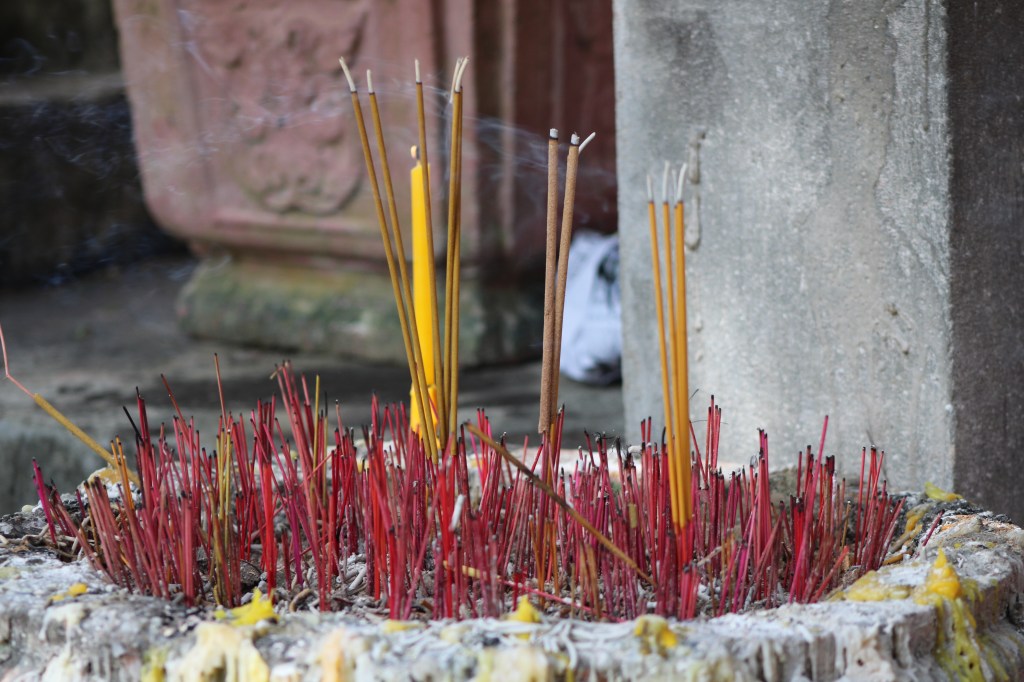

 Meditations on God