“Traditional schooling first failed us when we were taught to stay between the lines and finish our work before [we] play.”
—Scott Belsky
“A Boat” by Ana
The question of creativity is not necessarily how to break the rules, per se. Some rules, the laws of nature, for example, by definition, cannot really be broken. The true question of creativity is how to think about these rules in a way that transcends the restrictions we are taught to think that they place on us.
When we are young, we have no concept of these restrictions. Anything we can imagine is possible. In fact, to our minds, the very act of imagining something makes it real. We have not yet learned that the world and our imaginations are separate. We have not yet learned to be practical and to compromise our dreams for the sake of what is and must be.
Part of maturing as a human being is growing out of the perpetual fantasy world that is childhood, learning the rules and adapting to them. Our parents teach us rules so that we can be safe and make good decisions. In school, we are graded on how well we can memorize, regurgitate, and follow rules. At work, we are paid to follow rules or to enforce them. All of this moves us forward in life and makes the world function, but it is not what we are here for.
We each have a unique gift to offer the world, but that gift is not found within the rules and it is not found in work. It is found by coloring outside of the lines. It is found in imagination, play, and risk. We must come full circle and learn to be as children again, to fantasize, to make a mess, and to believe that the impossible is not only possible, but that it is up to us to make it real.
“As in life, so too it is in budo. As in budo, so too it is in life.”
-Robert Van Valkenburgh is co-founder of Taikyoku Mind & Body and Kogen Dojo where he teaches Taikyoku Budo and Brazilian Jiu-Jitsu
Wooden swords (bokken) made by Trevor Higgins for Kogen Dojo, a project that required him to invest money in better equipment in order to streamline his process for greater output without sacrificing quality and morale.
The problem with cutting costs as a business model is that, once you have reduced your expenses and you are still not as profitable as you need or want to be, the only thing left to cut is morale. Asking people to do more with less is not a sustainable business model, especially if you rely on those people to also make your company profitable.
If the people selling and providing your services are also the people whose resources you have reduced, eventually their sales and performance will also diminish. If your response to this drop in sales and performance is to cut out more resources, in this case personnel, you are in a race to the bottom and, paraphrasing Seth Godin, the only thing worse than losing a race to the bottom, is winning it.
The path to success is a reduction in friction, not expenses. Cut the things out of your business that are slowing down your earners and keeping them from doing their job freely. If you reduce the obstacles in their path, they will perform better and will earn more money for the company and themselves.
Money buys you the freedom to streamline your processes and make them more efficient, not to cut unnecessary costs, even if that is a byproduct, but to reduce friction so that your team has more freedom to drive the business forward. They will be happier, your customers will be happier, and the company will be more profitable. Profit is the result of a team that wants to and is allowed to be successful.
Unfortunately, this puts you, the leader, in a position that requires you to actually have to lead people, instead of managing numbers.
“As in life, so too it is in budo. As in budo, so too it is in life.”
-Robert Van Valkenburgh is co-founder of Taikyoku Mind & Body and Kogen Dojo where he teaches Taikyoku Budo and Brazilian Jiu-Jitsu
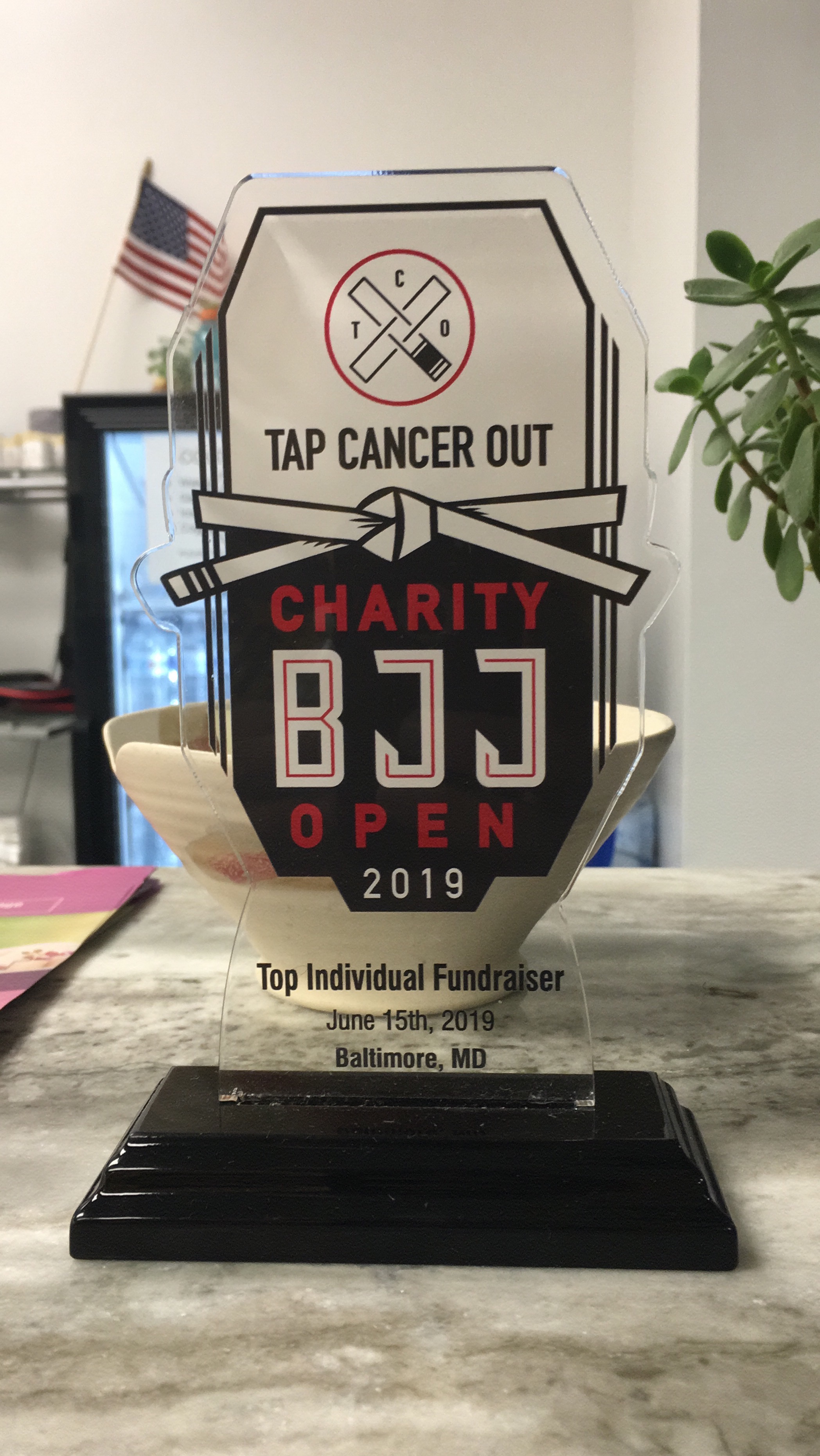
An award granted to Kogen Dojo member Kevin Glass by Tap Cancer Out for being the Top Individual Fundraiser
Depression is rooted in the struggle to find and feel a sense of purpose and value in one’s life and in one’s self. It is not the absence of happiness, per se, but the absence of meaning in one’s sadness and in one’s suffering. Suffering without meaning leads to despair. The path out of despair is not found in the search for happiness, but in the search for meaning, for a sense of purpose.
As with anyone who struggles with depression, I have had many days where I have questioned whether or not the feelings of hopelessness and sadness would ever end. I have had many days where I have questioned my own value and worth and many days when I have asked myself if it was all worth it. The space in between these days, the space within which I can breathe and smile, a space which, over the years has grown more real and more vast, I attribute directly to my sense of purpose and meaning.
The discovery of my purpose began one day with the thought that I may never be ‘the best’ at anything, that I would be eternally average. In the midst of all of this egotistical fear and noise, a sense of calm washed over me and my purpose became clear. Maybe my path is not one of greatness or to be the best at any particular endeavor. Maybe my purpose has nothing to do with me at all. Perhaps my life’s meaning is to be found in service, to create a space for others to be the best versions of themselves, to work towards their own greatness, and to discover their own value and meaning.
“As in life, so too it is in budo. As in budo, so too it is in life.”
-Robert Van Valkenburgh is co-founder of Taikyoku Mind & Body and Kogen Dojo where he teaches Taikyoku Budo and Brazilian Jiu-Jitsu
“Not using your gifts is not benign. It metastasizes.”
—Brené Brown
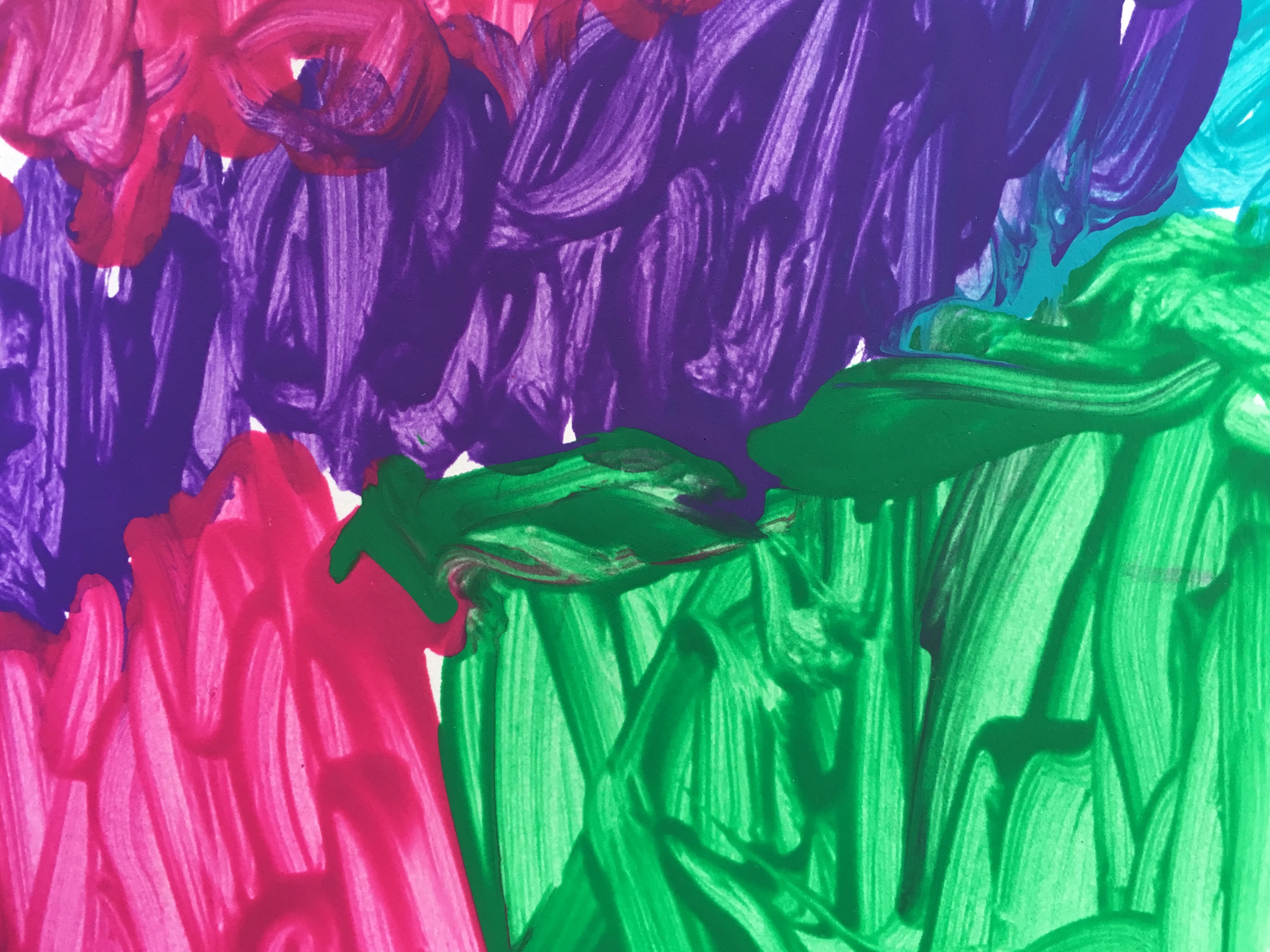
“Messy Banana” by Ana
Watching my daughter paint or draw, and listening to her tell stories makes me think back to when I was a child. I had a vivid imagination and I loved to draw. Every day, I would come up with new ideas for superhero characters and I would do my best to bring them to life on paper, one after the other, again and again. Drawing, witnessing my imagination become reality on paper, was an amazing feeling. It was like tapping into my own, personal superpower. Then, one day, I stopped. I cannot remember why I stopped or when, but I imagine that it was around the time I began participating in team sports.
I had no interest in sports and, as a result, I was terrible at them. Even writing this now, I am overwhelmed by the confusion and sadness I felt from being so clearly out of place on the field. I would rather pick flowers in the outfield than play baseball. In soccer, unable to pay attention, I walked around in circles until the game was over. At lacrosse practice, I was horribly bullied by the other players, perhaps in an attempt to motivate me, but I doubt that was the reason.
I did not know how to care about this thing that was so clearly important to others. Eventually, I found a group of friends who were into what I was into: music, comic books, and skateboarding. Regretfully, I never really got back to drawing though. I would doodle here and there, covering my notebooks with my favorite bands’ logos, but my skills had atrophied from lack of use. Fortunately, over time, I have found different ways to express myself creatively, ways to give myself my life back.
The need, that drive to create, does not die, but we do if we ignore it. That is why I cherish every painting my daughter paints, every story she tells, and every imaginary creature she conjures. Not everyone is gifted with a vivid imagination. It is my job to help her to keep, to develop, and to share that gift in whatever way it happens to manifest.
“As in life, so too it is in budo. As in budo, so too it is in life.”
-Robert Van Valkenburgh is co-founder of Taikyoku Mind & Body and Kogen Dojo where he teaches Taikyoku Budo and Brazilian Jiu-Jitsu



 Meditations on God