We often have a tendency to overcomplicate things simply because it makes us feel more useful. If we have more to do, we feel like we have purpose. So, we spend a lot of time and effort creating more for ourselves to do.
What if, instead, we put that same effort and energy into simplifying our lives in such a way that we actually have less to do? Isn’t this where freedom is found, in having less to do and having more time? Time, after all, is the only non-renewable resource we have. Shouldn’t that be what we are working to have more of, instead of working to create more work?
Our goal should be to simplify where we can, to reduce complexity wherever possible. Some problems in life are naturally complex and difficult in their very nature. By simplifying other areas of our lives, we can face and solve the these truly complex and truly difficult challenges with more focus, clarity, and fewer distractions.
Holistic Budo: As it is in budo, so too it is in life. As it is in life, so too it is in budo.
“One of the secrets to success is not unbound freedom, but selecting the proper constraints.”
— Tim Ferriss
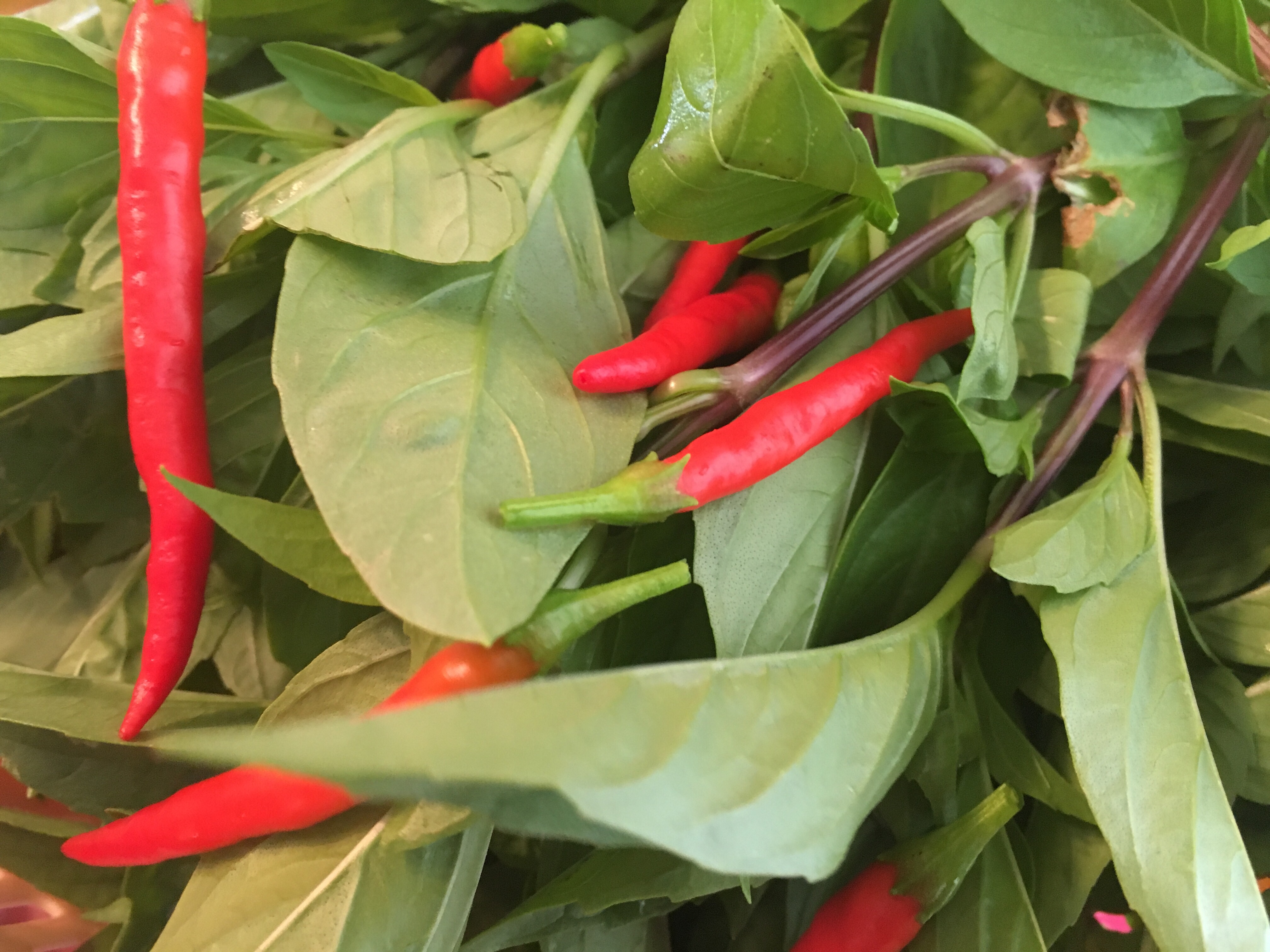
Homegrown Thai Basil and Bird Chilis
Being a husband, father, employee, and business owner, I have to make a lot of decisions every day. All decisions requires some degree of time, energy, and attention, each of which is in limited supply. Added decisions when it comes to things like what to cook and eat, especially when the options are seemingly infinite, take focus and energy away from other aspects of my life that are more important and making no decision at all means eating poorly, which only makes everything else, my health, my sleep, and my attitude, worse.
By applying a simple framework to cooking, inspired by Samin Nosrat, we can have variety without having to make a bunch of unnecessary decisions. If we think about the flavor of every dish as being the result of four components — salt, fat, acid, and heat — and we adjust those components, sourcing them from a specific culinary region, adding some regional herbs and alliums for an extra kick if we like, we give ourselves the luxury of infinite flavor options, without having to make an infinite number of decisions along the way.
Applying this framework to a simple piece of flank steak, we can make a Southeast Asian beef salad by pan searing (heat) the beef in avocado oil (fat), slicing it thin, and tossing it in a dressing of fish sauce (salt), lime juice (acid), and bird chilis (more heat). If we were to use sea salt, olive oil, balsamic vinegar, and red chili flakes, the same exact piece of beef becomes Italian. Soy sauce, sesame oil, rice vinegar, ginger, garlic, and scallions gives a Japanese flavor to the beef.
Looked at in this way, we do not need to make a lot of choices. We only need to choose a culinary region, allowing the region to tell us what salt, fat, acid, and heat works best for the protein and/or vegetables that are local and fresh.
By working inside these constraints, we are not only guaranteed to have fewer culinary decisions to make, but we are also promised a delicious outcome that is only restricted by availability and imagination.
“As in life, so too it is in budo. As in budo, so too it is in life.”
-Robert Van Valkenburgh is co-founder of Taikyoku Mind & Body and Kogen Dojo where he teaches Taikyoku Budo and Brazilian Jiu-Jitsu

 Meditations on God