Skip to content

Meditations on God

  • Robert Van Valkenburgh

  • Tiger Stripes and Ant Eggs

    When my wife and I were dating, one day she took me to one of her cousin’s houses to visit. They were cooking and asked me to stay for dinner. I accepted and we sat down to eat. They served the food ‘family style,’ in the middle of the table. It was grilled beef that was cut into thin slices, rice, and an assortment of raw vegetables. In front of each diner, they put a small bowl with some kind of paste in it. As we sat down, a few people started eating and the hostess, my wife’s cousin, looked at me with a smirk because it was obvious to her that I was out of my element. She asked, “Do you know how to eat this?”

    This question, I came to find out later, is a literal translation of the Khmer (the Cambodian language) question, “Che’ nyum ah-nee te’?” This question has multiple meanings, depending on the context. It could mean literally, “Do you know how to eat this food or should I show you how?” More commonly, however, it is a nuanced way of asking, “Is this something you like to eat?” In this case, my answer was “No” to all of the above. The hostess then explained to me that what was in the bowl was prahok, a fermented fish paste that was the base for almost all Cambodian cooking. In this preparation, it was served in its raw form as a dip for the beef and raw vegetables. A bit nervous, I was willing to try it for reasons I have explained elsewhere.

    Everyone looked at me with smiles on their faces. They knew, and then I knew, that this was the deep end of Cambodian cooking. This was real-deal Cambodian food, raw and unfiltered, prepared for their palate, not mine. With my chopsticks, I picked up a piece of beef, dipped it in the prahok, and ate it. The flavor was unlike anything I had ever had before and I was taken aback. It was strong, equal parts funky and bitter-sour. I tried it once more before determining that I did not like it. They all giggled as if this was the expected outcome and told me not to worry about it. We finished our meal, with me eating only the beef, rice, and raw vegetables. I thanked them for their hospitality and then we left.

    We went back to where my wife was living at the time and told her other cousins the story. My wife and her cousins all started laughing hysterically. Her cousin then asked, “Why would you make him eat the prahok with the ant eggs in it the first time he tried it?” My eyes bulged in surprise and then we all began laughing together. “Well,” I thought to myself, “for fermented fish paste with ant eggs in it, it really wasn’t all that bad.” I checked it off as an experience worth having and knew that it would make me more open to other such experiences in the future, even if after asking better questions about the food beforehand.

    A friend and teacher, Ellis Amdur has a saying, “When you go into lion country, you should never try to be a lion, instead just be a tiger and they will learn to like your stripes.” As adventurous and open-minded of an eater as I was, I was not and am not Cambodian (although I have learned to eat beef with prahok, if prepared for my palate). If I would have forced myself through the meal, eating everything I was served in spite of my distaste for it, my wife and her family would not have had any more respect for me than they did by my trying it (twice) and being honest about not liking it. In fact, this ‘lie’ would have actually harmed our relationship, even if subconsciously. By being myself, but still being open and gracious, I earned their respect and we all had a good laugh.

    – Robert Van Valkenburgh is co-founder of Kogen Dojo where he teaches Taikyoku Budo and Gracie Jiu-Jitsu
    Share this:

    • Share on X (Opens in new window) X
    • Share on Facebook (Opens in new window) Facebook
    Like Loading…
    December 14, 2018

  • Truth and Gospel

    My first college professor, the one who inspired me to pursue higher education after dropping out of high school, taught religious studies and philosophy. The first class I took with him was called Eastern Religions. It should have been called Asian Religions because even Judaism, Islam, and Christianity originated in The East, but I digress. We studied Hinduism, Buddhism, Taoism, etc. He was truly a great teacher, as he was somehow able to discuss each religion as if he were a part of it and it a part of him. His teaching felt equal parts historical and personal.

    Our assigned reading, writing projects, and classroom discussions always inspired me to think beyond myself and my personal experience or opinion, broadening my view of the world and my place in it. I would often stay after with a friend I made in the class to further discuss these seemingly foreign ideas and their implications with our professor. After the semester was over, I sought out this professor for other classes, such as Western Religions, where we studied the Judeo-Christian traditions, and Philosophy of Religion which focused on the relationship between Greek philosophers like Plato and Aristotle and religious philosophers like St. Anselm or St. Augustine.

    When there were no more classes left to take with this professor, I expressed my gratitude to him for the time he had spent with me and for the value he had added to my life. He pulled a Bible off the shelf in his office and gave it to me. It was highlighted and notated, as if it had been used for studying. He said it was a gift for my perusal and then casually invited me to his church, with no pressure to take him up on the offer whatsoever. He explained that it was a small, community church in Baltimore City and that he was the pastor. I was somewhat surprised. I asked him how he was able to teach all of these different religious traditions with so much unbiased passion, as if he grew up in them, when he was not only a Christian, but a pastor. “In all of these teachings, I see truth,” he said, “but in Jesus’ teachings, I see The Gospel.”

    Robert Van Valkenburgh is co-founder of Kogen Dojo where he teaches Taikyoku Budo and Gracie Jiu-Jitsu

    Share this:

    • Share on X (Opens in new window) X
    • Share on Facebook (Opens in new window) Facebook
    Like Loading…
    December 13, 2018

  • Jujutsu, Judo, and Jiu-Jitsu: Who Owns an Idea?

    When Kano Jigoro founded judo, he brought together experts from various koryu (classical Japanese traditions) jujutsu schools and asked them to help him put together a system of techniques based around the throws, pins, and submissions that they had found the most success with in randori (freestyle practice) and shiai (competitive bouts). He only wanted the techniques that had been proven to be both safe and effective, intentionally excluding the maiming or killing techniques that were the focal point of the koryu. Kano’s goal was to create a safe, friendly, competitive outlet for not only the extant koryu practitioners to test themselves through, but to revolutionize the physical education system for all of Japan. Judo was, and Kano was, revolutionary.

    By giving adults and children alike a way to compete in martial arts safely, Kano’s judo changed Japan and martial arts forever. Judo is now a worldwide martial sport, one of the few to have made it into the Olympics. Judo also led to the creation of Brazilian jiu-jitsu by the famed Gracie family when one of Kano’s students, Maeda Mitsuyo, brought ‘Kano Jujutsu’ (what judo was called at the time) to Brazil. By taking what they learned from Maeda, honing, and crafting it to work for a smaller, weaker person the Gracie family started a martial art revolution of their own through Gracie Jiu-Jitsu, now known more generically as Brazilian jiu-jitsu (or BJJ). This eventually led to the creation of what we now know as mixed martial arts (or MMA) though the Gracie family’s famed Ultimate Fighting Championship (UFC), the stage upon which Royce Gracie showed the world the effectiveness of their family’s system.

    In spite of his historical debt, the judo Kano created was really nothing like the koryu jujutsu he sourced his ideas from. Likewise, Olympic judo is quite dissimilar to Kano’s vision for the art and, along these lines, the Brazilian jiu-jitsu we have today looks very little like its judo roots. Modern MMA also looks nothing like the Gracie Jiu-Jitsu used by Royce in the first several UFC tournaments. Even sport BJJ has evolved to the point that it has taken on a life of its own, quite different from either its parent art in Gracie Jiu-Jitsu or its grandparent art in judo. This begs the questions: Once someone creates something and offers it up to the world, who does it belong to? Does a thing, an idea, an art belong to the creator? Does it belong to the creator’s descendants, those who carry on the tradition as closely to the creator’s original vision as possible? Or does it belong to the innovators who make it their own, sometimes at the cost of that which they were given? Is the value of an art, or art in general, found in its lineage or in its aliveness and nowness? As a person who values both tradition and effectiveness, I can honestly say that I find myself conflicted.

    Robert Van Valkenburgh is co-founder of Kogen Dojo where he teaches Taikyoku Budo and Gracie Jiu-Jitsu

    39.073857 -76.547111

    Share this:

    • Share on X (Opens in new window) X
    • Share on Facebook (Opens in new window) Facebook
    Like Loading…
    December 13, 2018

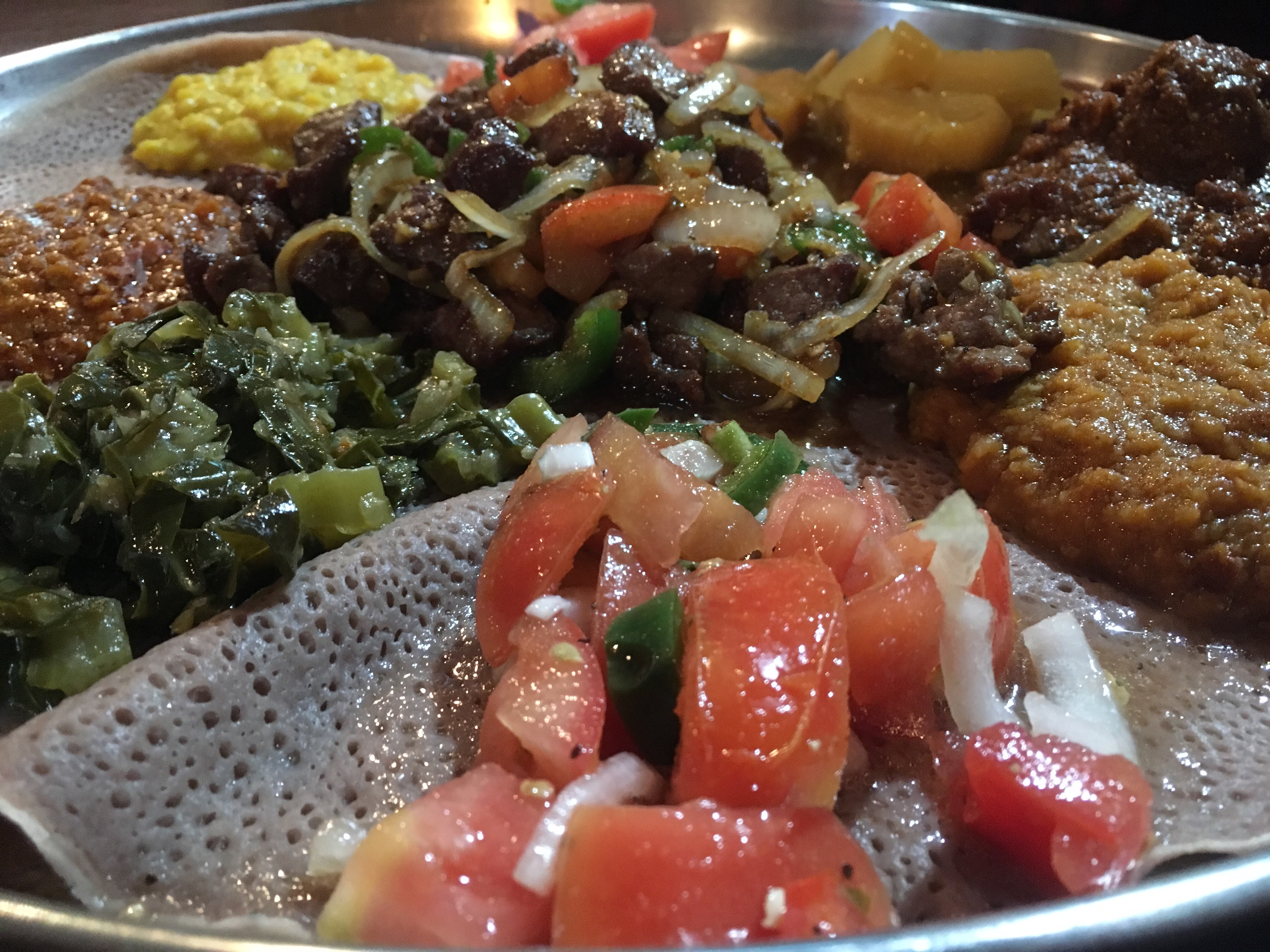
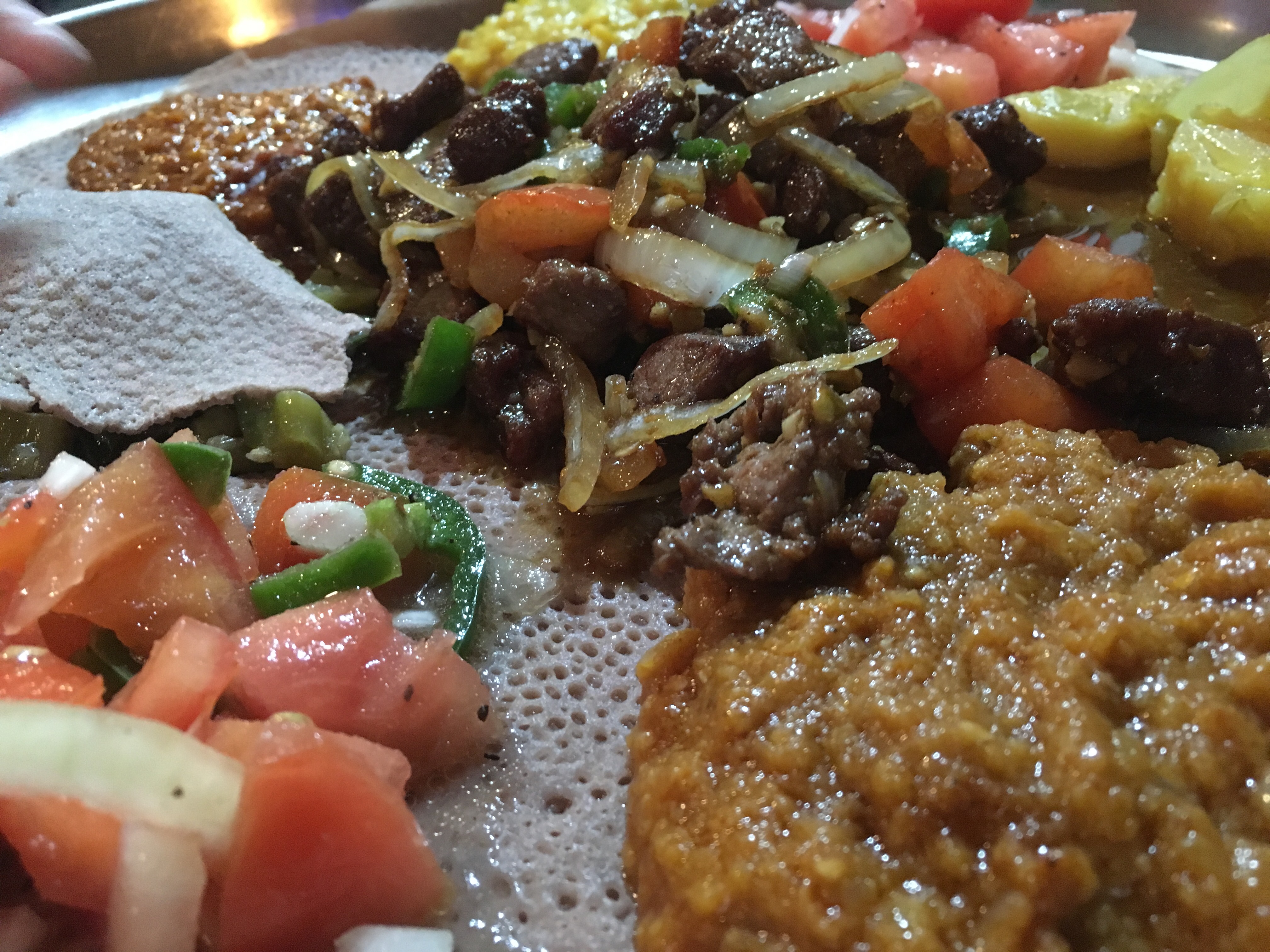
  • Lessons From a Preschooler: Contempt Prior to Investigation and Ethiopian Food

    With a Cambodian-American mother, aunt, and grandparents, my daughter has grown up eating and enjoying foods that most American children have never seen or tried. She is too young to be aware of the fact that what is normal for her is not necessarily normal for her peers and, for now, she is quite content in her youthful ignorance. She eats dried fish with rice, a variety of Southeast Asian soups and stews, and different stir-fries from fried rice to spicy squid. For the most part, whatever her family is eating, she eats.

    Because my wife and I enjoy eating foods from different cultures, our daughter has grown up eating Korean, Indian, Ethiopian, Italian, and all other types of international cuisine. She has her preferences, but she is open to trying new things if she sees that her mother and I are eating it. Of course, like any other child, given the choice she would stick with what was familiar. However, her mother and I like to travel and we like to eat, so our daughter has learned to at least try something once or twice before determining she does not like it. After she tries something, because she is willing to try it, if she says she does not like it, we are inclined to believe her.

    Contempt prior to investigation, I have come to understand, is one of the great barriers to enjoyable experiences and wresting meaningful satisfaction from this life. Being resistant to that which is new, strange, or unfamiliar is a guaranteed path to close-mindedness and isolation. It is only after we are open to new ideas and experiences that we can truly know ourselves and what we do or do not like or want for ourselves or our loved ones. We tend to ask our children what they want to be, but a better question is, “What would you like to experience?” On this day, it was coloring books, Christmas lights, and Ethiopian food.

    Robert Van Valkenburgh is co-founder of Kogen Dojo where he teaches Taikyoku Budo and Gracie Jiu-Jitsu

    39.302475 -76.617675

    Share this:

    • Share on X (Opens in new window) X
    • Share on Facebook (Opens in new window) Facebook
    Like Loading…
    December 11, 2018

  • Cultural Acceptance Through Culinary Openness

    Growing up, I was exposed to a wide variety of different foods before I ever knew that they were culturally unusual. I was not inherently adventurous per se, but I was never scared to try new, different foods and, as a result, I developed a palate for the unusual or exotic, as compared to those around me. This openness has allowed me to connect with people over food in ways I may have otherwise been unable to.

    Most of the different foods I tried as a young child were introduced to me by my mother. My father is a relatively unadventurous eater (another way of saying that he knows what he likes and he sticks with that), so my mom would have us try new things when he was away for business. Before I reached middle school, I knew that I liked calamari (squid), escargot (snails), venison (deer), and smoked pheasant, the latter two having been hunted and killed by my maternal grandfather and prepared by his wife.

    Having a diverse group of friends growing up exposed me to an even richer menu of exotic options. I had rice-and-peas and roti with my friend whose family was from Trinidad. My Korean-American friend exposed me to kimchi and Korean-style ramen. I discovered sushi through my Jewish-American friend whose Bar Mitzvah was at a sushi restaurant.

    As a young adult, I was willing to try anything once or twice before deciding I did not like it. My hapkido teacher introduced me to real Korean food. I had lunch at Indian restaurants with my mother on occassion. I ate Vietnamese food for the first time with the woman who taught me reiki and who would eventually perform my wife and my wedding service. Coincidentally, my wife and my first date was also over Vietnamese food.

    All of these experiences, I truly believe, made it possible for me to really connect with the woman who would become my wife. She is from Cambodia and, in spite of my having never tried Cambodian food before, I was willing to try the food that her family ate at home. They could be themselves with me at the dinner table, where they gathered as a family. My willingness to sit with them and to eat with them, to accept what was offered to me by them, allowed me to also be accepted by them.

    Share this:

    • Share on X (Opens in new window) X
    • Share on Facebook (Opens in new window) Facebook
    Like Loading…
    December 10, 2018

Previous Page Next Page

Create a website or blog at WordPress.com

Loading Comments...

    • Subscribe Subscribed
      • Meditations on God
      • Join 265 other subscribers
      • Already have a WordPress.com account? Log in now.
      • Meditations on God
      • Subscribe Subscribed
      • Sign up
      • Log in
      • Report this content
      • View site in Reader
      • Manage subscriptions
      • Collapse this bar
    %d