Skip to content

Meditations on God

  • Robert Van Valkenburgh

  • Dhanyavaad or How to Negotiate Toward a Fair Outcome

    In my day job, I deal with a lot of customers from different cultures. One of our main customers is known for hiring a highly diverse group of employees. Other customers we have are family-owned businesses or franchises owned by people from a variety of different countries, often from parts of Asia or the Middle East. Sometimes, there are cultural and/or language barriers that must be overcome in order for me to do my job and in order for them to understand what I did, why I did it, and why the cost is what it is. My ability to overcome these barriers is often the difference between the customer feeling as if they were treated either fairly or unfairly.

    Fairness is a strange thing because it is rarely as simple as a balanced mathematical equation. Fairness may be conceptualized logically, but it is experienced emotionally. In any given exchange of goods or services, regardless of whatever monetary equality that may or may not exist, we either feel as if we are being treated fairly or not. A lot of selling is actually selling the idea of fairness. Something can be beneficial or advantageous to a person in every feasible, logically deduced way, but if it does not feel fair, there will be resistance and, if the deal is made in spite of this, the result will often be regret or even animosity. A person who feels as if he or she was treated unfairly will not quickly forget the experience and is unlikely to want to do dealings with the other person or company again.

    Across cultures and even from person to person within a culture, there are different values, customs, and expectations that all play into what one person or another feels is fair. Without having grown up in or immersing oneself in another’s culture, it is nearly impossible to truly understand all of the factors that play into a particular person’s sense of fairness, especially when that sense of fairness is foreign or even antithetical to one’s own. For quite a long time, I struggled with my negotiations with certain customers and was even offended when dealing with them because I was being fair and they treated me as if I was trying to steal from them. Certain people just kept arguing with me in spite of the fact that we had agreed on the terms before I did my work and I stuck to my word throughout the job. Often, I would have to exert my will on the situation and overcome their resistance with force.

    One day, after I finished my work and received payment, the customer offered me a cup of coffee and something to eat. I accepted the coffee, but passed on the food. He insisted on giving me something to at least take home for my family. Reluctantly, I agreed. As he was handing me my coffee, I asked him how to say, “thank you” in his native language. He told me, “Dhanyavaad means ‘thank you’ in my language (Hindi), buddy.” “Dhanyavaad, buddy” I said as I took my coffee and the food he prepared. He smiled, nodded, and said, “That is the best word to know, my friend.” I smiled back, gathered up my things and left. I did not think much of it at the time, but it struck me later. He was right. Regardless of culture or personal beliefs, what everyone wants is to be seen, heard, and appreciated. No matter how a negotiation may be going, graciousness and respect always feel fair.

    – Robert Van Valkenburgh is co-founder of Kogen Dojo where he teaches Taikyoku Budo and Gracie Jiu-Jitsu

    Share this:

    • Share on X (Opens in new window) X
    • Share on Facebook (Opens in new window) Facebook
    Like Loading…
    December 20, 2018

  • Some Things You Just Should Feel Bad About

    For about a year while I was on a college hiatus, I rented a house in downtown Annapolis with two female roommates. One was about my age and one was a little bit younger. We had some similar interests, especially in regards to music. I was learning how to play the guitar and sing (I am still learning). One of the girls was a decent singer, far better than myself. The other girl was a highly skilled violin player. In the summer, we would sit in the backyard or on the front porch and we would sing and play Bob Dylan songs together.

    The older of the two and I had a lot in common and we became good friends. We spent a lot of time together, listening to music, walking around town, and sharing ideas. We both wrote songs and poetry, which we would discuss with each other at the coffee shop where we would sit, drink coffee, and smoke cigarettes. We both had strong personalities that were stronger, more resonant, together.

    One day, we were talking and the subject turned to relationships. She told me, in so many words, that she was not getting any younger and she needed to start thinking about the future and that included commitment, marriage, children, etc. I had been in some pretty crappy, even abusive relationships until that point and this conversation terrified me. I became cold and withdrew.

    Our relationship was never really the same after that, reaching its low point with me standing her up one night when we were supposed to meet at the coffee shop. We both went our separate ways eventually and one day I was talking to a friend about it. Looking for some consolation, I told him that I felt bad about my behavior towards her because we had been good friends and, even if we wanted different things from the relationship, I should not have left like I did. My friend looked at me and said plainly, “Well, Robert. There are some things that you should feel bad about.”

    – Robert Van Valkenburgh is co-founder of Kogen Dojo where he teaches Taikyoku Budo and Gracie Jiu-Jitsu

    Share this:

    • Share on X (Opens in new window) X
    • Share on Facebook (Opens in new window) Facebook
    Like Loading…
    December 18, 2018

  • Empathy is a Superpower: Are you a hero or a villain?

    Empathy is a superpower. It is like a cross between telepathy, x-ray vision, and shape-shifting. Empathy allows us to read minds, to see through facades into the souls of those around us, and to actually become those people for a moment, to see, feel, and experience their inner workings, those things which bring them joy, pain, excitement or terror. Like all superpowers, empathy can be used for good or it can be used for evil.

    Empathy gives us a glimpse into the hearts and minds of those around us. If we pay attention, it is a teacher. We can learn from it how to better treat one another. Empathy allows us to see and feel the wants and desires of those we come into contact with, but with this power comes with a choice. Once we know who someone truly is, how they operate on the deepest, most intimate levels, we have to decide what we do with that information.

    Empathy gives us insights into another person’s weaknesses and vulnerabilities. Once we see and feel a person like this, beyond their defenses, inside their deepest selves, we must choose whether we will embrace and uplift the person we find, becoming what and who they need, whether we will ignore them and carry on as if it does not matter, or whether we will cut them down for being so weak and vulnerable with us to let us in. Empathy is a superpower, but, as with all great power, it comes with great responsibility as it allows us to hold someone’s heart in our hands to with the power to love, to deny, or to destroy.

    – Robert Van Valkenburgh is co-founder of Kogen Dojo where he teaches Taikyoku Budo and Gracie Jiu-Jitsu

    Share this:

    • Share on X (Opens in new window) X
    • Share on Facebook (Opens in new window) Facebook
    Like Loading…
    December 17, 2018

  • Food and Family Memories

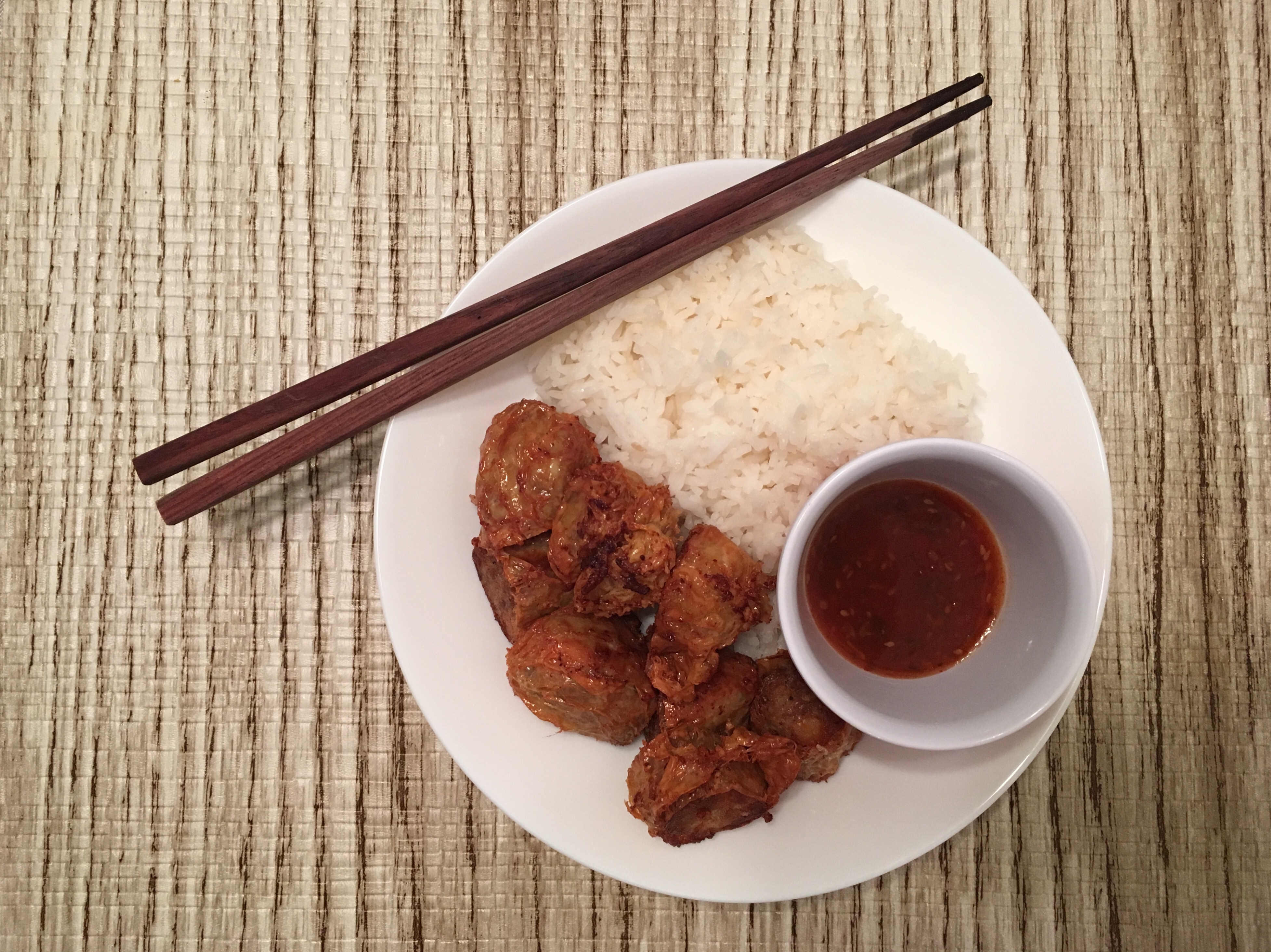
    Food creates memories, but food prepared and shared with love creates lasting memories. When my wife and I were dating, I spent a lot of time at her cousins’ home where she lived. In her culture, it is not considered appropriate for a female to spend time alone at the home of a man who is not her husband. Aside from going out on dinner or coffee dates, we mostly saw each other in the company of her family or mine. We ate a lot of meals together with her cousins and her cousins’ family.

    Much of the food we ate was entirely new to me. It was a combination of Cambodian and Chinese food (not American-Chinese food). It was all homemade and eaten family-style. There were a few dishes that either my wife’s aunt or cousin would cook that were considered special, not only because of their flavor, but because of the effort they took to prepare and cook. One such food that was considered extra special was fu pei gyuen*.

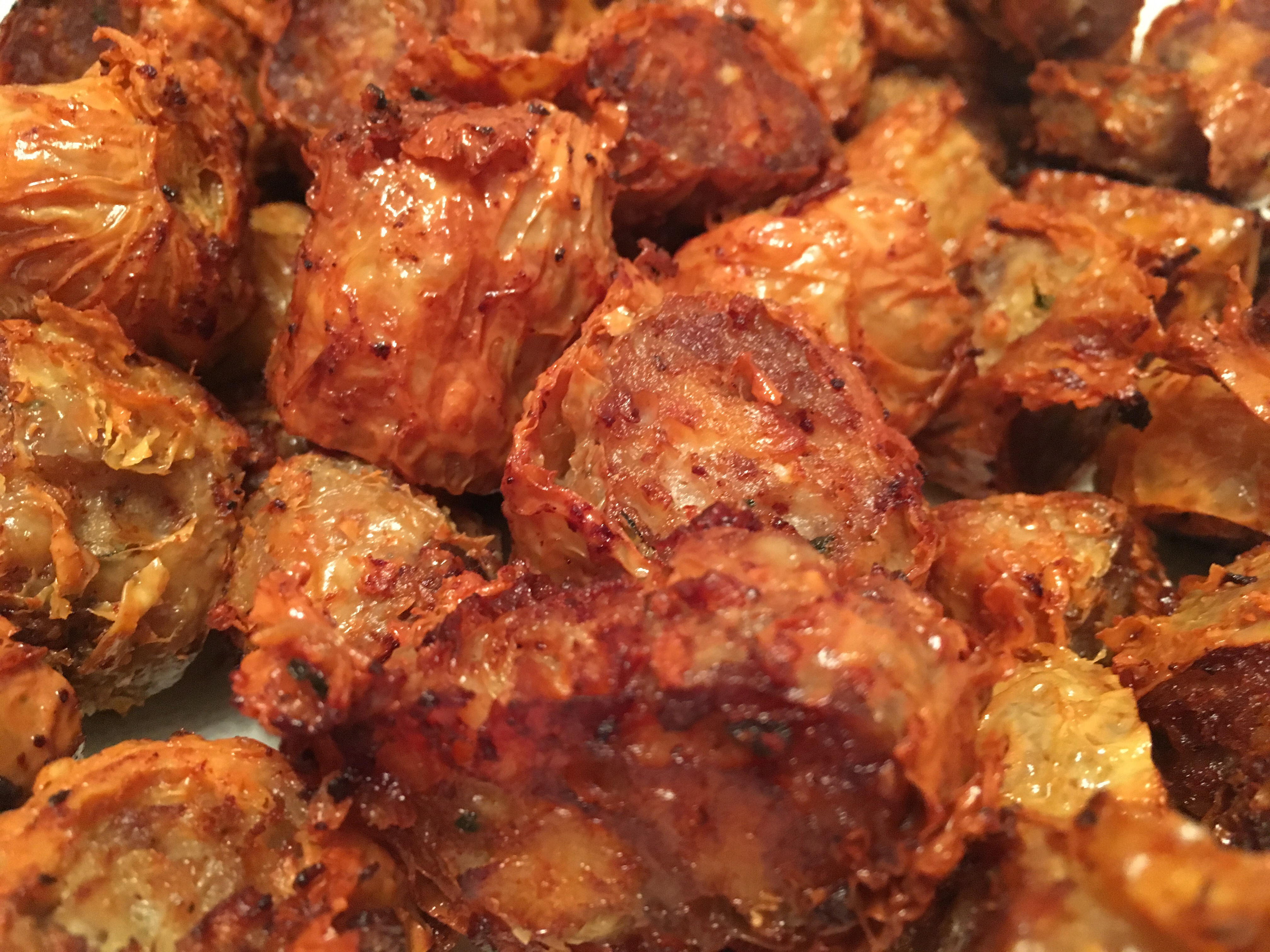
    Fu pei gyuen is a dish of Chinese origins, often found in dim sum restaurants. It is characteristically made of a paste of pork, shrimp, sometimes crab meat, and some variety of root vegetables for texture, all wrapped in bean curd skin and then either steamed or fried. Her family’s version is typically fried.

    One of the things that makes this dish so special is that my wife’s cousin used to prepare it for everyone. He was a kind, generous man who loved to cook for and eat with his family. Sadly, he passed away several years ago after a long battle with liver cancer. His mother, my wife’s aunt, gave the recipe for this dish to my mother-in-law who prepared it for us this weekend. As we all share this food together, we are reminded of his warm, loving spirit and we know that he is with us in our memories and in our hearts.

    – Robert Van Valkenburgh is co-founder of Kogen Dojo where he teaches Taikyoku Budo and Gracie Jiu-Jitsu

    *My wife’s family actually call this dish huy kung or hoi keung in Khmer.

    Here are links to some recipes:

    1. Huy Kung

    2. Hoi Keung

    Share this:

    • Share on X (Opens in new window) X
    • Share on Facebook (Opens in new window) Facebook
    Like Loading…
    December 17, 2018

  • A Johnnie In Form, If Not In Fact

    It was not long after I moved to Annapolis that people around town began asking me if I was a ‘Johnnie,’ which I quickly learned meant they wanted to know if I attended St. John’s College. I had moved to Annapolis for a fresh start after some poor life choices growing up led me to a dead end of depression and despair. All I knew of Annapolis was that it was the state capital, it was far (to me at the time) from where I had lived previously, and I had a place to stay as long as I was willing to follow some rules. As a high school dropout, college was not something I ever considered as an option, but St. John’s just kept coming up in seemingly unrelated conversations and contexts. I was intrigued.

    St. John’s College is a small, private college whose entire curriculum is based around the reading, dissecting, and discussing what they call the ‘Great Books.’ The Great Books are the books with subjects including philosophy, mathematics, science, music, et al, whose ideas have shaped western thought and culture over the last several thousand years. I was introduced to these books by a friend who lived in downtown Annapolis. He took me to a used-book store located a few blocks from St. John’s, on Maryland Avenue. They sold $1 paperbacks there, many of which had belonged to St. John’s students at one time. Among the books I picked up there were works by Nietzsche, Plato, Aristotle, and Dostoyevski. I became enthralled by the ideas in these books and with philosophy in general, carrying Thus Spoke Zarathustra and a notebook with me wherever I went.

    In spite of my disdain for the educational system I came up in and dropped out of, or perhaps because of it, I wanted to attend St. John’s College, to immerse myself in these ideas and this culture I had just discovered, and to perhaps become philosopher, poet, or writer. I did not end up going to St. John’s for my undergraduate degree (for reasons I will get into later — perhaps graduate school is in my future), but here I am writing because the best way to start is to start.

    – Robert Van Valkenburgh is co-founder of Kogen Dojo where he teaches Taikyoku Budo and Gracie Jiu-Jitsu
    38.982456 -76.492535

    Share this:

    • Share on X (Opens in new window) X
    • Share on Facebook (Opens in new window) Facebook
    Like Loading…
    December 15, 2018

Previous Page Next Page

Create a website or blog at WordPress.com

Loading Comments...

    • Subscribe Subscribed
      • Meditations on God
      • Join 265 other subscribers
      • Already have a WordPress.com account? Log in now.
      • Meditations on God
      • Subscribe Subscribed
      • Sign up
      • Log in
      • Report this content
      • View site in Reader
      • Manage subscriptions
      • Collapse this bar
    %d