One of the greatest joys of the creative process, at least for me, is surprise.
Among other creative outlets, I write every day. Some days, I start with a clear idea as to what I want to write about. On other days, I simply start and wait to see what happens.
In either case, what comes out may not be what I originally intended or expected. In fact, I feel like most of the writing I am most pleased with came through me more than it actually came from me. Quite often, if I am honest, I am more of a participating observer to the writing process than the actual author of it.
Even when I do have a clear idea about a topic I wish to explore or expound on in one of my posts, it usually starts with nothing more than a single sentence. That single idea may lead me down a straight path wherein the rest of the words come to me quite easily. It may lead me down many different paths, some of which will become other posts. Or, it may leave me struggling for understanding, for clarity, and for resolution.
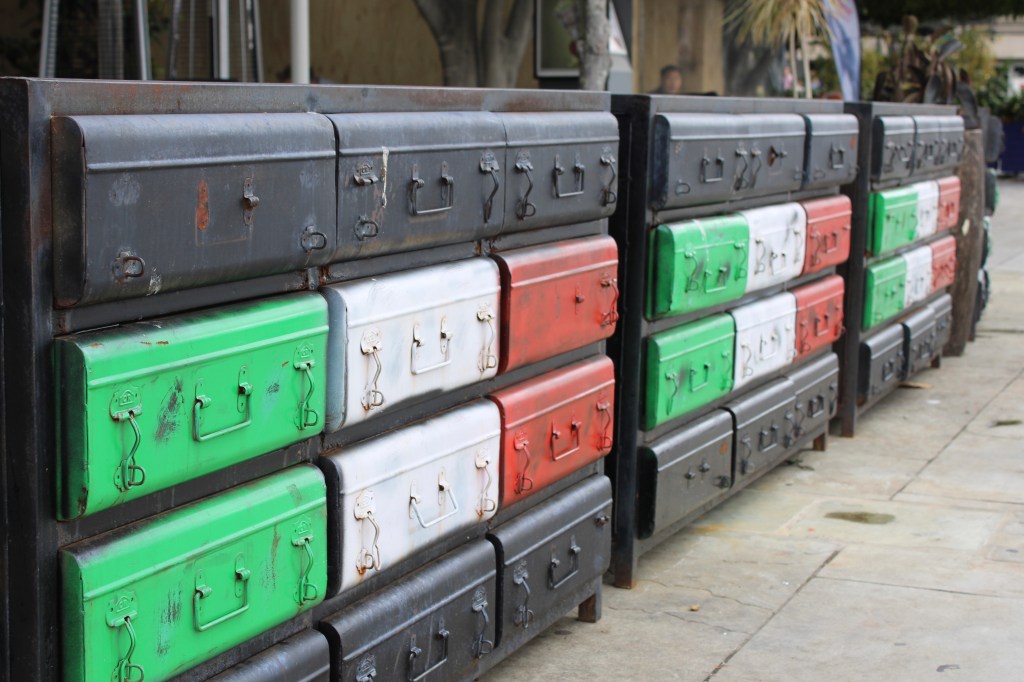
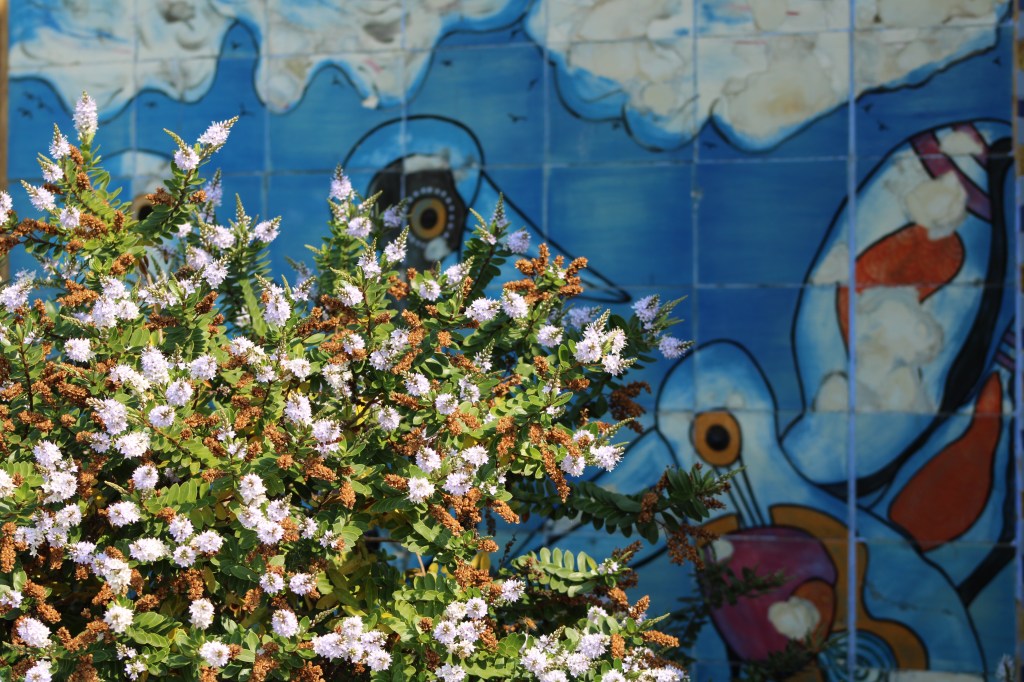
For anyone reading my writing on a somewhat consistent basis, it will be observed that there is always an image that accompanies the post. This is as much a creative-aesthetic decision, that is, I like taking pictures of things I find interesting and sharing the pictures that I take, as it is a source of inspiration. Sometimes the picture inspires the post. Sometimes the post inspires the picture.
Holistic Budo: As it is in budo, so too it is in life. As it is in life, so too it is in budo.
Robert Van Valkenburgh is co-founder of Taikyoku Mind & Bodyand Kogen Dojo where he teaches Taikyoku Budo and Brazilian Jiu-Jitsu.
All photos by Robert Van Valkenburgh unless otherwise noted.
“There’s never been a better time to have an idea. There’s never been a better time to be a writer, a singer, a speaker, a podcaster. There’s never been a better time to figure out how to help people than right now, but instead we spend an hour watching cat videos.” —Seth Godin
A blog or a podcast is nothing more than a homing beacon for other ‘folks like us.’ It is a way of putting a signal into the world so that others can know how to find someone with whom they may share a common frequency or who may even raise their frequency. It is a way of saying, “Here I am. Here is my message. Here is my contribution. If you are drawn to this, if you can relate to this, or if you are inspired by this, join me on my journey so that we do not have to go it alone.”
The difference between these platforms and social media is in how the content is curated and who it is curated for. On social media, content is curated by the platform itself and it is curated to lead the user, as a product, toward the real customers who are the companies buying the user’s information so that they can sell to those users. On social media, just like on television or radio, the content is curated for the advertising companies to profit off of the users’ preferences, patterns, and uninterrupted presence.
A blog or podcast, on the other hand, is curated by the actual creator for him or herself and his or her potential, often niche, audience. It is specific, personal, and voluntary, a cumulative body of work, usually with a theme, a point of view, and a direction, as opposed to a never-ending stream of suggestions. It is a statement about the creator and his or her ideas, opinions, experiences, and perspective as a means of contributing to the cultural conversation in a helpful, non-invasive way that ideally sparks a movement, no matter how small, in a new and interesting direction by and for ‘folks like us.’
Note: Thank you Christian Hipsky at the Spiritual Defense blog for finding enough value in my experience and opinion to ask me a question that made me think about why I blog.
Holistic Budo: As it is in budo, so too it is in life. As it is in life, so too it is in budo.
Robert Van Valkenburgh is co-founder of Taikyoku Mind & Bodyand Kogen Dojo where he teaches Taikyoku Budo and Brazilian Jiu-Jitsu.
All photos by Robert Van Valkenburgh unless otherwise noted.
“I’m not serving a menu. I’m serving a story. I’m serving my soul. I’m serving a conversation and I want you to talk back to me. I want you to dialogue with me.“ —Dominique Crenn
Within every artistic expression and experience, there are always many stories being told.
There is the story that the artist tells him or herself about who they are as a person, a creator, an artist, and as a member of society.
There is the story the artist tells him or herself about what their art means personally, what it means in the world, to the culture, and what it means to and for others with whom it will be shared.
There is also the story that the viewer, listener, reader, taster, experiencer, or witness tells about his or herself, about his or her culture, about the artist, and about the art itself when it is shared with them and when they share it with others.
Even the culture within or from which any piece of art is created tells its own stories about that art, but the art also tells a story about the culture it grew out of or was created in opposition to, and when foreign cultures experience this same art, a new, different story is told by and about these cultures, the artist, and the art itself.
Throughout all of this, the art is also telling many of its own stories. It is telling stories about individuality, relationships, creativity, conformity, rebellion, influence, preferences, possibilities limitations, clarity, confusion, joy, pain, beauty, ugliness, divinity, and profanity.
All of these stories are ultimately about one thing, however, and that is emotion. Art’s true story is told in the emotions it was created out of and the emotions it evokes in others. Art’s essence, its’ purpose, its’ most pure expression, manifestation, and experience is a feeling, an emotion, and, ideally, this emotion tells its own story while simultaneously transcending stories altogether.
Holistic Budo: As it is in budo, so too it is in life. As it is in life, so too it is in budo.
Robert Van Valkenburgh is co-founder of Taikyoku Mind & Bodyand Kogen Dojo where he teaches Taikyoku Budo and Brazilian Jiu-Jitsu.
All photos by Robert Van Valkenburgh unless otherwise noted.
Me: I’m stuck, dear. What should I write about today?
My Daughter: It’s your story. You can write about anything you want.*
Quite often, creative work begins as a flicker of an idea, a spark if you will. Most ideas, like most sparks, if not tended to properly, if not given just the right amount of oxygen and fuel, will die out. With some combination of luck and attentiveness, however, one of these sparks might get exactly what it needs to catch, bursting into a bright, beautiful flame that both warms and lights up the space around it.
Much like a fire, most creative ideas, if they are going to grow into something powerful and useful, require a lot more than one spark before they catch. Every one counts, but most flicker and fade, dying out, seeming to vanish into thin air before finding what they need in order to become something more. For this reason, if we are going to have one great idea, we must have many, many more not-so-great ideas.
We never know which spark or which idea will catch, what it will become, or to where it will lead, so we have to keep trying. Inspiration does not simply come to us. We must seek it, pay attention to it, and nurture it.
*What does this all have to do with the conversation I had with my daughter this morning while she ate her breakfast and I made my coffee? That’s the thing. I do not know. I invited inspiration. It answered. When it did, I gave it attention, fuel, room to breathe, and the result was the result.
Holistic Budo: As it is in budo, so too it is in life. As it is in life, so too it is in budo.
Robert Van Valkenburgh is co-founder of Taikyoku Mind & Bodyand Kogen Dojo where he teaches Taikyoku Budo and Brazilian Jiu-Jitsu.
All photos by Robert Van Valkenburgh unless otherwise noted.


 Meditations on God